
Forex profit can look easy on paper, then go sideways the minute real trading costs kick in. A trade that seemed like a sure thing may end up thinner than expected once pips, lot size, spread, and broker pricing get into the mix.
That is where many buyers hit the same wall: the math looks clean, but the final number tells a different story. It is a bit like getting a great wholesale price, then watching fees nibble away at the margin.
For firms comparing brokerage options, this is not just about trade wins and losses. It is about seeing what really drives returns, spotting hidden costs early, and knowing which pricing model gives you a fair shake.
A good forex broker does not just help you place trades. It helps you keep more of what you earn.
This guide breaks down how forex profit calculator logic works, what changes the final result, and where brokerage costs can quietly eat into gains. No fluff, no smoke and mirrors—just the parts that matter when money is on the line.
What Is Forex Profit and How Is It Calculated?

Forex profit is the money left after a trade moves your way and the bid-ask spread and other trading costs get baked in.
Forex profit sounds fancy, but it really comes down to a pretty simple idea: how far the currency pair moved, how big your position size was, and how much each move in pips was worth.
When you buy or sell a pair, you are comparing the base currency to the quote currency. If the exchange rate moves in your favor, you gain. If it moves against you, you lose. Until you close the trade, that running number is unrealized profit or unrealized loss.
Here is the plain-English formula people use all the time:
Forex Profit = Price Movement in Pips × Pip value × Lot size impact
Then subtract trading friction such as:
Bid-ask spread
commissions, if any
swap or overnight holding costs, if any
A brokerage buyer or wholesale partner usually cares about one thing: not just “Did the trade win?” but “How much money actually hit the account after costs?” That’s where a lot of folks get tripped up.
The quick math
Pick the currency pair you traded, like EUR/USD.
Mark your entry price and exit price.
Measure the move in pips.
Find the pip value for your trade size.
Factor in your lot size and position size.
Subtract the bid-ask spread and other fees.
Check how much margin was used if you traded with leverage.
What each term actually means
Currency pair
Two currencies quoted together, like GBP/USD or USD/JPY.Base currency
The currency listed on the left side of the pair.Quote currency
The currency listed on the right side of the pair.Exchange rate
The current price of one currency compared with another.Pips
Small units of price movement. In many pairs, one pip is 0.0001.Pip value
How much one pip is worth in money terms for your trade.Lot size
The trade volume. Standard, mini, and micro lots change profit fast.Position size
The exact amount you put into the trade.Bid-ask spread
The gap between the buying price and selling price. That gap is a real cost.Margin
The amount set aside to open and support a trade.Leverage
Borrowed buying power from the broker. It can juice returns, but it can also smack your account hard.Unrealized profit
Profit showing on the screen before the trade is closed.
A table that makes it click
| Currency Pair | Entry / Exit Exchange Rate | Position Size and Lot Size | Pips Moved | Estimated Profit Before Costs |
|---|---|---|---|---|
| EUR/USD | 1.1000 to 1.1050 | 1 standard lot | 50 pips | 50 × pip value |
| GBP/USD | 1.2700 to 1.2660 | 1 mini lot | -40 pips | -40 × pip value |
| USD/JPY | 150.20 to 150.80 | 2 mini lots | 60 pips | 60 × pip value × 2 |
That table shows the basic game: the bigger the move and the bigger the lot size, the bigger the money swing. Pretty straightforward. The catch is that real brokerage profit is always a little messier because the forex spread takes a bite right away.
A worked example
Let’s keep it chill and use a common setup.
You buy EUR/USD at 1.1000 and sell at 1.1050.
Price move = 50 pips
Trade size = 1 standard lot
Typical pip value for 1 standard lot in EUR/USD = about $10 per pip
So the rough profit looks like this:
50 pips × $10 = $500
Now let’s say the bid-ask spread cost was 1 pip.
Spread cost = 1 × $10 = $10
Your cleaner estimate becomes:
$500 - $10 = $490
That’s the kind of number a brokerage client actually wants to see. Not the hype number. The real number.
Why wholesale and brokerage buyers care so much
For a regular retail trader, a small spread might seem no big deal. For a wholesale client, introducing broker, or high-volume desk, tiny pricing changes can stack up fast.
A few things hit profit hard:
wider bid-ask spread
oversized position size
poor margin planning
aggressive leverage
weak control over entry and exit pricing
misunderstanding pip value on different pairs
A deal can look sweet on paper and still come out kinda rough once execution costs show up.
Common mistakes that throw off the math
Treating all currency pairs like they have the same pip value
Forgetting that lot size changes the dollar result
Looking at unrealized profit like it is locked-in cash
Ignoring the bid-ask spread
Using too much leverage for the account size
Confusing base currency with quote currency
Opening trades without checking available margin
A fast form traders and brokerage teams can use
| Item | What to Record | Example | Why It Matters |
|---|---|---|---|
| Currency pair | Pair traded | EUR/USD | Determines pip format and pricing |
| Entry and exit | Buy/sell rates | 1.1000 / 1.1050 | Shows total move |
| Position details | Lot size and position size | 1 standard lot | Controls money impact |
| Cost check | Bid-ask spread, fees | 1 pip spread | Shows true net result |
Straight talk from the Fxbee side
Q: What do clients usually miss when calculating forex profit?
Mason Reed, Fxbee Brokerage Operations Manager:
“A lot of folks only look at the move in pips. That’s not enough. You’ve got to tie that move to lot size, pip value, and spread cost, or the number is off.”
Q: What matters most for a wholesale buyer comparing brokers?
Lena Ortiz, Fxbee Pricing Engineer:
“Execution quality and spread consistency. A broker can advertise tight pricing, but if the real fill widens during active hours, your profit math gets shaky real quick.”
Q: Why does margin belong in the conversation?
Derek Cole, Fxbee Risk Desk Executive:
“Because profit is not just about upside. If margin gets too thin, even a decent setup can turn into stress. Clean sizing keeps the account alive long enough to book the win.”
The simple takeaway
Forex profit is the result of price movement in a currency pair, measured in pips, multiplied by pip value and shaped by lot size, position size, margin, and leverage. Then the bid-ask spread and other costs shave that number down.
That’s the real deal: not screen profit, not hype profit, but actual trading profit you can count.
Pips, Lots, and Leverage Explained
Pip Value and Lot Size in Brokerage Profit Calculations
A tiny Pipette can still move real money when the Contract Size grows.
Standard Lot = biggest common trade size
Mini Lot = mid-range exposure
Micro Lot = beginner-friendly sizing
For a Currency Pair, profit shifts with the Exchange Rate and lot choice. A Standard Lot can make each pip feel chunky, while a Micro Lot keeps risk chill. Brokerage buyers care because the same market move pays very differently across account sizes. For a deeper breakdown, see what are lot sizes in forex.

Bid-Ask Spread, Market Makers, and Liquidity Providers
Bid Price is where selling happens.
Ask Price is where buying happens.
Spread is the gap between them.
That gap is your starting Transaction Cost.
Market Makers and Liquidity Providers shape that gap through the Order Book, ECN access, and Market Depth. When spread widens, your break-even point moves farther away. Toss in Slippage during fast markets, and your expected profit can get trimmed pretty fast. For brokerage sourcing, tighter pricing usually means cleaner execution math.
Leverage Control and Position Sizing for Wholesale Trading Accounts
Big accounts can blow up from bad sizing, not just bad entries. Margin, Equity, and Position Size have to stay in sync or Drawdown gets ugly.
Keep it practical:
Match Leverage Ratio to real Capital Allocation
Set Position Size by risk, not ego
Watch usable Margin after every open trade
Good Risk Management keeps wholesale trading accounts steady when price swings hit. A broker may offer huge ratio options, but smart desks pick control over hype.
Retail Traders, Commercial Banks, and Hedge Funds in Price Formation
Retail Traders chase setups. Commercial Banks move size for client business. Hedge Funds and other Institutional Investors push Speculation when Market Sentiment lines up. Then Central Banks step in and the whole vibe shifts.
In the Interbank Market, Order Flow drives short-term price behavior more than flashy chart talk. Liquidity can look deep one minute and go thin the next. For brokerage buyers, this matters because price quality depends on who is active, how orders are matched, and how fast quotes react.
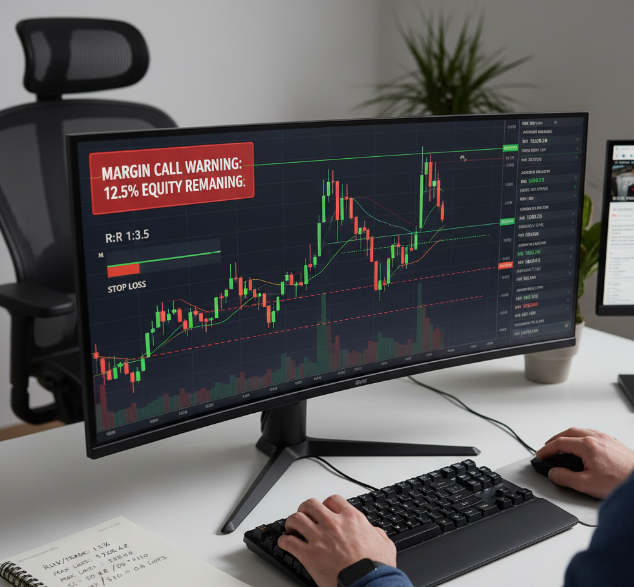
Stop Loss and Margin Call Risks When Scaling Forex Volume
When volume scales up, mistakes scale up too. A Stop Loss Order is not just a safety net; it protects Account Balance from a rough Volatility spike.
Use this flow:
Set the Risk-Reward Ratio before entry
Check Maintenance Margin
Know where Margin Call risk begins
Cut exposure before Liquidation becomes possible
Plenty of traders feel fine until one fast move wrecks the math. Bigger size needs tighter control, plain and simple.
Profit vs. Loss: What Changes the Final Result?
Swap Rate and Overnight Holding Costs
Hold a pair overnight and the rollover hits. That cost or credit comes from the interest differential between currencies. In a carry trade, this can look sweet, but triple swap days can sting hard. A long position and short position do not get treated the same, so check Tom-Next pricing with your broker. For wholesale brokerage buyers, this is where “profit on paper” can quietly leak in real life.
Drawdown, Profit Factor, and Brokerage Performance Review
Track the equity curve, not just closed wins.
Measure maximum drawdown so bad runs do not wreck cash flow.
Compare gross profit with gross loss to get profit factor.
Review risk-reward ratio, slippage, spread, and commission together.
A brokerage may look cheap at first glance, but hidden execution drag can mess up the whole scorecard.
Take Profit, Trailing Stop, and Exit Precision
A clean exit is not luck. It is timing, tools, and not getting too greedy.
Use a limit order near a resistance level when price action looks tired. Put a stop-loss under a support level when the setup still has room to breathe. In fast volatility, a trailing stop can lock gains one pip at a time. Once price hits break-even, the trade stops feeling like drama and starts feeling managed.
Interest Rates, Inflation Rate, and Consumer Price Index Impact
This stuff moves profit fast, no joke.
Monetary policy from the Federal Reserve can shift yield expectations and smash currency valuation in minutes. A hot Consumer Price Index print can hurt purchasing power stories and flip sentiment. Add GDP surprises and wider macroeconomics pressure, and spreads can get ugly. Smart brokerage-focused readers keep one eye on the economic calendar, because news timing changes both entry math and final profit.
Not Seeing Forex Profit? Check These Hidden Costs
Hidden Spread Markups from Market Makers and Liquidity Providers
A retail trader may spot a tight quote, then still pay more through a dealing desk markup. Here’s the catch:
Wider bid-ask spread means fewer clean pips kept
Some market makers pad pricing during busy hours
An ECN broker may charge commission instead of hiding cost in the spread
A weak liquidity provider setup can worsen fills
Net result: your brokerage cost sneaks up even when the trade idea was solid.

Slippage During Non-Farm Payrolls and GDP Growth Releases
Check the economic calendar before news trading.
Expect volatility around Non-Farm Payrolls and GDP Growth.
Market orders can fill far from the planned execution price.
A stop-loss may slip too when liquidity thins out.
That gap between planned and actual price is where profit often leaks. On fast news, clean charts mean nothing if execution gets messy.
Swap Rate Drag in Carry Trade and Swing Trading Positions
Carry Trade and Swing Trading can look chill, but rollover costs keep ticking in the background. A long position or short position may earn or lose money from the interest rate differential set around central bank policy. Overnight financing matters more when a trade stays open for days. Triple swap can hit hard midweek, so a setup that looks sweet at entry can feel rough later if the swap rate is working against you.
Overtrading Costs in Scalping and Day Trading Accounts
Scalping and Day Trading can eat profit when pace turns messy.
Short version: more clicks do not always mean more cash.
Transaction fees pile up. Spread accumulation gets nasty. Emotional trading pushes weak entries. High trading volume can turn into churning, and that is great for brokerage revenue, not your account. Keep an eye on margin call risk too. A busy screen can feel productive, but overtrading is where many good accounts go sideways.
Arbitrage Limits, Hedging Fees, and Broker Execution Rules
Some brokers sound flexible, then the rulebook says otherwise.
Arbitrage may be restricted
Hedging can trigger extra fees
Risk management rules may tighten margin requirements
Latency can wreck fast entries
Two-way pricing is not always equal across venues
Order routing on MT4 may add friction
Regulatory compliance can change what the broker allows
So yeah, the setup may work in theory, but execution rules decide what you actually keep.
Trade Balance Shocks, Central Banks, and Sudden Margin Pressure
Trade Balance surprises and central bank moves can hit a currency pair out of nowhere. When monetary policy shifts, interest rates can swing hard, and high leverage turns a normal move into sudden margin stress. Watch these pressure points:
Equity drops fast in sharp moves
Free margin shrinks quicker than expected
A black swan event can blow past normal risk plans
That is why brokerage terms matter just as much as trade direction.
How to Calculate Forex Profit Step by Step

Step 1: Measure Pip Value with Lot Size and Bid-Ask Spread
Pick the currency pair and note the exchange rate.
Check the base currency.
Choose a standard lot, mini lot, or micro lot.
Count pip movement, then add the pipette if needed.
A wider bid-ask spread means higher spread cost.
Bigger lot size means faster profit swings.
Tiny pricing gaps look harmless, but they can nibble profit all day.
That is the raw math every brokerage buyer needs before comparing account terms.
Step 2: Set Position Sizing, Stop Loss, and Take Profit Levels
Your account balance sets the tone. No need to go cowboy mode.
Use risk management to cap damage on one trade.
Match position sizing to margin and stop-out level.
Build an exit strategy before clicking buy or sell.
A clean reward-to-risk ratio helps you judge if the trade is worth the hassle. If entry price is weak, no fancy broker feature can save the setup. Good sizing keeps losses boring, and that is a win.
Step 3: Apply Leverage Control Across Scalping and Trend Following Trades
Scalping and trend following do not hit the account the same way.
In day trading, trade duration is short, but volatility can get spicy fast.
In swing trading, positions stay open longer, so gearing needs more care.
Watch used margin, equity, and free room before size goes up.
Too much gearing can trigger a margin call out of nowhere.
Calm sessions and wild sessions need different trade pressure.
Keep it chill. Control size before size controls you.
Step 4: Use Moving Average, MACD, and Relative Strength Index for Entry Logic
Technical analysis helps cut the guesswork.
A Moving Average, especially an exponential moving average, can show direction. A crossover may hint that momentum is shifting. MACD adds signal line behavior and divergence clues. Relative Strength Index helps flag overbought or oversold spots, so you do not chase late like a bag holder. Stack these tools with common sense. One signal alone can fake you out, but a few lined up together can give entry logic more bite.
Step 5: Add Fibonacci Retracement, Bollinger Bands, Stochastic Oscillator, and Pivot Points
Short checklist for sharper trade timing:
Fibonacci Retracement tracks the golden ratio and likely support and resistance zones.
Bollinger Bands show volatility bands built around standard deviation.
Stochastic Oscillator helps spot trend reversal pressure.
Pivot Points give clean price action levels for intraday planning.
Put together, these tools can show where market sentiment is heating up or cooling off. Nice for brokerage clients who want cleaner entries, not random button-mashing.
Step 6: Adjust for Swap Rate, Drawdown, and Profit Factor
A trade can look sweet on paper and still come out mid.
Add rollover interest if you hold an overnight position.
Check if carry trade income beats the swap rate cost.
Compare net profit with gross loss, not just the win count.
Maximum drawdown tells you how ugly the ride got.
Profit factor shows if the system actually pays.
The equity curve should rise without looking like a heart monitor.
That is how you judge real performance, not hype.
Step 7: Recalculate Profit Around Interest Rates, Central Banks, and Inflation Rate
Profit math changes when big macro stuff hits the tape.
Fundamental analysis matters around CPI, GDP, and the economic calendar.
Central Banks can shift monetary policy from dovish to hawkish fast.
Federal Reserve updates can move pricing, spreads, and execution quality in a snap.
Recheck projected profit before and after major news. A setup that looked solid in a quiet market can get flipped when rate talk turns hot. Smart brokerage buyers price in these shocks instead of acting surprised later.
Conclusion
Learning to calculate forex profit is a lot like checking the full price tag before you hit the register. The move in price matters, sure, but pip value, lot size, spread, and position size are what tell you what you really keep. Miss one piece, and your numbers can get out of whack fast.
Hidden costs are where many traders get tripped up. A trade can look solid going in, then swap fees, margin pressure, or a sloppy exit strategy eat your lunch. If you are comparing brokers, this stuff is not small potatoes. It is the difference between clean pricing and getting nickeled and dimed.
At the end of the day, good math helps you dodge rookie mistakes and pick brokerage terms that fit your goals. Keep it simple, stay sharp, and do not let flashy promises pull the wool over your eyes. Traders who want to Learn Forex Trading, compare the best forex brokers, or get forex trading support can use those resources to tighten up both their calculations and their broker selection process.
References
[What is a pip in trading? - https://www.oanda.com/us-en/learn/introduction-to-leverage-trading/what-is-a-pip/]
[What is margin in trading? - https://www.oanda.com/us-en/learn/introduction-to-leverage-trading/what-is-margin-in-trading/]
[What is leverage trading? - https://www.oanda.com/us-en/learn/introduction-to-leverage-trading/what-is-leverage-trading/]
[Calculating Profits and Losses of Your Currency Trades - https://www.investopedia.com/articles/forex/12/calculating-profits-and-losses-of-forex-trades.asp]
[What Are Pips in Forex Trading, and What Is Their Value? - https://www.investopedia.com/terms/p/pip.asp]
[Our Pricing, Costs and Charges on CFDs - https://www.ig.com/en/charges]
[Forex Trading Calculator: Margin, Leverage, Profit and Loss - https://www.ig.com/sg/forex/fx-calculator]
[Best indicators for forex trading and how to use them - https://www.ig.com/uk/forex/fx-need-to-knows/forex-indicators]
[5 Effective Forex Indicators You Should Know - https://www.ig.com/en/trading-opportunities/5-effective-indicators-all-forex-traders-should-know-38602-170612]
[Which indicators and drawing tools can I use with IG charts? - https://www.ig.com/uk/help-and-support/platforms-and-charts-f6988a96/ig-web-and-mobile-trading-platforms-306cfcd9/ig-charts-indicators-and-analysis-tools-3e8b30a0/which-indicators-and-drawing-tools-can-i-use-with-ig-cha-d49ecff1]
[What is MT4 and how to use it - https://www.ig.com/sg/trading-platforms/metatrader-4/what-is-mt4-how-to-use-it]
[Foreign Currency Trading | CFTC - https://www.cftc.gov/LearnAndProtect/AdvisoriesAndArticles/ForeignCurrencyTrading/index.htm]
FAQ
How do you calculate pip value in forex?
Pip value depends on the currency pair, trade size, and quote currency. For standard lots, a pip in EUR/USD is typically $10, while in JPY pairs, one pip is calculated differently due to pricing decimals.
What is position sizing and lot size in forex trading?
Position size determines the number of lots (standard, mini, micro) traded. It directly affects pip value and overall profit or loss. Choosing the right position size is critical for managing risk and leverage.
How do leverage and margin affect forex profit?
Leverage amplifies potential profit and loss, allowing traders to control larger positions with smaller capital. Margin is the required deposit to maintain positions. Proper management prevents margin calls and reduces risk.
Which indicators are useful for entry signals in forex trading?
Common indicators include Moving Averages (MA), MACD, Relative Strength Index (RSI), Fibonacci retracements, Bollinger Bands, Stochastic Oscillator, and Pivot Points. They help identify entry points and market momentum.
How do swap rates and overnight costs impact profit?
Holding a position overnight may incur swap fees based on interest rate differentials. These costs can reduce profit in carry trades or add to profit if favorable.
What macroeconomic factors affect forex profit?
Interest rates, inflation, GDP, and central bank policies influence currency valuations and can significantly impact trading profit and loss.
How do drawdown and profit factor help assess performance?
Maximum drawdown measures risk exposure during losing streaks, and profit factor shows the ratio of gross profit to gross loss, helping evaluate system performance.
How do stop loss and take profit tools affect results?
Stop loss limits potential losses while take profit locks gains at pre-defined levels, ensuring better risk management and preserving capital.
What hidden costs should traders be aware of?
Hidden costs include spread markups, slippage during volatile news, broker execution rules, and rollover fees that can reduce net profit.
How can fundamental analysis improve forex profit?
Fundamental analysis, including interest rates, inflation, GDP, and economic news, helps forecast currency moves and make more informed trading decisions.