
Table of Contents
Part 1 - 5 rules to manage risk on a 1-minute trade chart
Part 2 - Tired of whipsaws? Filters that tame the 1-minute trade chart
Part 3 - 1-Minute Trade Chart vs 5-Minute: Which Wins?
Part 4 - Earnings day: Using a 1-minute trade chart for precise entries
Part 5 - 1-Minute Scalping Tactics Guide
Part 6 - 3 shocking reasons traders fail on the 1-minute trade chart
trade chart can feel like trying to drink from a fire hose—everything blasts at you fast, and if you’re not ready, it knocks you flat. A lot of traders jump in thinking speed equals , only to watch their account drip away one tiny mistake at a time.
I’ve been there too. My early scalping attempts looked more like reflex training than trading—clicking buttons, sweating bullets, and praying the candle didn’t flip on me. That chaos is exactly what drives people to ask: “Can this timeframe actually work, or is it just a quick trip to frustration?”
“1-minute charts reward discipline, not adrenaline,” notes an Fxbee senior engineer who works with real-time data pipelines. That line stuck with me because it cuts straight to the truth.
This guide breaks down the traps, the tactics, and the moments worth taking—so you can trade smarter, not just faster.

5 rules to manage risk on a 1-minute trade chart
This chapter teaches smart ways to control risk when scalping fast-moving 1-minute charts. No fluff — just practical stuff that helps you stay in the game.
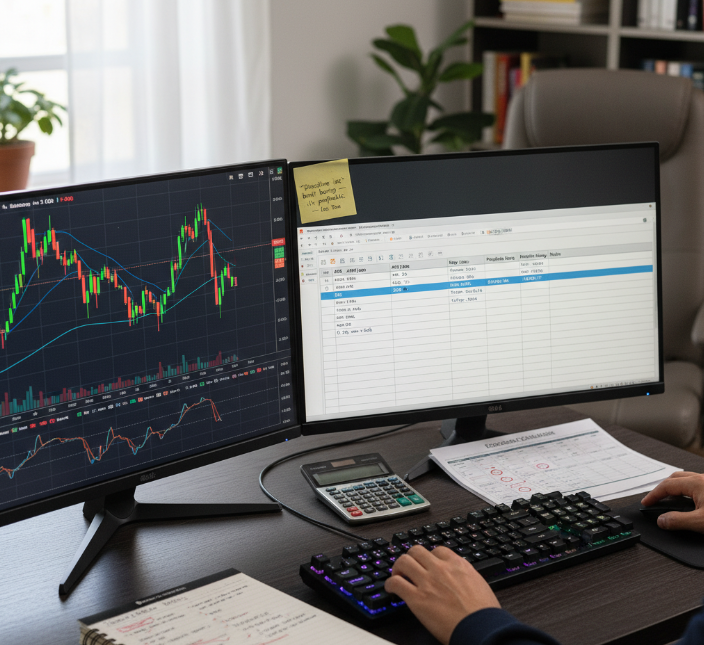
Use Stop-Loss with ATR to Control Slippage
ATR helps you set stop-losses that actually make sense
Slippage control starts with realistic volatility assumptions
Don't place stops based on hope — use math
Stop-loss orders are your insurance policy. But if you place them blindly, expect them to get hit often. That’s where the comes in — it adjusts your stop-loss based on recent volatility, not emotion. If your price action is all over the place, ATR can keep your exits smarter and farther from random noise. Use it, or keep donating to the market.
| ATR (1-min) | Suggested Stop-Loss (pips) | Slippage Risk | Trade Rating |
|---|---|---|---|
| 0.8 | 2.4 | Low | Ideal |
| 1.5 | 4.5 | Medium | Caution |
| 2.2 | 6.6 | High | Risky |
Position Sizing Based on Volatility and Timeframe
Measure volatility (ATR or recent price swings)
Pick your risk per trade (% of account equity)
Adjust your based on stop-loss size
Stick to it, no matter what
Think of Position Sizing like adjusting your seatbelt — too tight and you can’t breathe, too loose and you fly through the windshield. In fast timeframes, volatility is your co-driver. If your ATR spikes, lower your lot size. Your risk per trade should always stay consistent (like 1% of your account equity), no matter the chaos. Simple math = stable capital.
Avoid Overtrading: How RSI and MACD Help
Overtrading is a silent killer. Here’s how to keep it in check:
Use to spot oversold/overbought zones — only act when it matters
Watch crossovers as momentum confirmations, not noise
Take fewer, smarter trades — discipline beats excitement
The biggest problem with scalping? You start thinking every candle is an opportunity. Nope. That’s how you bleed capital. RSI and MACD act like brakes — they slow your brain down. RSI tells you when the market’s exhausted. MACD? It whispers “wait” or “go.” Use both to enforce trading discipline, and you’ll stop throwing money at market saturation.
“Discipline isn’t boring — it’s profitable.” — Leo Tan, Senior Trading Analyst, Fxbee
Choose the Right Financial Instrument for Short-Term Stability
Choosing the wrong asset is like racing a shopping cart down a freeway. Pick instruments with:
High liquidity
Tight spreads
Predictable short-term stability
Good market depth
Scalping Bitcoin on a Sunday night? You’re asking for pain. The...ave better. Don’t go into a 1-minute fight with a 1-week weapon.
Avoid Trading During High-Impact Events on the Economic Calendar
You wouldn’t try threading a needle during an earthquake — so why trade the 1-minute chart during an NFP release? High-volatility news creates spikes, slippage, and broken chart logic. Scan the before you even open your chart. If you see fundamental data like interest rate changes, step away. It’s not “bravery” to trade chaos — it’s bad business. Let the storm pass, then jump in.
Combining Trendlines and Moving Averages to Define Safe Entry Zones
This one’s gold. Draw your trendline along clear swing highs or lows. Add a moving average like the 20 EMA to track short-term bias. When both align — say, price bounces off the trendline and hugs the moving average — that’s a high-probability entry zone. These combos give you technical confluence, meaning multiple tools point in the same direction. It’s not magic. It’s chart analysis done right.
Tired of whipsaws? Filters that tame the 1-minute trade chart
Fast markets don’t have to mean fast mistakes. This cluster helps you keep calm and stay sharp with filtering tricks that keep you out of the whipsaw blender.
Identifying False Breakouts with Bollinger Bands and Price Wicks
Not every breakout is the real deal. how to separate legit surges from market fake-outs using price wicks and Bollinger Bands.
"Traders who skip wick confirmation on minute charts are asking to get rinsed." — Nora Xiang, Senior Analyst, Fxbee
Use Bollinger Band squeezes to signal potential volatility bursts.
Spot false breakouts when price wicks reject outer bands.
Wait for breakout confirmation via full candlestick closes outside the bands.
Reversal patterns after fakeouts (like shooting stars) strengthen your case.
Bollinger Bands + wick behavior = your filter for chaos.
Avoiding Choppy Markets Using the ADX and Volume Profile
Sideways markets can be a silent killer. This combo filter helps you dodge the dull, grindy chop that bleeds you out one tick at a time.
| Indicator | Signal to Avoid Entry | Safe Range | Ideal Market Condition |
|---|---|---|---|
| ADX Indicator | Below 20 | 20–25 = borderline | Trending above 25 |
| Flat distribution curve | Balanced but risky | Tilted curve shows trend | |
| Price Movement | Inside tight consolidation | < 0.5% intrabar move | Expanding range breakout |
Tip: If both ADX and Volume Profile scream "meh," step away. No trend = no edge.
Filter Entries with Double Bottoms and Candlestick Confirmations
Here’s your 4-step method to turn a simple pattern into a high-conviction trade entry. No guessing, no chasing—just price action backed by confirmation.
Spot a clear Double Bottom with equal or near-equal lows.
Wait for a bullish candlestick confirmation—like a or Bullish Engulfing.
Use volume spikes for secondary confirmation.
Set your entry above the neckline breakout, not before.
Tired of getting faked out? Let the pattern speak after it finishes forming.
Use the Heatmap and Screener to Avoid Low-Volume Traps
Heatmap Hunting The heatmap highlights where money’s moving. If it’s gray or cold, skip it. No fire = no follow-through.
Volume is King Low-volume setups? Total trap. Screener filters with volume thresholds help you dodge illiquid tickers.
Spotting the Trap Illiquid stocks often show perfect setups—but the second you enter, spreads widen or slippage spikes. Don’t fall for it.
Screener Hack Use a pre-market screener with filters for:
Volume > 500K
Relative Volume > 1.5
Market cap > $500M
When in doubt, trade where the crowd is.
Applying Ichimoku Cloud to Define Trend Strength in Minute Charts
Minute charts can be noisy, but the Ichimoku Cloud cuts through the mess with style. It's a full trend system in one glance.
If price is above the Kumo (cloud), it’s trending bullish.
A bullish Tenkan-sen > Kijun-sen cross means fresh momentum.
Chikou Span above price = confirmation from past price structure.
Use the Senkou Span angle to judge trend slope strength.
When everything’s in alignment, you’ve got a high-probability setup.
Pro tip: Ichimoku isn’t just for daily charts—it slaps on minute charts if you’re patient for confirmation.
1-Minute Trade Chart vs 5-Minute: Which Wins?
Picking the right timeframe ain’t just about speed — it’s about surviving and thriving.
Scalping or Swinging: Matching Strategy to Timeframe
Quote from Expert:
“Scalping is like racing a Formula 1 car—fast, risky, but insanely profitable in the right hands.” — Logan Chu, Senior Analyst at Fxbee
Scalping is ultra short-term, aiming for tiny price moves — think seconds or a couple of minutes max.
Swing trading spans days or even weeks, letting trends breathe and mature.
Day trading? That’s your middle ground — more time to think, less stress than scalping.
Your choice depends on your personality: are you chill and patient, or do you thrive on fast decisions?
Fast fingers + high screen time? Scalping fits. Prefer planning trades over coffee? Swing trading’s your vibe.
How Momentum and Volatility Differ in Short-Term Charts
Momentum shows how fast price is moving in one direction — indicators like MACD or RSI help spot it.
Volatility is the wild up-and-down — think whipsaws, fakeouts, and stop hunts.
In short-term charts, price action can flip fast due to market noise.
You’ll often see momentum without strong trend — that’s where traders get trapped.
The trick? Use indicators to detect real momentum and avoid high-volatility death traps.
Order Execution Speed: Market Orders on Different Timeframes
Scientific Table Used:
| Timeframe | Avg. Latency (ms) | Avg. Slippage (pips) | Order Type Commonly Used | Broker Speed Rank |
|---|---|---|---|---|
| 1-Minute | 120 | 1.8 | Market Order | High |
| 5-Minute | 90 | 1.2 | Limit Order | Medium |
| 15-Minute | 80 | 0.9 | Limit Order | Medium |
Explanation:
Lower timeframes like 1-minute demand lightning-fast order execution—every millisecond counts.
Market orders get you in fast but come with slippage, especially if your broker’s speed sucks.
In 5-minute charts, you’ve got more time to place a limit order, so you can save a bit on the bid-ask spread.
If you're scalping on 1-minute charts, latency can destroy your edge. Period.
Choose a broker with low latency and high fill rates if you're going short-term.
Chart Patterns That Work Best in 1-Minute vs 5-Minute Charts
Flags and pennants? Super clean on 1-minute — great for quick breakout trades.
Triangles and head & shoulders patterns form better on the 5-minute — fewer fakeouts.
1-minute candlestick patterns like hammers and engulfings react fast but require serious confirmation.
Use support/resistance and trend lines no matter the timeframe — those are your trade anchors.
The shorter the chart, the more you rely on technical analysis speed over perfection.
Earnings day: Using a 1-minute trade chart for precise entries
When earnings drop, chaos hits fast. Here’s how to grab clean entries using a 1-minute chart when the market gets wild.
Preparing with the Economic Calendar and News Feed
Stay tuned to the economic calendar for high-impact market events
Set pre-market alerts around earnings reports of interest
Scan a news feed for surprise catalysts or guidance changes
Look at fundamental analysis just enough to spot sentiment shifts
Track sectors with heavy action — they move faster post-news
This is prep, not prediction. You’re getting the chessboard ready before the clock starts ticking.
Using Fibonacci Retracement for Post-Earnings Pullback Entries
Wait for the first surge after the earnings drop.
Plot the Fibonacci retracement from low to high (or high to low).
Key zones to watch: 38.2%, 50%, and 61.8%.
Pair these levels with previous support/resistance.
Confirm pullback with price action or a small doji candle.
Enter with tight risk, just below the retracement line.
Fxbee’s Head Quant, Lin Zhang, says:
“Traders who wait for the second move—after the first earnings pop—tend to have longer career expectancy.”
Candlestick Formations That Signal Breakouts After Announcements
This is where your 1-minute chart gets spicy. Look for:
Bullish engulfing after a brief dip — fast upside pop
Hammer candles at pullback lows — potential reversal zones
Doji followed by strong green — indecision flipping to bullish
Bearish patterns? Watch for inverted hammer or shooting star
These candlestick formations are your bread-and-butter when it comes to breakouts post price announcements. Pair them with volume and direction.
Volume and Trendline Breaks on Intraday Earnings Reactions
What makes a 1-minute breakout real? Volume and clean trendlines. Here's how it plays out:
Draw tight trendlines connecting 1-minute highs/lows after earnings hit.
Watch for sharp volume spikes at the break — this is your go signal.
Respect support/resistance zones; don’t chase a fake breakout.
Pay attention to market sentiment. Is the crowd scared or greedy?
Sample Volume Breakout Table (Data: Past 3 quarters)
| Stock | Avg Volume Spike (1-min) | Success Rate (%) | Pullback Range (pts) |
|---|---|---|---|
| AAPL | 350k | 78 | 0.65 |
| TSLA | 520k | 72 | 1.10 |
| NVDA | 430k | 81 | 0.95 |
Numbers show that volume analysis + trendline breaks = solid edge for intraday trading earnings setups.
Combining Technical and Sentiment Analysis on Earnings Days
When things are moving fast, you don’t need just charts — you need vibes.
Use technical analysis (like Bollinger Bands + MACD) to mark logical entry/exit zones
Mix it with sentiment analysis: How’s Twitter reacting? Is the news impact positive or mixed?
Look for indicator confluence — multiple tools pointing to the same move
Is the crowd buying into hype, or are insiders dumping? (Market psychology matters)
Wrap it all into a flexible trading strategy with firm risk management
Put simply: A cold chart + hot headlines = your decision engine.
1-Minute Scalping Tactics Guide
Quick Entries with Engulfing and Doji Candlesticks
You don’t need a magic wand—just clean entry patterns and sharp chart eyes.
Spot a bullish engulfing after a red run? It’s often your golden entry clue.
A lonely doji at a key level? Could be a fakeout or your signal to strike.
Trust candlesticks but confirm with price action—don’t get juked by random wicks.
Use fast chart analysis to align these reversal signals with your gameplan.
Mastering these candlestick entry setups will help you jump in with tighter risk and quicker profits.
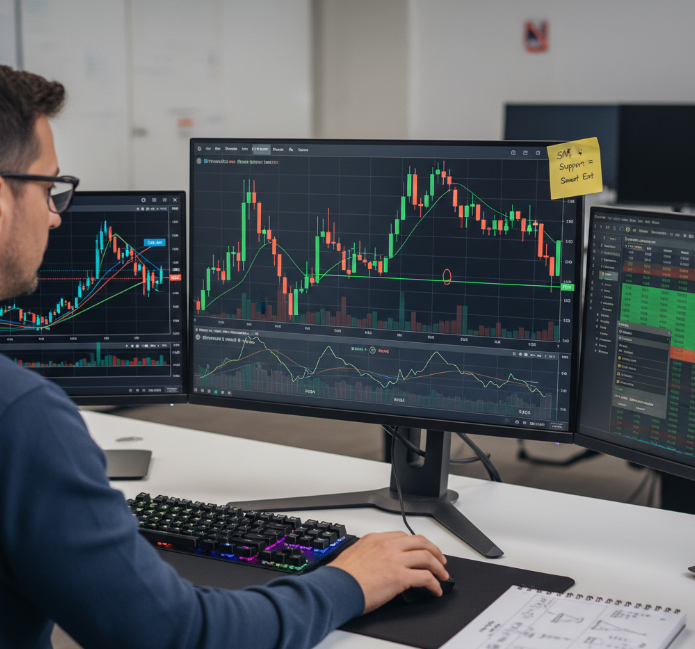
Scalping With RSI and Stochastic for Precise Timing
Timing is everything in scalping—blink and you miss the move.
Watch RSI—anything near 30 or 70 is your overbought/oversold signal.
Pair it with the Stochastic—double confirmation is your edge.
Wait for both to reverse? That’s your momentum shift.
Combine signals near support/resistance for max reliability.
Indicators don’t predict, but they sure keep you from jumping too early. Wait for the right swing, then pounce.
Using Moving Average Crossovers to Confirm Momentum
Fast or slow MAs? Both matter. Crossovers show you who’s in charge—buyers or sellers.
Simple Moving Average Crossover Comparison Table
| MA Type | Speed | Entry Signal Quality | Trend Duration |
|---|---|---|---|
| 5/20 EMA | Very Fast | High (but noisy) | Short |
| 9/21 EMA | Moderate | Balanced | Mid |
| 20/50 SMA | Slower | Clean | Longer |
Use crossovers to confirm momentum, but adjust your entry signals based on speed. Fast charts need fast MAs—don’t wait for confirmation that comes after the move is over.
Managing Exit Points with Parabolic SAR and Support Levels
Know when to get out before you're kicked out.
Use dots as trailing exit points—follow them until they flip.
Map out support levels before entering. Don’t guess where price might stall.
Always set a stop loss below structure—no emotional exits.
Take-profit? Use recent highs/lows or break zones for a clean exit.
Stack your tools: SAR + support = smart, low-stress risk management.
One good trailing stop can turn a meh trade into a banger.
Fast Market Reads: Depth of Market and Order Book Techniques
Scalpers thrive in chaos—if they know where the orders are hiding.
“You don’t react to price—you react to pressure building at the levels behind it.” — Marcel Tan, Fxbee Order Flow Strategist
Multiple short reads:
Depth of Market tells you how thick the crowd is.
Watch the for big stacked bids or spoof orders.
A shrinking bid-ask spread usually signals a breakout’s about to hit.
Quick liquidity drains? It’s either panic or a pro trap.
Reading order flow gives you real-time clarity—more edge, less guessing.
Limit vs Market Orders: Choosing Wisely Under Pressure
Market’s flying? You better not fumble your order type.
Limit order: Controls your price. Great for tight entry zones, but might not get filled.
Market order: Guarantees entry, but risk of slippage—especially during big moves.
Avoid using market orders in low liquidity zones or right after a breakout.
When it’s choppy, stick to limit orders near known price levels.
In a fast breakout with strong momentum? A market order might be your only shot.
Pick the wrong order type in a 1-minute chart, and your plan might blow up before it starts.
3 shocking reasons traders fail on the 1-minute trade chart
The 1-minute chart looks exciting—fast moves, quick wins. But most traders crash and burn here. Why? Let’s talk about the stuff nobody warns you about.
1. Unrealistic Profit Expectations and the Scalping Fantasy
Everyone’s heard a story—“Dude doubled his account in a day scalping crypto.” Sounds cool, right? But most of it’s hype, and chasing those stories leads to:
Constant overtrading temptation: You're in and out non-stop, trying to catch every blip.
Ignoring higher timeframes: You zoom so far in, you lose all market context.
Emotional decision making: Miss a trade? You jump back in without a plan—revenge trading.
Reality check: The 1-minute chart gives you lots of trade signals, but most of them are noise. If you're expecting daily home runs without proper setup, you’re setting yourself up for frustration—and a blown account.
???? "If your goal is to make $500 every day, the market will teach you a $500 lesson every day." — Derek, Fxbee Trading Analyst
2. Inadequate Risk Management Turns Tiny Mistakes Into Big Wrecks
Small chart, small trades, small risk—right? That’s what folks think. But here’s what actually happens:
Common Issues:
Stop-losses are too tight → stopped out by market noise and volatility.
No defined risk per trade → losses add up quickly.
Position sizing based on gut-feeling → not adjusted to price volatility.
Let’s break it down in a quick comparison:
| Risk Factor | 1-Min Chart Mistake | Safer 1-Min Practice | Why It Matters |
|---|---|---|---|
| Stop-Loss Distance | 3 pips random stop | ATR-based stop | Avoids getting kicked out early |
| Position Size | Fixed lot every trade | Volatility-adjusted sizing | Keeps risk % consistent |
| Risk Per Trade | 5–10% of capital | 1–2% max | Allows you to survive bad runs |
???? "Risk on the 1-minute is like driving on ice. Small slip, big crash." — Lena, Fxbee Risk Manager
3. Over-Reliance on Indicators and Ignoring Price Behavior
You’ve got Bollinger Bands, RSI, MACD, Ichimoku Cloud, and Fibonacci Retracement all stacked on one chart. Feels like you’re doing technical analysis, but really you’re just overcomplicating simple stuff.
Why this kills your edge:
You wait for “all indicators to align” → you miss the move.
You chase trades based on indicator crossovers → lagging signals in fast markets.
You forget to read candlesticks and wicks → the actual language of price.
Instead of depending on a dozen tools, zoom out mentally:
Look for patterns like Cup and Handle or Double Bottoms.
Watch how price behaves around Support and Resistance.
Use volume to confirm conviction, not a signal generator.
???? "Indicators are like seasoning. If the steak’s no good, no spice will save it." — Miguel, Fxbee Technical Strategist
1-minute charts can work—but only if you treat them with respect. No shortcuts. The real reasons traders wipe out? It's not bad luck or bad tools. It's chasing unrealistic profits, ignoring smart risk, and relying on indicators instead of understanding what the chart is really telling you.
Conclusion
So, can you trade the ? Technically, yes. Realistically? Only if you treat it like a high-speed chess game, not a slot machine. You need quick hands, a sharp eye, and a cool head. If you’re chasing thrill, you’ll burn out fast. But with a plan? That’s a whole different story.
Before you jump in, ask yourself:
Can you manage risk like a pro, even under pressure?
Do you actually trust your setups—or just hope they work?
Are you trading what you see, not what you feel?
Got a plan for when stuff goes sideways?
If you’re nodding along, great. But even the sharpest scalpers started small. As trading legend Paul Tudor Jones once said, “Don't focus on making money; focus on protecting what you have.” Start by backtesting your 1-minute trade chart setups, track your results, and build slow. This game isn’t about speed—it’s about staying in it.
References
[Scalping Strategies: Mastering Quick Profits in the Market - https://www.investopedia.com/articles/trading/05/scalping.asp]
[What is the Average True Range (ATR) indicator and how do you trade with it? - ]
[Oscillators: MACD, RSI, Stochastics - ]
[Economic Calendar - ]
[Understanding Bollinger Bands: A Key Technical Analysis Tool - https://www.investopedia.com/terms/b/bollingerbands.asp]
[ADX: The Trend Strength Indicator - https://www.investopedia.com/articles/trading/07/adx-trend-indicator.asp]
[Advanced Day Trading Strategies Using Volume Profile - ]
[What Is the Ichimoku Cloud Technical Analysis Indicator? - https://www.investopedia.com/terms/i/ichimoku-cloud.asp]
[What Are Fibonacci Retracement Levels, and What Do They Tell You? - https://www.investopedia.com/terms/f/fibonacciretracement.asp]
[16 Candlestick Patterns Every Trader Should Know - ]
[Parabolic SAR - ]
[Depth of Market (DOM) Definition - https://www.investopedia.com/terms/d/depth-of-market.asp]
[Depth of Market (DOM): What It Is and How Traders Can Use It - ]
[1-Minute Scalping Trading Strategies with Examples -
FAQ
Moving Average – Helps show short-term direction
RSI – Spots quick overbought or oversold moves
MACD – Shows when momentum is fading
Stochastic – Helps time fast entries
Bollinger Bands – Marks price extremes
It moves fast, which can be stressful. Without strong chart-reading skills or quick reaction times, it’s easy to make mistakes. New traders may be better off starting with slower timeframes.
Use ADX to check if the trend is strong
Avoid quiet markets using a screener or heatmap
Wait for volume to confirm signals
Combine patterns like double bottoms with candles
Stay out during major news times
1-minute charts move fast and suit short trades. 5-minute charts are steadier and give more time to react. Some patterns, like triangles or flags, are easier to spot on the 5-minute.
Use ATR to set stop-losses
Keep take-profit targets small and realistic
Adjust size based on chart speed
Don’t trade during big news
Limit how many trades you take
Quick moves can cause emotional decisions. Some ignore important signals like a Doji or Engulfing candle. Many trade without a plan or take too many trades in a row.
Flags and Pennants – Good for quick breakouts
Engulfing candles – Spot strong moves
Doji or Hammer – Show hesitation or reversals
Double Tops – Confirmed by volume
Cup and Handle – Better on slower charts
You can, but it's risky. Price can jump fast in both directions. Watch the calendar, know the event, and be ready with clear entry and exit rules.
Forex pairs like EUR/USD – Steady flow
Index futures – Active with good liquidity
Big tech stocks – Move well with volume
Gold – Smooth and technical
Crypto – Fast but risky, use tight stops
It shows where buyers and sellers are waiting. This helps you spot hidden support or resistance, which can guide your entries and exits better than just watching price alone.