
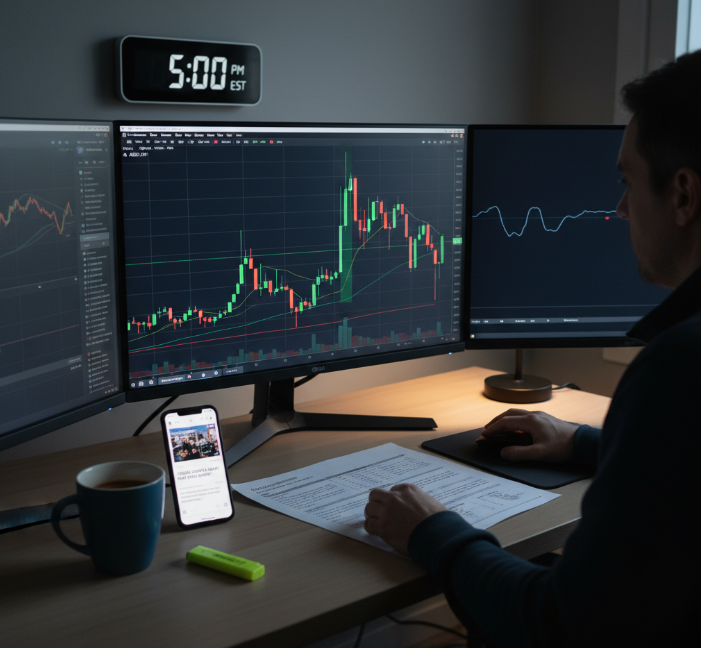
: where low liquidity meets high tension and the brave (or prepared) start sketching their week's trading playbook. If you're tracking forex trading hours, this moment isn’t just a time—it’s a signal.
What Time Does the Forex Market Open?
The forex trading hours don’t follow your typical Wall Street schedule. Let’s break down when and why things kick off around the globe.
Understanding the Global Forex Market Opening Times
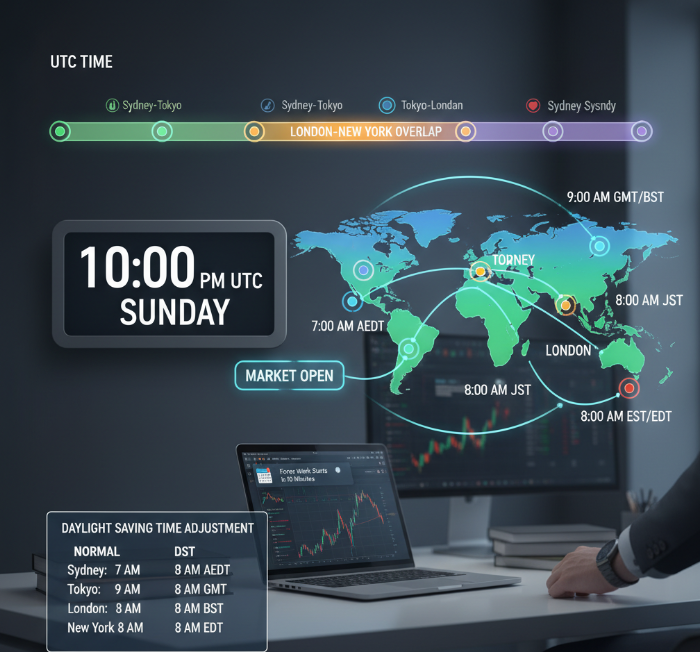
Sydney open: Sunday, around 10 PM UTC
Tokyo open: Monday, around midnight UTC
London open: Monday, around 8 AM UTC
New York open: Monday, around 1 PM UTC
Each of these major financial centers marks a key part of the global trading hours, and because they’re spread across different time zones, the market stays open continuously from Sunday night to Friday evening. These overlapping sessions—especially between —are where most action happens. And since there’s no centralized exchange, forex never really “closes” until Friday winds down.
Factors Influencing Market Opening Hours
● The world doesn’t spin on one clock. Different time zones, driven by each region's geographical location, determine when banks and institutions start their day.
● Big hitters like international banks and major financial centers influence liquidity right from their local morning bell.
● Weekends? Forget about it—most brokers shut down late Friday and only resume Sunday evening due to low volume and risk.
● can throw a wrench into expected activity. If London or New York is closed for business, expect slower moves.
According to data from its 2022 Triennial Survey, about $7.5 trillion flows through FX markets on an average day—timing that flow can make or break trades during specific windows of activity.
The Impact of on Forex Opening Hours
When clocks spring forward or fall back, so do your trading charts. The shift affects not just your sleep but also the overlap between major sessions like London open and New York open. This throws off synchronization for traders who aren’t watching closely.
Here’s how it plays out:
| Region | Normal Session Start | DST Adjusted Start | DST Period |
|---|---|---|---|
| Sydney | Sun @10 PM UTC | Sun @9 PM UTC | Oct–Apr |
| Tokyo | Mon @12 AM UTC | No change | N/A |
| London | Mon @8 AM UTC | Mon @7 AM UTC | Mar–Oct |
| New York | Mon @1 PM UTC | Mon @12 PM UTC | Mar–Nov |
Some brokers adjust automatically; others don’t. That means if you’re relying on fixed times without checking for seasonal shifts—or broker notices—you might miss prime setups entirely during volatile overlaps caused by DST changes.
As notes, trading hours can change during daylight saving time and certain public holidays—so it pays to re-check session timing whenever clocks shift.
Understanding Forex Trading Hours: A Comprehensive Guide
Here’s your go-to breakdown on how forex trading hours impact market moves, tools, and timing tricks.
The Overlapping Sessions: What It Means for Traders
When Forex sessions overlap—like the London session meeting the New York session—traders see fireworks. Why? That’s when the market’s wide awake.
More traders = more action = more liquidity
Higher activity means tighter spread costs
Volatility spikes, giving scalpers golden chances
For those chasing movement, these overlaps are prime time to trade big pairs like EUR/USD or GBP/USD. Just be cautious: high volatility can cut both ways.
How Economic Calendar Events Affect Trading Hours
Big headlines shake things up fast. If you’re watching an , here’s what to keep tabs on:
Central bank rate decisions can cause sudden price jumps.
Key reports like non-farm payrolls, GDP, or inflation numbers spike volume.
These events often hit during major session openings, especially London and New York.
Smart traders plan around these releases—sometimes even sitting out until the dust settles.
Trading Platform Recommendations for Optimal Timing: MetaTrader vs. cTrader
Choosing between top-tier platforms like MetaTrader 5 or cTrader? Depends on how you roll with your trades.
• Want powerful indicators and expert advisors? Go with MetaTrader—it shines at automated setups during high-volume periods like the London/New York overlap. • Prefer sleek design and ultra-fast execution speed? cTrader delivers, especially useful when trading volatile currency pairs during economic releases.
Both offer real-time charting tools that help you ride the rhythm of global markets across all four major sessions—Tokyo, Sydney, London, and New York.
Key Trading Terms Related to Forex Hours: Leverage Ratio, Spread Cost
Let’s break down some core lingo that’ll help make sense of different forex time zones:
| Term | Definition | Impact During Active Hours | Best Practice |
|---|---|---|---|
| Leverage ratio | Borrowed capital used to amplify trades | Amplifies gains/losses during volatility | Use cautiously during peak liquidity |
| Spread cost | Difference between bid and ask prices | Narrows when liquidity is high | Trade during overlaps for tighter spreads |
| Pips | Smallest price move a currency pair can make | More pips = more profit potential | Monitor pip value by currency pair |
| Stop-loss | Pre-set level where trade auto-closes if it goes wrong | Crucial when news drops unexpectedly | Always set it—especially before events |
Timing your trades based on these terms—and knowing how they behave across different forex trading hours—is half the game won.
EasyCashBackFx Tip-Off
Want while working those charts? EasyCashBackFx lets you earn rebates every time you trade—even when you're just testing waters during quieter Asian sessions or going full throttle at London open.
Specific Forex Trading Hours for Major Currency Pairs
Timing is everything in trading. Let’s break down the best forex trading hours for top currency pairs and how to catch them when they’re most alive.

Trading hours for EUR/USD: Maximizing Opportunities
• The EUR/USD pair comes alive when London wakes up and New York kicks off. • Expect tight spreads, juicy liquidity, and solid momentum during these overlapping sessions. • Best time window? 8 AM to noon EST — that’s the sweet spot.
High volume = higher chance of catching trends early.
News drops from both US and EU drive volatility here.
???? Pro tip: Avoid late Asian session; it gets sluggish with wider spreads.
The EUR/USD isn’t just popular — it’s reliable during active market overlaps, especially when major economic reports are flying in from either side of the Atlantic.
GBP/JPY: Best Trading Hours for Higher Volatility
The GBP/JPY pair is known for its wild swings, especially when London opens at 3 AM EST.
From 3 AM to 11 AM EST, you’ll see sharper moves thanks to economic news from both regions.
Tokyo-London overlap (3–4 AM EST) adds extra punch due to dual liquidity streams.
is widely considered a high-volatility pair, and major UK/Japan data and central-bank decisions can amplify swings.
Quick bursts of price action make this pair ideal for scalpers chasing fast pips — but don’t forget your stop-losses because this beast bites back hard!
Opening and Closing Times for AUD/USD: An Overview
Grouped by session:
Sydney Session:
Opens at 5 PM EST
Early movement driven by Aussie economic releases
Tokyo Session:
Starts around 7 PM EST
Adds liquidity and stabilizes direction
New York Session:
Lower volume post-lunch; avoid unless news hits
Best trades on AUD/USD? Usually between 6 PM and midnight EST — that’s where price discovery happens before things cool off into the European morning lull.
USD/CHF: Key Times for Strategic Trading
Here’s a quick reference table showing optimal trade windows based on average pip movement:
| Time (EST) | Avg Pip Range | Liquidity Level | Best Strategy |
|---|---|---|---|
| 2–4 AM | Low | Low | Avoid |
| 4–8 AM | Moderate | Building | Pre-breakout setups |
| 8–12 PM | High | Peak | Trend following |
| After 1 PM | Declining | Low | Exit or scale out |
When trading USD/CHF, align your entries with Swiss or US data releases — think SNB policy statements or NFPs. It’s not flashy, but it respects fundamentals like clockwork.
The Role of Market Sessions in Trading Timing
Let’s break this down into bite-sized insights:
• London session brings heat — high volatility across majors like GBP/JPY, EUR/USD, etc. • New York session follows suit with big news drops and deep liquidity pools. • Overlaps are goldmines — most notably London/New York (8 AM–12 PM EST).
Timing your trades around these sessions means more action, better spreads, tighter execution, and fewer fakeouts.
And hey, if you’re looking to stack while timing those perfect entries during prime forex trading hours, EasyCashBackFx has your back without eating into your profits.
Key Takeaways on Forex Trading Hours Explained
Short on time but want to get smart about forex trading hours? This is your go-to guide—quick, real, and packed with things that actually matter.
Critical Lessons on Sunday Forex Trading Times
• Sunday opening kicks off the global market week at 5 PM EST when the Sydney session lights up. But don’t expect fireworks—liquidity’s thin and spreads can be brutal. • The Wellington session, though quieter, still influences early pricing. Weekend news often triggers what traders call a “gap”—a price jump you didn’t see coming. • If you're plotting trades during these hours, keep your eyes peeled for sudden volatility, and maybe skip placing large orders until volume picks up.
As explains, retail trading typically ends around 5 p.m. ET Friday and reopens around 5 p.m. ET Sunday—so liquidity can be thin and weekend gaps can affect fills.
How to Use Trading Indicators for Hourly Analysis: Moving Average vs. Bollinger Bands
The Moving Average smooths out price action so you can spot trends without all that noise.
On the flip side, Bollinger Bands stretch and squeeze based on volatility, showing when prices might snap back or break out.
Together? They’re a killer combo—trend + volatility = smarter entries.
???? Many pros use both during active market sessions like London or New York open, where hourly shifts are more telling than daily charts.
| Indicator | Measures | Best Time Frame | Signal Type |
|---|---|---|---|
| Moving Average | Trend direction | 1H–4H | Crossover |
| Bollinger Bands | Volatility | 15M–1H | Band breach |
| RSI (bonus pick) | Momentum | 1H | Overbought/Oversold |
Don’t just slap them on your chart—test how they behave in different sessions of the day before relying on them.
Understanding Order Types: What to Consider for Timed Trades
• A market order gets you in immediately—but not always at the price you wanted, especially during high-volatility hours like London open. • A limit order waits until price hits your sweet spot—but there’s no guarantee it’ll execute. • Smart traders use a combo of pending orders (like stop and limit) with tight risk controls during peak times.
➡️ During choppy Asian sessions or right after the Sunday reopen, consider using a stop-loss order to cut losses if things go sideways fast.
???? Execution strategy matters too:
In low liquidity periods like Sunday night, avoid big positions.
During overlapping sessions (London/New York), expect better fills but faster moves—so set those stops wisely.
Knowing your tools—and when to use each—is half the battle in mastering daily rhythms of forex trading hours.
What Investors Need to Know About Sunday Forex Trading
Sunday night kicks off the action—if you’re in forex, timing and prep can make or break your week.

Market Opens Sunday Evening: Timing Implications
Forex market open begins at 5 PM EST on Sunday, launching with the Sydney session, followed closely by New Zealand session activity.
Liquidity is thin during early hours; market timing here often results in wider spreads and slower execution.
Traders should be cautious of slippage due to lack of volume—especially during pairs involving AUD, NZD, and JPY.
The overlap between Sydney and Tokyo sessions brings more movement but still lacks the punch of London or New York hours.
Smart traders avoid large positions until momentum builds with European entry on Monday morning.
Algorithms and bots often dominate early trades, so human traders should wait out erratic price action caused by low liquidity.
If you're watching forex trading hours, remember that Sundays are less about big wins and more about positioning smartly for what’s ahead.
Why Sunday is Crucial for Preparing for the Week Ahead
Start your week like a pro by locking down your prep game.
• Scan the before markets open—key events like GDP reports or central bank speeches can shift sentiment quickly. • Review past week’s performance to refine your trading plan—what worked, what didn’t? • Evaluate global news over the weekend that might impact currencies—geopolitical shifts don’t take days off.
Identify high-impact events scheduled Monday through Wednesday using tools like Forex Factory or DailyFX.
Align those with current technical setups on major currency pairs.
Adjust risk exposure based on expected volatility from known events.
➤ Keep tabs on trader sentiment across forums or platforms like to gauge crowd positioning.
Remember, prepping on Sunday isn’t just about charts—it’s about understanding how upcoming data may influence market sentiment, especially when it comes to USD crosses.
How Interest Rate Decisions Can Affect Sunday Trading
Interest rate decisions rarely happen over weekends—but expectations around them absolutely stir things up right when markets reopen on Sunday evening. Traders often react not just to actual hikes or cuts but also to hawkish or dovish tones hinted at in prior announcements.
For example, a recent Federal Reserve meeting signaling a potential hike—even if weeks away—can cause immediate ripples across USD-based pairs as soon as Tokyo opens shop late Sunday U.S. time. This effect is magnified when paired with surprise inflation data released late Friday or leaked over the weekend.
Tools like the can help you track how markets are pricing upcoming rate decisions—useful context to keep in mind when trading right after the Sunday reopen.
The influence of these decisions extends beyond direct currency impact—they shape broader expectations around yields and capital flows too.
Trading Strategies for the First Week's Volatility
Here’s how savvy traders ride out that shaky start-of-week energy:
Step 1: Watch opening gaps closely—these often signal where sentiment stands after a weekend pause in liquidity-heavy news cycles.
Step 2: Use tight stop-loss orders when entering trades within two hours of market open; spreads are wide and reversals common due to algorithmic noise.
Step 3: Focus on breakout setups only after confirmation candles form post-Tokyo session; fake-outs are rampant early on Sundays.
Step 4: Position sizing matters more than ever—keep lots small until London opens and real volume shows up mid-Monday UTC time.
Step 5: Consider fading extreme moves if no new information supports them; many times these spikes reverse once liquidity returns fully Monday morning.
By treating early-week trading as an opportunity instead of a trap—and respecting volatile behavior—you’ll survive those first few hours without blowing up your account chasing shadows during unpredictable parts of global forex trading hours.
References
OANDA – Forex & Crypto Trading Hours Of Operation (US) -
AvaTrade – Forex Trading Sessions (DST overlaps) -
BabyPips – Forex Market Hours -
Bank for International Settlements – OTC foreign exchange turnover in April 2022 -
CME Group – CME FedWatch Tool -
DailyFX – Economic Calendar - https://www.dailyfx.com/economic-calendar
Dukascopy – The 10 Most Volatile Forex Pairs -
Forex Factory – Calendar - https://www.forexfactory.com/calendar
FXCM – How Do Orders Execute Over The Weekend? -
Investopedia – Forex Market Hours: Can You Trade 7 Days a Week? - https://www.investopedia.com/terms/forex/f/forex-market-trading-hours.asp
Myfxbook - https://www.myfxbook.com/
OANDA – Forex Trading Sessions & Best Times to Trade -
FAQ
What are the main global forex trading hours and sessions?
Trading feels alive across four key pulses:
Sydney session opens Sunday evening — calmer, favoring AUD/USD trades.
Tokyo session lights up Asian pairs like USD/JPY with measured swings.
London session peaks in liquidity for EUR/USD and GBP/JPY, spreads often tighten here.
New York session overlaps London, sparking sharper volatility in USD-based trades.
How does daylight saving time affect trading rhythm?
A clock shift changes the dance between London session and New York session overlap — sometimes making EUR/USD or USD/CHF tighter on spread cost, other times stretching it apart; traders on MetaTrader 4 or cTrader platform adjust timing to catch this altered heartbeat.
Why is the London–New York overlap so electrifying for traders?
When these two giants breathe at once: liquidity surges, pip value moves quicker; EUR/USD can turn on a dime, GBP/JPY leaps into action; execution speed matters most — MetaTrader 5 shows combined RSI indicator + Moving Average signals vividly during this window.
Which economic events stir markets during peak hours?
The buzz rises around:
Interest rate decision sways USD/CAD sharply.
GDP growth rate fuels confidence or doubt in European flows.
Inflation rate data jolts volatility level mid-session.
Unemployment rate report breaks quiet mornings wide open.
On TradingView platform’s calendar, each event feels like a tide change under your feet.
When is the most active moment to trade EUR/USD?
Best felt within that golden stretch when London shakes hands with New York — orders fly as Spread cost narrows dramatically; day traders eye Fibonacci retracement points while keeping Stop-loss order ready for unexpected surges driven by consumer confidence index news.
How do order types protect you amid sudden volatility spikes?
Think of them like gear shifts: Market order gets you in instantly (but mind margin requirement under tight deadlines), Limit order waits at your chosen price line marked by Bollinger Bands support/resistance zones; Stop-loss order shields against harsh turns right after an interest rate decision hits live screens via Interactive Brokers feed.