
Forex Trading with $10K isn’t a lottery ticket; it’s a discipline game. Most traders learn that the hard way.
Daily gains hover near one percent when risk stays sane and costs behave.
In 2025 briefings, Fxbee executives stress execution speed, tight spreads, and disciplined risk controls for consistent client performance.
Typical Daily Returns With $10K Forex Trading Accounts
Running a $10K account in Forex Trading sounds flashy, but real talk—it’s about steady math, not hype. In the Forex market, daily returns depend on discipline, timing, and clean risk control.
Overview of Average Daily Forex Gains
For most day traders, realistic daily returns sit between 0.5% and 2%. That shapes true average gains inside active trading accounts.
Core performance drivers:
Spread
Slippage
Win rate
Risk-to-reward ratio
Trade frequency
Position sizing
Profit potential
Performance metrics
Cost factors
Within Forex Trading, a 1% move on $10,000 equals $100. Stack that across 20 solid trading days and you see how currency trading builds momentum. Platforms like Fxbee help track these metrics in real time, keeping Forex trading decisions grounded instead of emotional.
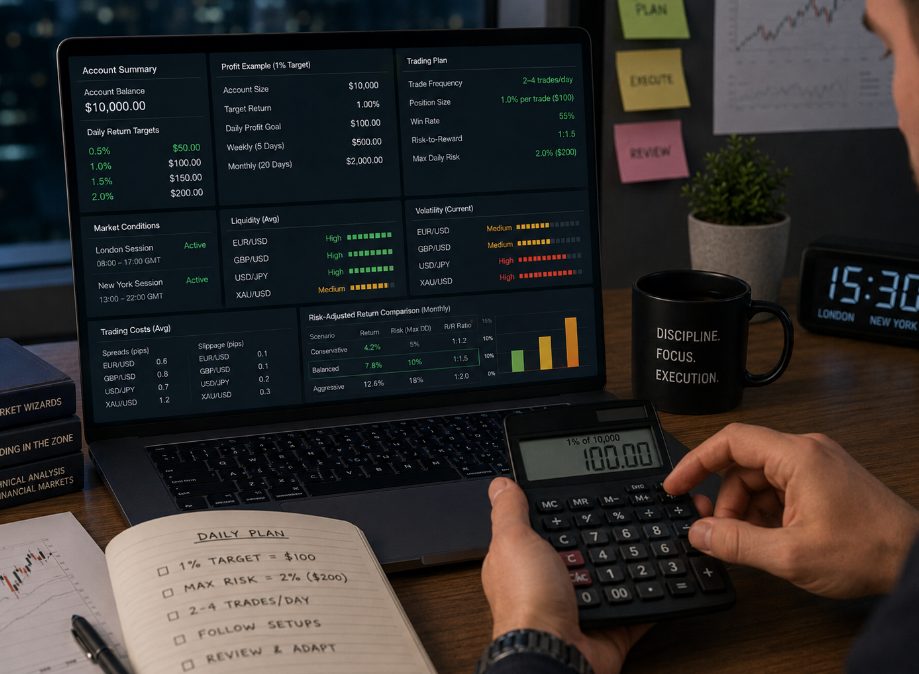
Benchmarking Returns Across Major Trading Sessions
Not all trading sessions move alike.
London & New York overlap
Higher liquidity
Sharper volatility
Stronger session performance
Asian market hours
Tighter ranges
Slower return comparison
Calmer tone across global markets
In Forex trading, session choice can shift outcomes. Many Forex Trading strategies on Fxbee focus on overlap periods where movement supports short-term currency trading setups.
Comparing Risk-Adjusted versus Nominal Profits
Here’s the breakdown traders actually care about:
Nominal profit = raw dollar gain.
Risk-adjusted return = gain relative to drawdown.
Smart risk management protects capital preservation.
• High profit with wild swings isn’t solid performance evaluation.
Short wins feel great. Big drawdowns don’t. A balanced trading strategy inside Forex Trading keeps profit comparison honest and sustainable.
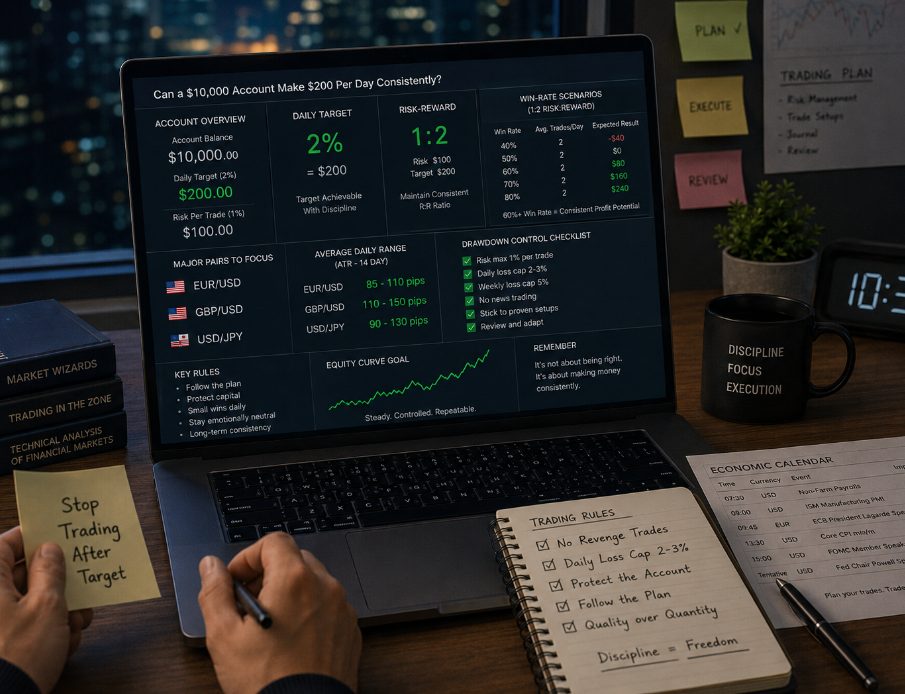
Can Forex Trading Deliver Consistent $200 Days?
Making $200 a day from Forex Trading sounds simple on paper. In real life, forex trading mixes math, mood, and market speed. Let’s break down what daily trading forex really demands.
Probability of Hitting a $200 Target Each Session
Reaching a fixed target each session in Forex Trading depends on measurable factors inside your trading plan.
Account and Return Math
1.1 Capital Base
1.2 Statistical Pressure
Higher variance
Lower consistency
Risk 1% per trade
Need minimum 1:2 risk-reward
At 50% win rate
At 40% win rate
$10,000 account
$200 daily goal
Required 2% profit per session
Volatility and Market Conditions
| Pair | Avg Daily Range (pips) | 2% Target Feasibility |
|---|---|---|
| EUR/USD | 60–80 | Moderate |
| GBP/USD | 80–110 | Higher |
| USD/JPY | 50–70 | Moderate |
Realistic Probability Drivers
Structured forex trading plan
Controlled lot sizing
Limiting trades per session
In short, the math works. The behavior part is harder. Consistency in currency trading isn’t magic; it’s disciplined repetition.
Strategies to Sustain $200-Day Performance
Keeping that $200 daily profit flowing in Forex Trading calls for repeatable strategies, not hype.
Core Methods:
Trade during London/New York overlap for tighter spreads.
Maintain minimum 1:2 risk-reward.
Stop trading after hitting the target.
Setup Selection
Focus on breakout + pullback models in active forex pairs. Clean structure beats random entries.
Performance Tracking
Track:
Win rate
Average profit
Maximum intraday drawdown
Platform Edge
Tools matter. Many active traders use Fxbee to monitor volatility, manage capital, and stay aligned with real-time trading conditions without overcomplicating things.
According to the 2025 Triennial Central Bank Survey, global FX turnover reached $9.6 trillion per day in April 2025, highlighting deep liquidity but also intense competition in short-term forex markets.
Liquidity is huge. Still, personal performance depends on sticking to rules, not chasing candles.
Drawdown Management on High-Profit Days
Big green days in Forex Trading can flip fast if drawdown management is weak.
After Hitting the $200 Target
1.1 Lock the Gain
1.2 Emotional Control
No revenge trades
No “just one more” setups
Reduce position size by 50%
Or stop trading completely
Volatility Awareness
2.1 News Windows
2.2 Capital Protection
Cap daily loss at 2–3%
Never risk entire capital on one idea
High-impact releases can spike volatility
Spread widening eats profit
Long-Term Consistency Rules
Weekly review of trading stats
Monthly equity curve check
Reduce size after 3 losing days
Smart risk control keeps high-profit sessions from turning red. In currency trading, survival builds steady income. And that’s how Forex Trading even has a shot at delivering consistent $200 days.
5 Factors That Determine Daily Trading Profits
Forex Trading isn’t just about catching a lucky move. In Forex markets, small details stack up fast. A solid trading routine, smart risk control, and calm thinking often matter more than flashy wins. If you’re into currency trading or active FX trading, these five factors quietly shape your daily results.
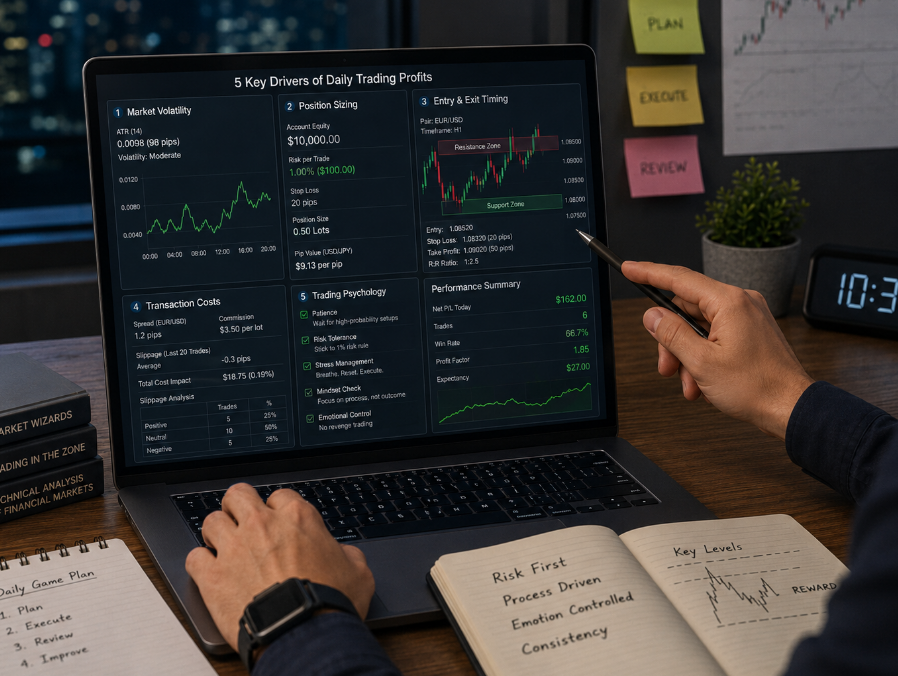
Market Volatility Levels
In Forex Trading, profit potential rises with stronger market movement and wider price fluctuations, yet risk climbs just as quickly.
Market Conditions
Weak trend
Strong directional bias
Narrow range
Lower breakout probability
Tighter stops required
Wide range
Higher breakout probability
Larger stop-loss distance
Trading range
Trend strength
Drivers of Volatility
Central bank rate decisions
Geopolitical shocks
Inflation reports
Employment numbers
Economic data
News events
Volatility index
Market sentiment
Active Forex traders often adjust stop levels based on recent price fluctuations and overall market sentiment. When volatility spikes, position exposure usually shrinks to keep drawdown in check.
Position Sizing Strategies
Smart capital allocation keeps Forex Trading accounts alive.
Define account equity before each session.
Set fixed risk management rules (often 1–2% per trade).
Calculate trade size using stop distance and pip value.
Monitor leverage use carefully.
Align profit targets with acceptable risk.
Nested inside this logic:
Risk Control
Stop-loss placement
Position scaling
Growth Logic
Compounding gains
Portfolio diversification
In currency trading, oversizing one position can wipe out a week of steady gains. Consistent sizing builds smoother equity curves.
Entry and Exit Timing
Clean timing often separates random trading from professional Forex Trading.
Trade signals
Chart patterns
Support resistance
Momentum indicators
Based on technical analysis
Execution Layer
Order execution
Liquidity at market open
Volatility near market close
Many Forex traders wait for confirmation near support resistance zones before committing capital. Exits are planned ahead, not improvised. Tight timing reduces slippage and emotional second-guessing.
Trading Cost Considerations
Even solid Forex Trading setups lose edge when transaction costs pile up. Below is a simplified comparison showing how costs impact net return in active FX trading.
| Trade Type | Avg Spread (pips) | Commission ($) | Slippage (pips) | Net Cost per Lot ($) |
|---|---|---|---|---|
| Major Pair Low Vol | 0.8 | 7 | 0.2 | 15 |
| Major Pair High Vol | 1.5 | 7 | 0.5 | 27 |
| Minor Pair | 2.0 | 8 | 0.6 | 38 |
| News Event Trade | 3.5 | 7 | 1.2 | 62 |
| Overnight Position | 1.2 | 7 | 0.3 | 22 + swap |
Key cost components:
Brokerage fees
Commission rates
Slippage impact
Tax implications
Frequent Forex traders feel these costs daily. Lower friction means more of the move stays in your pocket.
Emotional Discipline and Mindset
Forex Trading looks technical on the surface, yet trading psychology often decides the outcome.
Internal Factors
Risk tolerance
Fear management
Greed control
Behavioral Habits
Patience during slow sessions
Clear decision making
Strong stress management
A rough loss can push revenge trades. A big win can trigger overconfidence. Staying steady keeps performance stable. In the fast pace of Forex markets, emotional control isn’t optional—it’s survival.
4 Common Mistakes Eating Into Daily Earnings
In Forex Trading, small habits quietly drain daily gains. Many traders jump into currency trading thinking fast clicks mean fast cash. Not quite. The foreign exchange market rewards discipline, not hype. If you’re serious about trading forex for steady income, these common slip-ups deserve a hard look before your next move.
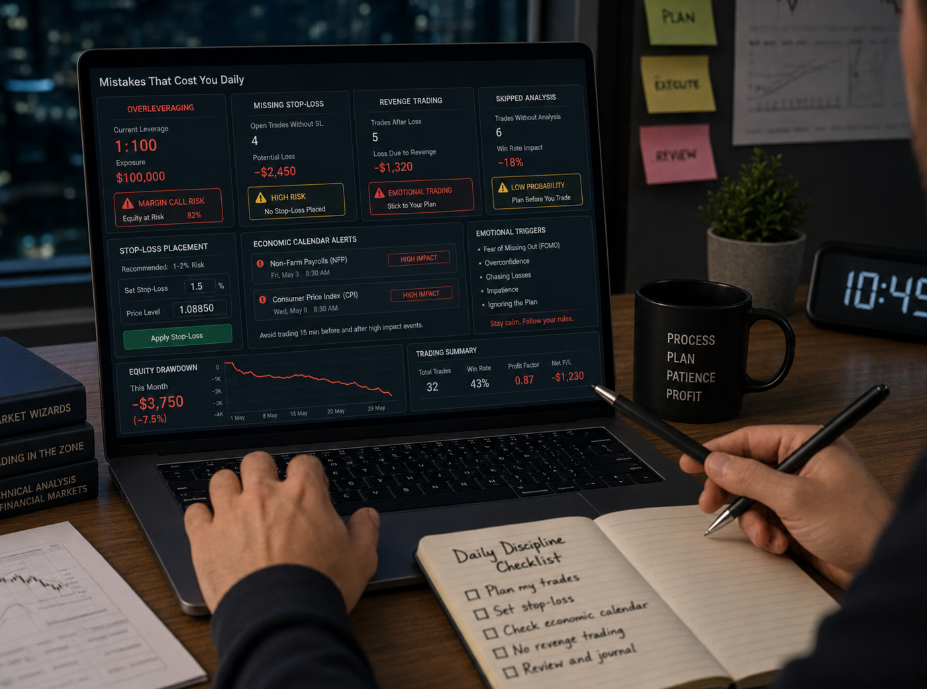
Overleveraging Positions
In Forex Trading, overleveraging feels tempting because brokers offer high ratios. Yet risk builds fast.
Capital Structure
Ratio above 1:30
Correlation across pairs
Margin allocation per trade
Free margin buffer
Base capital
Borrowed exposure
Market Volatility
Non-Farm Payrolls
CPI releases
EUR/USD daily swings
GBP/USD event spikes
Major pairs
News-driven moves
Account Impact
Margin call thresholds
Forced liquidation risk
Psychological pressure
When trading forex, a 2% move against a 1:100 position can crush an account. Many experienced foreign exchange traders keep effective exposure modest, often below 1:20, to survive rough days.
Ignoring Proper Stop-Loss Orders
Skipping a stop-loss order in Forex Trading is like driving without brakes. You might be fine—until you’re not.
Common excuses sound familiar:
“It’ll bounce back.”
“I’ll watch it manually.”
“Just this once.”
Here’s the reality in currency trading:
Markets react fast to economic data.
Slippage widens losses during volatility.
Small losses turn ugly without a predefined exit.
A smarter rhythm when trading forex:
Define risk per trade (1–2% of equity).
Place stop based on technical support or resistance levels.
Adjust only if structure changes, not emotions.
Platforms like Fxbee make stop placement straightforward, helping Forex Trading stay rule-based instead of mood-based.
Chasing Losing Trades Impulsively
Revenge trading is brutal in the foreign exchange market.
Emotional Trigger
Loss frustration
Desire to recover fast
Fear of missing out
Behavior Pattern
Adding to losing positions
Increasing lot size
Ignoring original plan
Compounding Damage
Higher drawdown
Margin stress
Clouded judgment
In Forex Trading, adding to a loser without strategy isn’t smart scaling; it’s emotional doubling down. Consistent currency trading means accepting small losses as business costs, not personal insults.
Neglecting Ongoing Market Analysis
Forex Trading runs on information. Skip analysis, and you trade blind.
Macro Layer
Federal Reserve rate decisions
ECB statements
Central bank policy
Inflation trends
Technical Layer
Trend direction
Volume behavior
Key breakout zones
Event Risk Snapshot
| Event Type | Avg Volatility (pips) | Frequency/Month | Risk Level |
|---|---|---|---|
| NFP Release | 80–120 | 1 | High |
| CPI Data | 40–70 | 1–2 | Medium |
| Interest Rate Decision | 60–150 | 1 | High |
Ignoring this in Forex Trading often wipes out steady gains. Solid trading forex routines include checking calendars daily, updating charts weekly, and reviewing performance monthly. Serious traders using Fxbee tools often build analysis into their daily workflow, keeping foreign exchange decisions grounded instead of random.
Leverage Levels And Their Impact On Daily Profits
Forex Trading sounds exciting, and yeah, it can be. But once you step into currency trading, the real game is how you handle leverage in the FX market. In online Forex Trading, small moves can feel huge. This part breaks down how leverage shapes profits, losses, and daily trading decisions in a way that actually makes sense.
How 1:50 Leverage Amplifies Gains and Losses
In Forex Trading, a leverage ratio of 1:50 means your trading capital controls fifty times its size. That changes everything in foreign exchange trading.
Impact on exposure
Higher market exposure with the same account equity
Lower upfront margin requirements
Faster swings in floating P/L
Profit and loss dynamics
A 1% move can sharply increase potential profit
The same 1% move can expand potential loss
Rising volatility magnifies both outcomes
Account implications
Equity drops affect usable margin
Drawdowns tighten flexibility
Emotional pressure rises in active Forex trading
At Fxbee, traders in Forex Trading are reminded that bigger position size isn’t free money; it’s amplified responsibility in the FX market.
Choosing Leverage for Different Currency Pairs
Not all currency pairs behave the same in Forex Trading.
Major pairs like EUR/USD usually offer deep liquidity and steadier market volatility. That often supports moderate exposure in currency trading. Exotic pairs, on the other hand, can show wider spreads and sharp reactions to economic indicators.
Quick checks before deciding:
Review current margin levels.
Match the choice with your trading strategy.
Be honest about your risk appetite.
Watch pair correlation to avoid stacking similar risks.
BIS 2025 Triennial Survey data showed elevated FX volatility and a surge in trading activity following trade policy announcements in early April 2025.
That’s why many Forex Trading pros adjust exposure pair by pair instead of using one fixed setting. Fxbee tools help traders compare volatility data directly inside their trading platform.
Risk Management at High Leverage Ratios
High ratios in Forex Trading demand tight risk control. No shortcuts.
Core protection layer
Clear position sizing rules
Pre-set stop-loss orders
Defined daily loss caps
Margin safety
Monitor for margin calls
Track free margin daily
Avoid overloading correlated trades
Discipline framework
Follow written trading discipline rules
Base entries on solid market analysis
Focus on long-term capital preservation
In Forex Trading and foreign exchange trading alike, survival beats quick wins. Fxbee encourages traders to treat account protection as the main goal. Profits follow when the account stays alive.
Scenario: Turning $10K Into $12K In A Week
Forex Trading sounds simple when someone says “just make 20%,” but in real life, trading forex at that pace means tight control over risk, position size, and mindset. This week-long breakdown shows how Forex Trading, smart currency trading decisions, and steady forex trade execution can push a $10K account toward $12K—without gambling the whole account.
Day-by-Day Profit Breakdown
In Forex Trading, weekly performance is built one trading day at a time. Here’s how the growth trajectory unfolded.
Capital Progress Table
| Trading Day | Starting Account Balance | Daily % Gain | Daily Profit Analysis ($) | Ending Balance |
|---|---|---|---|---|
| Monday | 10,000 | 3.5% | 350 | 10,350 |
| Tuesday | 10,350 | 4.2% | 435 | 10,785 |
| Wednesday | 10,785 | 4.8% | 517 | 11,302 |
| Thursday | 11,302 | 3.9% | 441 | 11,743 |
| Friday | 11,743 | 2.2% | 257 | 12,000 |
Performance Breakdown by Structure
London open volatility.
New York overlap strength.
Maximum 1.5% risk per position.
Scale lot size as account balance grows.
Protect capital before chasing gains.
Limit exposure to high-impact news in Forex Trading.
Track every forex trade in a journal.
Daily Focus
Risk Control
Momentum Windows
Each trading result fed into the next day’s sizing. No revenge trades. No doubling down. Just structured currency trading with consistent daily profit targets. That’s how Forex Trading compounds instead of crashes.
Optimized Trade Setups for 20% Growth
Hitting a growth objective like 20% in Forex Trading demands sharp setup optimization and strict risk management.
Core Trading Strategy Framework
Minimum 1:2 risk-reward.
Partial take profit at 1R.
Trail stop once structure shifts.
Breakout above Asian range.
Retest of key support or resistance.
Confluence with 20/50 EMA alignment.
Trade only strong trend pairs.
Avoid sideways sessions with low volume.
Market Conditions Filter
Entry Criteria
Exit Strategy
Execution Checklist
Confirm macro bias before execution.
Validate liquidity sweep or momentum candle.
Place stop beyond structural level.
Capital Allocation Model
Base risk: 1% per trade.
Increase to 1.5% only after two green days.
Reduce to 0.5% after one red day.
Forex Trading at this speed isn’t random clicking. It’s calculated trade execution based on clean price action. Platforms like Fxbee help streamline order management, so forex trading decisions happen fast without sloppy entries. Clean charts. Clear rules. That’s it.
Lessons Learned from a Winning Week
Strong trading insights come from reviewing both wins and close calls in Forex Trading.
Success Factors
Cap total open risk below 4%.
Accept small losses as business cost.
Remove low-probability setups.
Stick to one or two currency pairs.
No overtrading after big wins.
No panic exits during pullbacks.
Psychological Discipline
Strategy Refinement
Risk Assessment
Performance Review Routine
Screenshot every forex trade.
Log entry logic and emotional state.
Compare planned vs actual exit.
Future Planning
Protect capital before scaling.
Gradually reduce aggression after target hit.
Maintain steady Forex Trading pace next week.
The big takeaway? A hot week in Forex Trading feels great, but elevated returns mean elevated pressure. Sustainable currency trading depends on control, not hype. Traders using tools like Fxbee often find that structured reviews and stable execution matter more than flashy gains.
Five solid days. Controlled exposure. Clear rules. That’s how Forex Trading turns $10K into $12K—without blowing up the account the week after.
References
[BIS Press Release: Global FX trading hits $9.6 trillion per day in April 2025 and OTC interest rate derivatives surge to $7.9 trillion - https://www.bis.org/press/p250930.htm]
[BIS OTC foreign exchange turnover in April 2025 - https://www.bis.org/statistics/rpfx25_fx.htm]
[CFTC Fraud Advisory: Foreign Currency Forex Fraud - https://www.cftc.gov/LearnAndProtect/AdvisoriesAndArticles/fraudadv_forex.html]
[CFTC/NASAA Investor Alert: Foreign Exchange Currency Fraud - https://www.cftc.gov/LearnAndProtect/AdvisoriesAndArticles/cftcnasaaforexalert.html]
[ESMA adopts final product intervention measures on CFDs and binary options - https://www.esma.europa.eu/press-news/esma-news/esma-adopts-final-product-intervention-measures-cfds-and-binary-options]
FAQ
How much can a $10K Forex Trading account realistically earn each day?
A $10K account can aim for controlled daily growth, but the tension sits between ambition and restraint.
Typical target range:
0.5%–2% per day
Equals $50–$200 under steady conditions
What shapes that outcome:
London & New York sessions bring stronger movement
Spread and slippage quietly trim profits
Risk per trade kept near 1% protects the account’s pulse
Push too hard for $200 every day, and pressure builds. Trade with patience, and consistency becomes more realistic than excitement.
Why is earning $200 per day consistently so difficult in Forex Trading?
Because $200 on $10K means 2% daily — and markets do not move on command.
Volatility shifts from calm to chaotic within hours
A single mistimed entry can erase two careful wins
Emotional reactions after a loss often spark revenge trades
The real struggle isn’t finding trades.
It’s staying calm when the setup almost works… but doesn’t.
Consistency demands discipline under stress, not just strategy on paper.
What factors most influence daily profits and drawdowns?
Daily results in Forex Trading are shaped by a tight chain of decisions:
Market Volatility
Wide ranges increase opportunity — and risk exposure.
Position Sizing
Small sizing keeps losses survivable; oversized trades magnify regret.
Costs & Timing
Spreads, commissions, and poor session choice quietly drain gains.
Mindset Control
Calm execution preserves equity. Impulsive clicks damage it fast.
Short-term profits attract attention.
Drawdown control earns trust — especially when the week turns rough.