
Ride the forex trading rollercoaster with confidence—master forex trading calculation to dodge margin call blues and keep profits soaring.
Ever tried to ride a rollercoaster blindfolded? That’s what forex trading feels like without nailing your forex trading calculation. You’re dealing with fractions of a cent that move billions, and one tiny misstep can flip your account faster than a pancake on Sunday morning. Most folks either overestimate their margin or underestimate the storm when market news hits—cue the margin call blues.
Some traders think they “feel” the numbers. Don't. Gut instincts are for picking ripe avocados, not managing risk in trillion-dollar markets. Knowing how position size, equity, and pip value fit together is how pros stay in the game—and sleep at night.
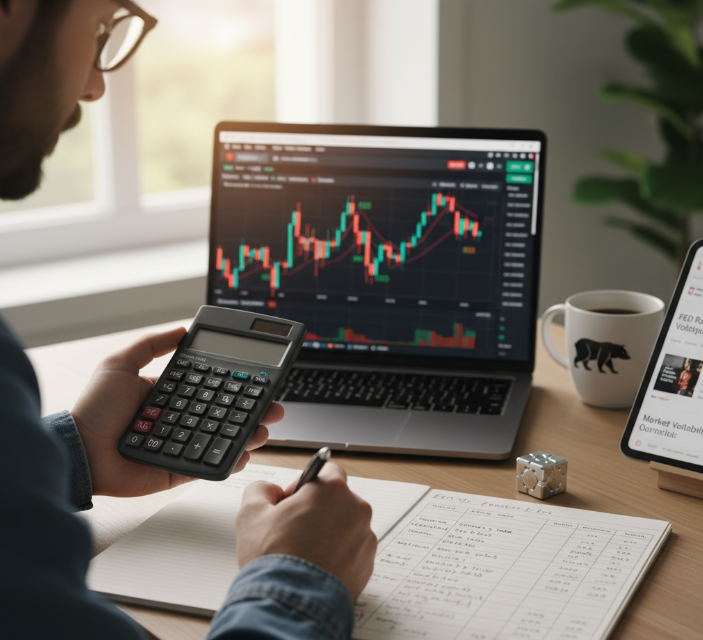
What Is Leverage In Forex Trading?
Forex trading hinges on how well you manage your buying power, especially when you're amplifying trades with borrowed funds. Here's where things can get wild — or smart — depending on how you handle the math and risk.

Understanding Leverage: Its Role in Currency Pairs
Leverage lets traders control large amounts of currency with a relatively small deposit, known as margin.
It’s like using a slingshot — small pullback, big launch — but it works both ways.
In popular currency pairs like AUD/USD or USD/JPY, leverage allows traders to open positions worth tens of thousands of dollars while only putting down a few hundred bucks.
The mechanism magnifies gains when the market moves your way, but even tiny price shifts against you can wipe out your balance fast.
Brokers offer different leverage ratios, such as 50:1 or 100:1, depending on regulations and account types. Try a regulated forex trading broker when comparing requirements.
Margin requirements vary by pair; exotic pairs often need more margin than majors like EUR/USD.
A solid grasp of forex trading calculation basics helps avoid overexposure and unnecessary liquidation risks.
How Leverage Impacts Trades with EUR/USD and GBP/USD
• Say you’re trading EUR/USD with $1,000 at 100:1 — that means controlling $100,000. Nice, right? But now every pip move is worth about $10 on a standard lot of EUR/USD, so a 50-pip swing is ~$500 up or down (see pip value).
• With GBP/USD being more volatile than EUR/USD most days, the stakes get higher. That same position could spike wildly if there's unexpected news from the Bank of England or U.S. Fed.
• Smart traders rely on calculated risk-to-reward setups before opening any leveraged trade. They don’t just wing it based on gut feel.
• Here’s where proper position sizing kicks in — knowing how much capital to commit based on stop-loss distance and pip value keeps things sane.
• Don’t forget margin calls. If your equity drops below required levels due to an adverse move in either pair, your broker might close positions automatically to protect their end (see margin call).
• So yeah, leverage sounds sweet until it turns sour without tight management strategies baked into your game plan.
The Balance Between Risk and Reward in High Leverage
Step 1: Start by identifying your risk tolerance per trade — usually no more than 1–2% of total capital for most risk-aware traders (see general leverage basics).
Step 2: Choose appropriate lot sizes that align with both your account size and chosen high leverage level; micro lots are often safer for newbies testing waters.
Step 3: Use stop-loss orders religiously to cap downside exposure before emotions take over mid-trade during volatile swings common in forex markets.
Step 4: Monitor real-time volatility indicators; if markets are choppy due to major economic releases or central bank chatter, consider scaling back exposure temporarily.
Step 5: Always calculate potential reward vs risk ratio before entering any trade using basic principles of forex trading calculation, ensuring each setup offers at least a 2:1 reward-to-risk ratio for long-term sustainability.
Understanding Margin In Forex Trading
Get a grip on how margin works in real-world forex trading calculation—it’s more than just numbers; it’s your risk buffer, your trade enabler, and sometimes, your biggest wake-up call.
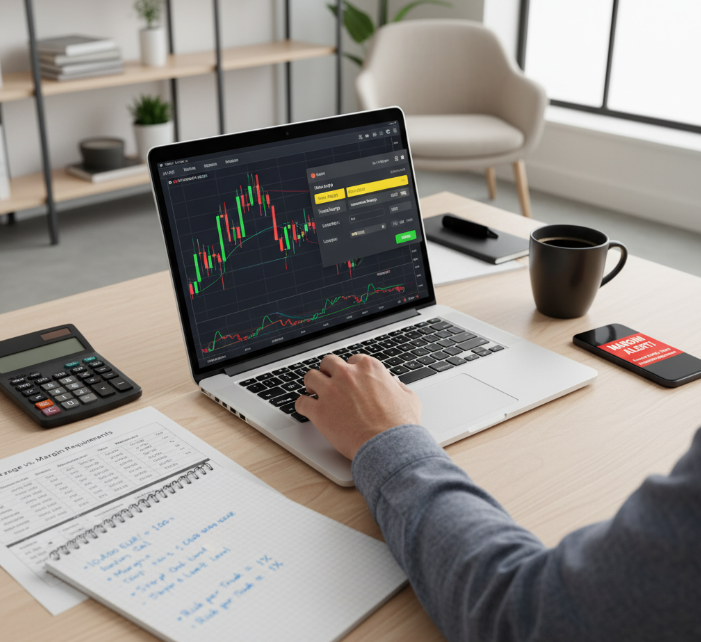
The Function of Margin in Forex Transactions
So, what does margin really do in a forex setup? It's not just a fancy finance term—it’s the safety net between your account and market chaos.
Think of it as a deposit held by your broker, not an expense. Compare options with a regulated forex broker.
It lets you open larger trades with less upfront capital, making efficient use of funds.
If you're trading EUR/USD at $100,000 but only need $1,000 due to margin requirements, that’s the power at play (100:1 leverage; example).
But here’s the catch: while margin gives you access to bigger positions, it also magnifies losses. That’s why understanding this part of your forex trading calculation is crucial if you want to avoid getting burned.
Differentiating Between Initial Margin and Maintenance Margin
When you're knee-deep in charts and pips, knowing the difference between these two types of margin can save your account from imploding:
Initial Margin
Needed to open any new trade
Acts like an entry ticket into the market
Varies depending on currency pair volatility
Maintenance Margin
Keeps existing trades alive
Automatically monitored by your broker
If it dips too low? Say hello to a possible margin call (regulators warn you may have to add funds or close positions if markets move against you — see CFTC advisory)
These thresholds are tied directly to your account's equity balance. And if you’re running multiple positions? You better stay sharp with every pip movement—it all feeds into that ongoing forex trading calculation puzzle.
How Margin Calls Affect Your Trading Strategy
A sudden dip in equity hits harder when you're overexposed—and that's when the dreaded margin call knocks on your screen. A margin call means your account equity has fallen below the required level set by the broker for maintaining open trades.
Your options?
Add more funds fast,
Or watch positions close automatically—usually not at ideal prices.
Authoritative education sources note that if the market moves against you, you may need to deposit additional funds or close positions, and losses can exceed the initial deposit (CFTC; FOREX.com).
Leverage vs. Margin: Key Differences Explained
Let’s clear up this messy confusion once and for all—because too many traders think they’re interchangeable when they're really two sides of different coins:
| Feature | Leverage | Margin | Risk Level |
|---|---|---|---|
| What It Is | Borrowed buying power | Collateral held by broker | High |
| How It Works | Amplifies exposure | Limits exposure via capital lockup | Moderate–High |
| Impact On Trades | Boosts both gains & losses | Controls position size | Depends on usage |
| Role In Calculations | Multiplier in trade sizing | Percentage requirement | Crucial in planning |
Understanding this distinction is key when running those quick-fire trade setups or long-term plays using any kind of automated system or manual strategy involving intense number crunching like proper forex trading calculations demand. One last tip? If you're serious about mastering both concepts without blowing up your account balance early on—try tools from FXBee that simplify position sizing using real-time data inputs tailored for both beginners and pros alike.
4 Key Factors Affecting Leverage Calculation
Understanding what drives smart decisions in forex trading calculation isn’t just about crunching numbers—it’s about reading the room, or rather, the market. Here’s what really shifts the gears.
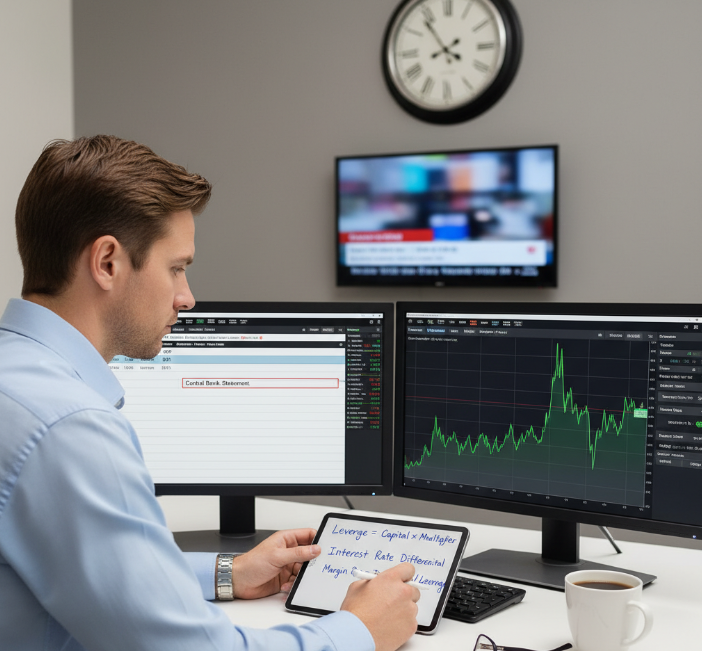
Interest Rates: Their Influence on Leverage Decisions
Interest rates directly impact how much it costs to borrow money when opening a position.
When central banks hike rates, borrowing costs go up, making high-margin positions more expensive.
Lower rates often fuel strategies like the carry trade, where traders borrow in low-rate currencies to invest in higher-yield ones.
The expected direction of a country's monetary policy can either amplify or suppress risk appetite.
A change in the global risk-free rate benchmark also alters return expectations across currency pairs.
In short, if you're not watching interest rate moves during your forex trading calculation, you’re flying blind.
The Role of Economic Calendar Events in Leverage Strategy
Economic data drops can shake things up fast:
Major reports like NFPs or CPI trigger immediate price swings.
Traders often scale down their leverage strategy ahead of such events to avoid whiplash.
Surprise outcomes from high-impact data releases can either spike profits—or wipe them out fast.
By tracking key items on the economic calendar, you dodge unnecessary risk and align your trades with market rhythm instead of fighting it.
Market Conditions: How Volatility Affects Leverage
• You’ll see wider spreads and sudden price gaps—classic signs of rising market volatility. • High volatility increases your exposure per pip move, so small mistakes cost more. • Smart traders reduce their position sizes and adjust based on current margin requirements and available liquidity levels.
If you're serious about refining your forex trading calculation, keeping tabs on overall sentiment and real-time movement is non-negotiable.
Central Bank Policy: Adjusting Leverage Expectations
Central banks don’t just tweak interest—they set the tone:
A hawkish shift from a major bank signals tighter financial conditions ahead.
Dovish tones often spark rallies in risk assets as traders anticipate looser policies.
Tools like quantitative easing, aggressive cuts, or even subtle changes in forward guidance all influence where currencies are headed—and how much heat your trades can take.
So if you’re calculating trade size without factoring in upcoming policy statements or potential currency intervention? That’s asking for trouble.
And hey—if you're looking to sharpen your edge across all these moving parts? FXBee's advanced forex trading support can make forex trading calculation faster and cleaner than going solo.
Are You Ready For High Leverage In Forex Trading?
High stakes, big wins—or losses. Before you crank up the dial, it’s time to check if high gear fits your trading engine.
Assessing Risk-Tolerance: Are You Prepared for High Leverage?
• Know your risk tolerance before diving into high-octane trades. If you're sweating over a small pip move, rethink your exposure. • A too-small account size can get wiped out fast if you’re not using tight stop-loss orders and respecting volatility. • Watch out for that dreaded margin call—it’s not just a warning; it’s a slap from the market saying you overdid it (see CFTC guidance).
Emotional readiness matters—can you handle wild swings without panic selling?
Financial readiness is non-negotiable—don’t use money earmarked for rent or bills.
Use a risk calculator to backtest how much capital you’re putting at stake with each trade.
★ If you're trading during major news releases, expect higher volatility, which means more risk—and possibly more reward.
A trader's mindset must balance confidence with caution. Jumping into high-risk positions without understanding the full scope of potential loss is like skydiving with a questionable parachute. Think twice before going all in.
Short-term euphoria doesn’t equal long-term strategy. Many traders burn out because they misjudged their psychological limits and ignored basic capital preservation tactics.
The Impact of Technical Indicators on Your Leverage Strategy
• Use technical tools like RSI, MACD, and dynamic moving averages to avoid gambling on guesswork when scaling up position sizes.
RSI helps spot overbought or oversold conditions—a critical edge when timing leveraged entries. 2) MACD crossovers can confirm momentum shifts, making your exits less emotional. 3) Combine indicators with solid knowledge of support and resistance levels to fine-tune your timing (overview of leverage concepts).
✦ Don’t forget that false signals happen often; always validate with multiple sources before adjusting leverage based on one chart pattern alone.
Leverage amplifies both profits and mistakes; using strong technical signals minimizes the latter while boosting the former through calculated entries and exits tied to real data—not gut feelings.
Scenarios Using High Leverage: Trend Following vs. Swing Trading
| Strategy Type | Ideal Timeframe | Typical Holding Period | Optimal Position Sizing |
|---|---|---|---|
| Trend Following | Daily/Weekly | Days to Weeks | Smaller lots, longer hold |
| Swing Trading | H4/Daily | Hours to Days | Medium lots, tighter SLs |
| Scalping (not ideal) | M1/M5 | Minutes | Tiny lots, ultra-tight SL |
Group A – Trend Followers:
Ride long-term moves using broader trendlines.
Rely heavily on breakouts confirmed by volume spikes.
Use low-to-medium-sized positions but hold them longer.
Need patience and discipline—not every candle matters here.
Strong focus on macroeconomic trends alongside charts.
Group B – Swing Traders:
Capitalize on shorter retracements inside larger patterns.
Prefer tight setups around Fibonacci levels or channel bounces.
Adjust position sizing dynamically based on risk-reward setups.
Require quick decision-making across volatile sessions.
Thrive in choppy markets where trends don’t last long.
In both styles, proper use of high gearing depends heavily on mastering entry points through precise calculations—especially when applying any kind of forex trading calculation method involving pip value estimations or lot sizing formulas tailored to account equity constraints and stop-loss distances. For fundamentals, review lot sizes when planning positions.
Step-by-Step Guide To Forex Trading Calculation
Mastering forex trading calculation isn't rocket science—it just takes the right steps, sharp thinking, and some solid math. Here's how to break it all down.
Step 1: Determining Position Size for USD/JPY Trades
Account balance is your starting point—know what you're working with.
Decide how much you’re cool risking per trade—typically around 1–2%.
Calculate pip value for the USD/JPY currency pair using standard formulas (a reference formula and examples are available via pip calculators).
Figure out your lot size based on risk and stop-loss distance.
Want a shortcut? Use online calculators, but always double-check with manual logic. Getting your position size right keeps emotions out and strategy in. When estimating profits, a forex profit calculator can help sanity-check your math.
Step 2: Calculating Risk-Reward Ratios in Different Scenarios
• Say you're risking 50 pips with a target of 100 pips—your risk-reward ratio is 1:2. • Aiming for higher rewards? You’ll need tighter stop losses or bigger moves. • Balance is key—too high reward may mean low win rate; too low reward might not justify the risk (see FOREX.com on leverage & margin for practical parameters).
Step 3: Using Technical Indicators for Optimal Entry Points
Short bursts of insight:
• Moving averages smooth out noise—great for spotting trends. • RSI tells you when things are overbought or oversold—a trader's early warning system. • Bollinger Bands squeeze before big moves; don’t ignore them when they tighten up.
Use these tools together—not alone—for smarter entries into trades. Combining multiple technical indicators increases confidence and filters fakeouts.
Step 4: Executing Different Order Types for Leverage Strategies
You’ve got options:
✔️ Market Orders — Fast execution, but no price control. ✔️ Limit Orders — Set your price, wait like a sniper. ✔️ Stop Orders — Protect yourself if things go south fast.
For those using margin accounts, precision matters more than speed. Match each order type to your specific leverage strategy, especially when volatility spikes during major news releases (check the economic calendar before entries).
Step 5: Evaluating Trade Outcomes — Learning from Each Calculation
Every trade leaves clues:
Did the outcome match your expected R:R?
Was the entry aligned with technical signals?
Did slippage mess up execution?
Keep a detailed trading journal, noting every result—even small wins or losses matter. Over time, patterns emerge that can refine both your math and mindset around every future forex trading calculation decision.
The more honest you are about each result, the faster you grow—and yeah, even losing trades teach loud lessons if you’re listening close enough.
References
How Leverage Works in the Forex Market — Investopedia - https://www.investopedia.com/ask/answers/06/forexleverage.asp
Understanding Forex Margin — Charles Schwab - https://www.schwab.com/learn/story/what-is-leverage-forex-trading-understanding-forex-margin
EURUSD Pip Calculator — Myfxbook - https://www.myfxbook.com/forex-calculators/pip-calculator/EURUSD
Margin Call (Glossary) — FOREX.com - https://www.forex.com/en-us/glossary/margin-call/
Trade Margins & Leverage — FOREX.com - https://www.forex.com/en-us/about-us/financial-transparency/trade-margins/
Eight Things You Should Know Before Trading Forex — CFTC - https://www.cftc.gov/LearnAndProtect/AdvisoriesAndArticles/CustomerAdvisory_MustKnowForex.html
What Is Leverage Trading? — OANDA Learn - https://www.oanda.com/us-en/learn/introduction-to-leverage-trading/what-is-leverage-trading/
Economic Calendar — FXStreet - https://www.fxstreet.com/economic-calendar
Economic Calendar — Myfxbook - https://www.myfxbook.com/forex-economic-calendar
FAQ
How does margin work in forex trading calculations?
Margin is the trader’s security deposit—small in size, crucial in consequence.
Opening a EUR/USD or USD/JPY position means setting aside a fraction of trade value as initial margin.
Maintenance margin keeps positions open during swings (e.g., GBP/USD consolidation).
A sudden adverse move may trigger a margin call—you must act quickly before equity erodes further.
Why are interest rates important before deciding your forex trading calculation strategy?
Interest rates act like tides on currency values—lifting or lowering them.
Higher rates can make carry trades more tempting (e.g., AUD/USD, NZD/USD).
Anticipated shifts tied to GDP growth and inflation feed into central-bank policy moves that ripple through sentiment.
Smart traders check the economic calendar and align orders ahead of key rate announcements.
What role does volatility play in determining suitable lot sizes for GBP/USD?
Volatility inflates potential gains—and swells risks just as fast.
Wide Bollinger Bands suggest caution; pip values can swing dramatically during trend surges or sharp reversals.
Adjusting lot size helps steady exposure when market conditions are unpredictable (e.g., GBP/USD range trading).
How do order types fit into forex trading calculation plans for beginners buying brokerage services?
Order choice shapes both pace and protection:
Market Orders: Instant execution—used by scalpers tracking Stochastic Oscillator signals on USD/JPY bursts of liquidity after an employment report.
Limit Orders: Wait at precise entry points—ideal for breakout plays mapped with Fibonacci Retracement on EUR/USD trends.
Stop Orders & Trailing Stops: Guard positions under volatile shocks (e.g., geopolitical events affecting USD/CHF), locking in profits while containing loss via well-set stop losses.