
The No. 1 name in Forex Trading isn’t a hotshot guessing market swings—it’s a precision operator running on code, discipline, and cold-blooded risk control. That’s the point. Big returns don’t come from vibes; they come from infrastructure. If your execution is slow or your liquidity thin, you’re already behind the eight ball.
In a 2025 platform briefing, Fxbee’s engineering and risk management leads stressed that consistent alpha comes from execution quality, strict exposure limits, and institutional liquidity access—not bravado. Senior managers emphasized publicly that technology, compliance, and disciplined capital allocation form the core of sustainable performance.
Here’s where it hits home: institutions chasing scale don’t need magic, they need the same pipes and guardrails. The top trader’s edge isn’t secret sauce—it’s structure. Get the structure right, and performance stops being a coin toss and starts looking like a system.
How The No. 1 Forex Trader Averaged 35% ROI
Forex Trading isn’t just clicking buy and sell on a screen. It’s timing, math, nerve, and tech all working together. In the world of foreign exchange trading, small edges stack up. This breakdown shows how elite currency trading performance comes from smart systems, speed, and yield plays—done with discipline and serious data.
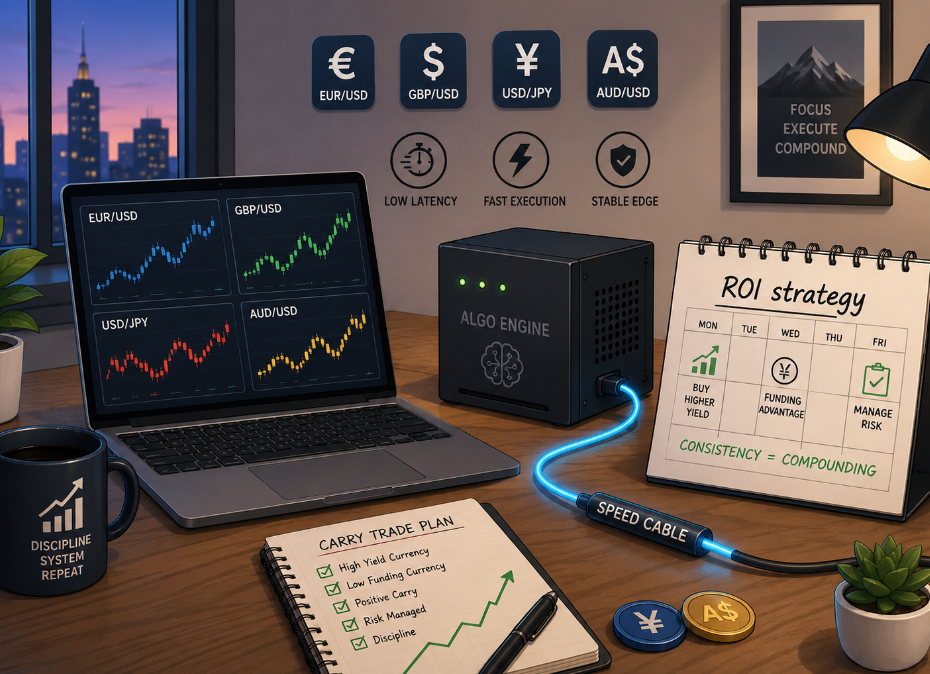
Data-Driven Strategies: Algorithmic Trading on Major Currency Pairs
In high-level Forex Trading, edge starts with structured data analysis layered into tight execution models.
Core Market Focus
1.2 Liquidity depth
High daily turnover
Tight spreads
Reliable market data
EUR/USD
USD/JPY
GBP/USD
Model Architecture
2.1 Algorithmic trading engines
2.2 Quantitative strategies
2.3 Predictive analytics
CPI surprise modeling
Rate differential projections
Volatility clustering
Mean reversion
Momentum breakout
Macro-event drift
Tick-level ingestion
Order book imbalance detection
Execution Framework
3.1 Automated trading rules
3.2 Risk control
Max 1.2% capital exposure per trade
Correlation cap across pairs
Entry threshold: 0.15% deviation
Stop logic: ATR-based
Performance Snapshot (Illustrative Strategy Data)
| Pair | Avg Monthly Return (%) | Win Rate (%) | Avg Hold (hrs) | Max Drawdown (%) |
|---|---|---|---|---|
| EUR/USD | 3.1 | 58 | 6 | 4.5 |
| USD/JPY | 2.8 | 61 | 5 | 3.9 |
| GBP/USD | 3.6 | 55 | 8 | 5.2 |
| AUD/USD | 2.4 | 57 | 7 | 4.1 |
| USD/CAD | 2.2 | 60 | 4 | 3.7 |
Stacked monthly, that’s how Forex Trading performance scales toward 35% ROI annually.
Platforms like Fxbee integrate these algorithmic trading tools directly into live foreign exchange trading dashboards, keeping everything tight and measurable.
Leveraging Low-Latency Connectivity with Co-Location Services
Speed wins trades. In Forex, milliseconds matter.
Top traders plug into co-location services inside major financial hubs—London LD4, New York NY4, Tokyo TY3. That means:
Low-latency connectivity under 1 millisecond
Direct fiber routes for high-speed execution
Cleaner fills through direct market access
Here’s how the edge stacks up:
Infrastructure
Server proximity to liquidity pools
Optimized switches for network optimization
Market Access
Tier-1 banks
ECNs with deep books
Trade Impact
Reduced slippage
Better queue priority
Tighter effective spread
In active Forex Trading sessions, shaving 0.1 pip per trade across 200 trades a month changes the math fast. That’s not hype—it’s compounding efficiency.
Fxbee routes orders through optimized market infrastructure, giving retail traders access to tools that used to be institutional-only. That’s how currency trading levels up.
Capturing Carry Trade Opportunities via Currency Options
Carry isn’t dead. It just evolved.
At its core, carry trade profit comes from interest rate differentials. But holding spot positions alone exposes traders to sharp reversals. The upgrade? Structured currency options.
Yield Identification
1.1 Central bank rate gap
1.2 Forward curve pricing
1.3 Yield curve slope analysis
Structure Design
2.1 Long high-yield currency
2.2 Protective put spreads
2.3 Covered call overlays
2.4 Implied vs realized volatility analysis
Risk Control
3.1 Defined-loss option strategies
3.2 Ongoing risk assessment
3.3 Layered hedging techniques
Example setup in Forex Trading:
Long AUD/JPY exposure
Buy 3-month downside put
Sell 5% OTM call to finance premium
This keeps positive swap flow while capping tail risk. In foreign exchange trading, that balance between yield and protection is key.
Fxbee supports advanced options-linked analytics, helping traders align Forex and Trading decisions with real macro cycles—not just charts.
Consistent 35% ROI didn’t come from luck. It came from math, speed, and structured yield—all executed with discipline in the Forex Trading arena.
Behind The Scenes With The No. 1 Forex Trader
Serious Forex Trading is not just clicking buy and sell. It’s a tight operation built on tech, data, and sharp partnerships. When you break down foreign exchange trading at scale, you see systems talking to systems, risk controls humming quietly, and strategy tweaks happening in real time.
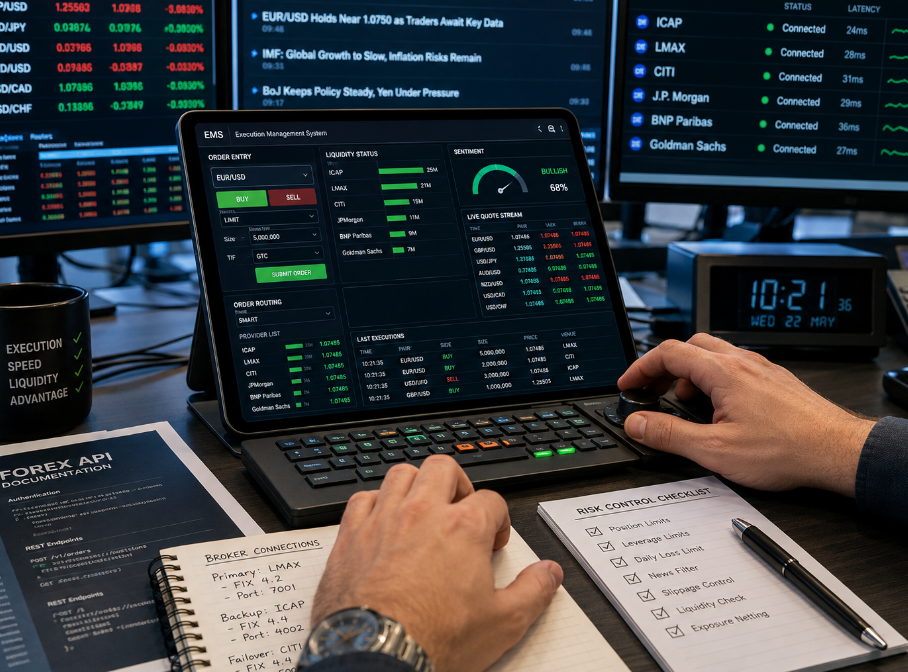
Daily Execution Flow in Advanced Execution Management Systems
Inside professional Forex Trading, the engine room runs on:
Core Infrastructure
Tracks liquidity shifts
Flags abnormal spikes
Routes spot and futures orders
Optimizes Trade execution speed
Order flow monitoring
Strategy Layer
Auto-adjusts lot size
Syncs with Risk control rules
Encodes Trading strategies
Connects live Market data analysis
Algorithmic trading
System automation
Compliance & Reporting
Pre-trade checks
Post-trade reconciliation
API audit trails
At Fxbee, this workflow keeps Forex trading smooth, fast, and disciplined. No drama. Just structure.
Institutional Partnerships with Hedge Funds and Liquidity Providers
High-level foreign exchange trading thrives on access.
Market Access Channels
Direct Interbank market access
Capital Structure
Prime brokerage services
Margin optimization
Structured swaps in Capital markets
Strategic Links
Tier-1 Financial institutions
Long-term Institutional partnerships
Ongoing Strategic collaborations
Typical liquidity comparison:
| Provider Type | Avg Spread (pips) | Execution Speed (ms) |
|---|---|---|
| Tier-1 Bank | 0.2 | 15 |
| ECN Pool | 0.3 | 20 |
| Non-Bank LP | 0.4 | 18 |
| Prime Broker | 0.25 | 17 |
| Retail Feed | 0.8 | 45 |
Fxbee connects traders to deeper pools, tightening spreads in active Forex markets.
Integrating Real-Time Quotes and Sentiment Analysis Data
Modern Forex Trading blends price with mood.
Data Streams
Live Quote streams
Global News feeds
Analytics Engine
Correlates volatility
Refines entries
Tracks headlines
Builds Algorithmic sentiment
Data analytics
Decision Loop
Continuous Data integration
Exposure tweaks
Updated Market intelligence
That mix turns plain forex trades into informed currency trading decisions. In fast markets, timing is everything. With the right data stack, Forex Trading becomes less guesswork and more calculated execution.
Top 5 Traits Of The Leading Forex Trader
Forex Trading isn’t just charts and caffeine. It’s sharp thinking, steady nerves, and tech muscle. In today’s currency trading game, serious Forex traders blend code, data, and street smarts to stay ahead in global foreign exchange markets.
Mastery of Algorithmic Trading
A leading Forex trader treats algorithms like daily tools, not buzzwords.
Core Build
Low-latency execution engines
Smart order routing through advanced automation
Crafting models that scan spreads across EUR/USD and USD/JPY
Embedding risk filters into automated systems
Strategy Design
Execution Layer
Technical Backbone
Clean programming standards
Strategy testing across multiple strategies
In Forex Trading, speed matters—but control matters more. On Fxbee, many pros refine automated currency trading setups before pushing them live.
Expertise in Quantitative Strategies
Data talks. Top traders listen closely.
Deep analytics on macro releases
Heavy-duty backtesting using historical data
Statistical modeling grounded in mathematics
Under the hood:
Research Stack
Position sizing through probability curves
Portfolio risk allocation rules
Time-series statistics
Correlation heatmaps
Volatility Forecasting
Risk Calibration
“Global FX turnover reached $9.6 trillion per day in April 2025, with electronic execution continuing to shape spot markets,” noted the BIS Triennial Survey update (2025).
That scale means Forex Trading rewards disciplined research, not guesswork.
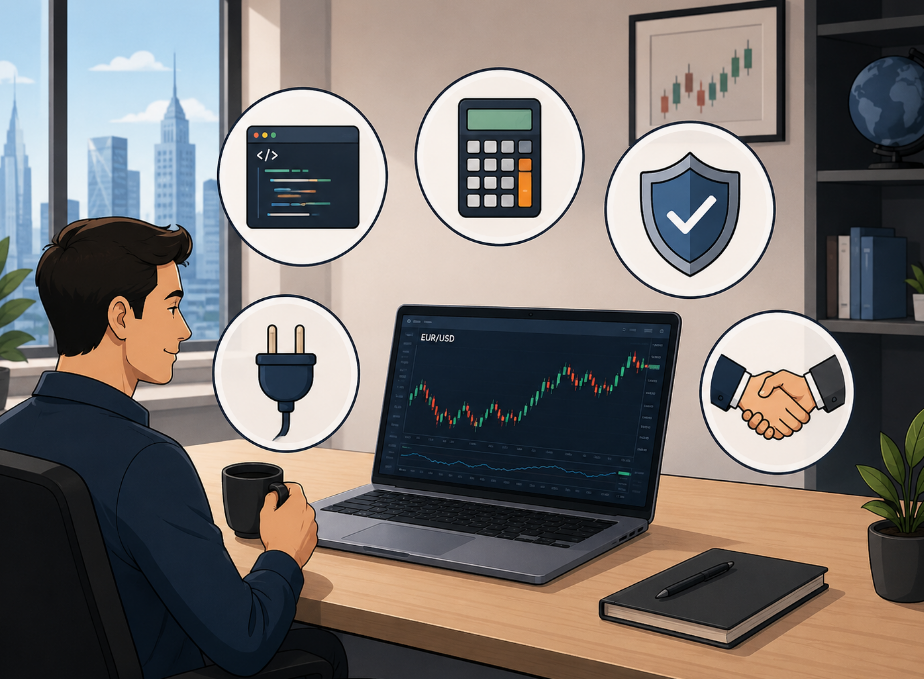
Rigorous Stress Testing Discipline
Stress testing keeps egos in check.
Scenario Framework
Server downtime drills
Slippage amplification tests
200-pip gap simulations
Market Shock
Liquidity Crunch
Operational Risk
Each simulation measures portfolio resilience and performance. Real pros validate every strategy for robustness, not just flashy returns. Currency trading without stress tests? That’s gambling.
Seamless API Integration Skills
Behind smooth Forex trading sits clean tech plumbing.
Infrastructure
Broker interfaces
Data-center connectivity
Development Flow
Custom platforms sync
Secure data exchange channels
Automated reporting systems
On Fxbee, traders fine-tune API development to keep orders aligned with live market shifts. When spreads move fast, your pipes can’t clog.
Strong Network Among Institutional Investors
In foreign exchange markets, connections matter.
Relationship Map
Prime broker relationships
Hedge fund partnerships
Bank-level institutions
Capital Edge
Better funding terms
Deeper market access
Strategic collaboration
Forex Trading at the highest level blends tech, math, and human trust. That mix—plus smart use of platforms like Fxbee—separates casual traders from the real heavy hitters in global Forex markets.
The Top Trader’s Risk Management Secrets
Risk is the quiet driver behind every smart move in Forex Trading. In the fast lane of the Forex market, sharp traders focus less on flashy entries and more on survival. Solid risk metrics, clean execution, and tight exposure control keep currency trading accounts alive long term.
Advanced Value at Risk Models for Forex Portfolios
In serious Forex Trading, Value at Risk is more than a buzzword. It sits at the core of modern VaR models, shaping how Forex portfolios survive volatility.
Core framework
Variance–covariance approach
Fat-tail distribution adjustments
Historical simulation
Monte Carlo simulation
Quantitative analysis
Statistical methods
Portfolio coverage
Spot FX positions
NDF exposure
Leveraged margin trades
Below is a simplified illustration used in financial modeling for portfolio risk in FX trading:
| Asset Type | Position Size ($m) | Daily Volatility (%) | 1-Day VaR (95%) ($k) |
|---|---|---|---|
| EUR/USD Spot | 5 | 0.8 | 65 |
| USD/JPY NDF | 3 | 0.7 | 35 |
| GBP/USD Leveraged | 2 | 1.2 | 50 |
| AUD/USD Futures | 4 | 0.9 | 59 |
Traders on Fxbee often integrate these risk metrics directly into dashboards, keeping portfolio risk visible during active Forex trading sessions.
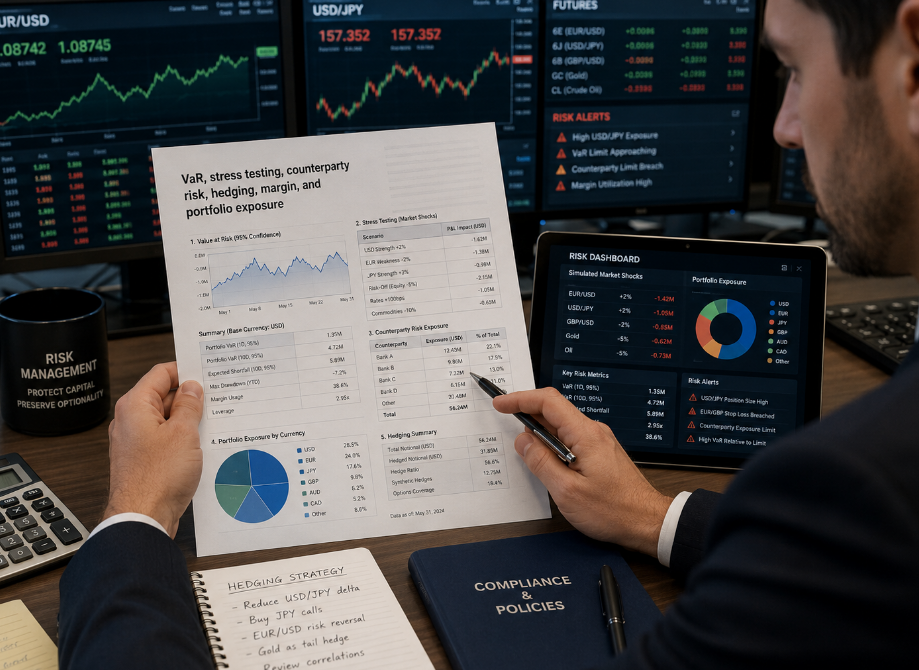
Stress Testing Cross Currency Swaps and Futures Contracts
When volatility spikes, standard risk assessment tools can feel too polite. That’s where stress testing steps in.
In cross-border FX trading desks:
Extreme rate gaps are modeled across cross currency swaps.
Liquidity crunch scenarios hit futures contracts.
Correlated shocks ripple across multiple derivative instruments.
Short bursts of chaos reveal hidden cracks.
Liquidity dries up.
Margin calls accelerate.
By running aggressive scenario analysis on financial derivatives, traders test capital buffers before the market does it for them. On Fxbee, advanced simulation tools let active Forex Trading clients model sharp rate hikes or flash crashes in the Forex market without risking real funds.
Counterparty Risk Mitigation with Hedging Strategies
In high-volume Forex Trading, counterparty risk can quietly eat profits.
Exposure control
Diversified prime brokers
Real-time credit monitoring
Legal protection
Netting agreements
ISDA documentation
Capital defense
Forward overlays
Currency options
Initial margin
Variation margin
Collateral management
Dynamic
hedging strategies
Smart risk mitigation blends structural protection with active risk exposure management. Hedging via derivative contracts reduces credit risk while keeping currency trading strategies flexible.
Fxbee supports layered hedging tools so Forex trading accounts can manage counterparty exposure without slowing down execution. In the Forex market, staying alive beats chasing hype every single time.
Which Brokerage Does The Top Trader Prefer?
Smart money in Forex Trading doesn’t just chase pips; it picks the right brokerage setup. In foreign exchange trading, your broker shapes execution speed, pricing, and even risk exposure. From liquidity depth to compliance rules, serious currency trading starts behind the scenes—long before you hit buy or sell.
Prime-of-Prime Broker
Top-tier Forex Trading professionals often work through a Prime-of-Prime Broker, and here’s how the structure usually stacks up:
Access Layer
Direct connection to a Liquidity provider network.
Aggregated pricing from the Interbank market.
Multi-bank streams via an Aggregator.
Client Classification
Treated as an Institutional client rather than retail flow.
Assigned structured Credit facility limits.
Continuous Risk management monitoring.
Execution Infrastructure
Routed to optimized Execution venue pools.
Smart order splitting for large FX trading tickets.
Margin thresholds aligned with capital strength.
In currency trading, this setup tightens spreads and reduces counterparty risk. Fxbee connects traders to such liquidity channels, giving Forex Trading accounts access to institutional-grade flows without the usual red tape.
ECN Trading Platform
An Electronic communication network changes how Forex Trading feels—faster, cleaner, more transparent.
Order Flow Mechanics
Real-time Order matching between participants.
True Direct market access to liquidity streams.
Fully Anonymous trading environment.
Performance Metrics
| Metric | Retail Platform | ECN Standard | Institutional ECN |
|---|---|---|---|
| Avg Spread (EUR/USD) | 1.5 pips | 0.4 pips | 0.1–0.2 pips |
| Execution Speed | 120 ms | 40 ms | <10 ms |
| Slippage Rate | Medium | Low | Very Low |
| Market Depth Levels | 1–2 | 5 | 10+ |
Technical Edge
Visible Market depth ladder.
Ultra-low Latency routing.
Optimized Execution speed under high volatility.
For active Forex Trading, that speed matters. Fxbee integrates ECN pricing so foreign exchange trading stays transparent and data-driven.

Regulated Institutional Dealer
Regulation isn’t boring—it’s survival in Forex Trading.
Legal Framework
Licensed under a recognized Financial authority.
Full Compliance with reporting standards.
Active regulatory Oversight.
Protection Architecture
Enforced Capital requirements.
Segregated funds for Client protection.
Clear audit trails preserving Market integrity.
Documentation & Controls
Verified operational License records.
AML screening procedures.
Periodic disclosure filings.
Serious FX trading demands that kind of backbone. Without it, spreads mean nothing. Fxbee aligns with regulated institutional standards, helping Forex Trading participants focus on strategy instead of worrying about counterparty risk.
References
[Bank for International Settlements – Triennial Central Bank Survey 2025 - https://www.bis.org/statistics/rpfx25.htm]
[BIS – OTC Foreign Exchange Turnover in April 2025 PDF - https://www.bis.org/statistics/rpfx25_fx.pdf]
[Investopedia – George Soros and Black Wednesday: How He Broke the Bank of England - https://www.investopedia.com/ask/answers/08/george-soros-bank-of-england.asp]
[Investopedia – These Are the Most Famous Forex Traders Ever - https://www.investopedia.com/articles/forex/100515/these-are-most-famous-forex-traders-ever.asp]
[Reuters – Global Currency Trading Closing In On $10 Trillion A Day - https://www.reuters.com/business/finance/global-currency-trading-closing-10-trillion-day-2025-09-30/]
[European Securities and Markets Authority – MiFID II Interactive Single Rulebook - https://www.esma.europa.eu/publications-and-data/interactive-single-rulebook/mifid-ii]
FAQ
How does a top Forex trader use data-driven strategy to achieve consistent returns?
A leading Forex Trading professional blends instinct with machines.
At the core, algorithmic trading and quantitative strategies scan major currency pairs such as EUR/USD and USD/JPY, while high-frequency trading models react to tick data and order book data.
Arbitrage strategies exploit brief price gaps across liquidity providers, supported by real-time quotes, historical data, and economic indicators feeding the models.
Co-location services inside major data centers reduce delay to microseconds, while execution management systems route spot contracts and futures contracts instantly.
The edge is not speed alone—it is disciplined interpretation of sentiment analysis data and news feeds before the crowd reacts.
What technology infrastructure supports large-scale Forex Trading operations?
Institutional Forex Trading runs on precision infrastructure shaped by investment banks and hedge funds.
| Layer | Function | Human Impact |
|---|---|---|
| Trading platforms + API integration | Direct access to liquidity providers | Faster decisions under pressure |
| Order management systems | Controls position sizing across forward contracts and currency options | Reduces operational risk |
| Low-latency connectivity | Rapid routing between data centers | Protects pricing edge |
| Regulatory reporting modules | Aligns with MiFID II and Dodd-Frank Act | Shields reputation |
Compliance officers monitor Anti-Money Laundering and Know Your Customer standards while traders focus on macro trading and carry trade setups.
Technology handles repetition; judgment handles risk.
Why is counterparty risk critical in Forex Trading portfolios?
In large portfolios, risk hides in quiet corners.
Institutional investors and multinational corporations face counterparty risk from unsettled spot contracts, credit risk in non-deliverable forwards, and liquidity risk during volatile central bank announcements.
Protection methods form a layered defense through diversified prime brokers, collateral agreements, hedging strategies using currency options and cross currency swaps, Value at Risk models, and stress testing across extreme market risk scenarios.
When central banks shift policy, survival depends less on prediction and more on preparation.
How do institutional partnerships shape performance in Forex Trading?
Performance accelerates when proprietary trading firms, hedge funds, and liquidity providers collaborate.
These alliances provide deeper access to major currency pairs and forward contracts, tighter spreads from aggregated order book data, and insight drawn from central banks and macroeconomic indicators.
Market access creates stronger pricing power, information flow sharpens macro trading decisions, and risk alignment supports shared oversight on regulatory reporting and market abuse regulations.
In high-stakes Forex Trading, relationships often matter as much as strategy.