
A forex cashback percentage of spread can look straightforward: a service returns a stated share of the spread cost from eligible trading. The useful question is what that percentage applies to, when the credit is calculated, and whether the broker account, currency pair, volume, and country eligibility all qualify. This guide breaks down the math with illustrative examples, then shows the checks that matter before a U.S.-based trader treats a rebate as part of trading costs.
Educational notice: This article is general information, not investment, legal, or tax advice. Forex trading involves substantial risk, and a rebate does not reduce market risk or guarantee a profit.

What does forex cashback as a percentage of spread mean?
It generally means the cashback is calculated as a percentage of an eligible spread-related trading cost. If a program states “25% of spread,” the simple model is that it returns 25% of the applicable spread cost after an eligible trade is recorded. It is a later credit, not necessarily a narrower bid-ask quote when the order is placed.
The distinction matters because the spread is the difference between the bid and ask price. A rebate can lower the effective cost after payment, but it cannot change execution, slippage, margin requirements, or a trade’s profit and loss. FXBee’s guide to how forex cashback works likewise describes rebates as credits with eligibility conditions rather than an automatic reduction in every live quote.
Some programs instead use a fixed dollar amount per lot or a share of commission. Do not assume a percentage-of-spread offer is comparable to a per-lot offer until both are converted to the same currency, trade size, instrument, account type, and time period.
The forex cashback percentage of spread formula
For a simple spread-only arrangement, use this sequence:
Find the eligible spread cost in account-currency terms.
Convert the advertised percentage to a decimal.
Multiply the eligible spread cost by that decimal.
Cashback amount = eligible spread cost × cashback rate
For example, a 25% cashback rate becomes 0.25. If the eligible spread cost is $12, the illustrative cashback is $12 × 0.25 = $3. The effective spread-related cost after that credit is $9.
Where the terms genuinely apply to the entire spread cost, another helpful shorthand is:
Effective spread-related cost = eligible spread cost × (1 − cashback rate)
This is a cost illustration, not a statement about a broker’s quoted spread. Live spreads can vary, and the program may define “eligible spread,” exclude instruments, cap payouts, or calculate using its own reporting data. Read the published terms before relying on either formula.
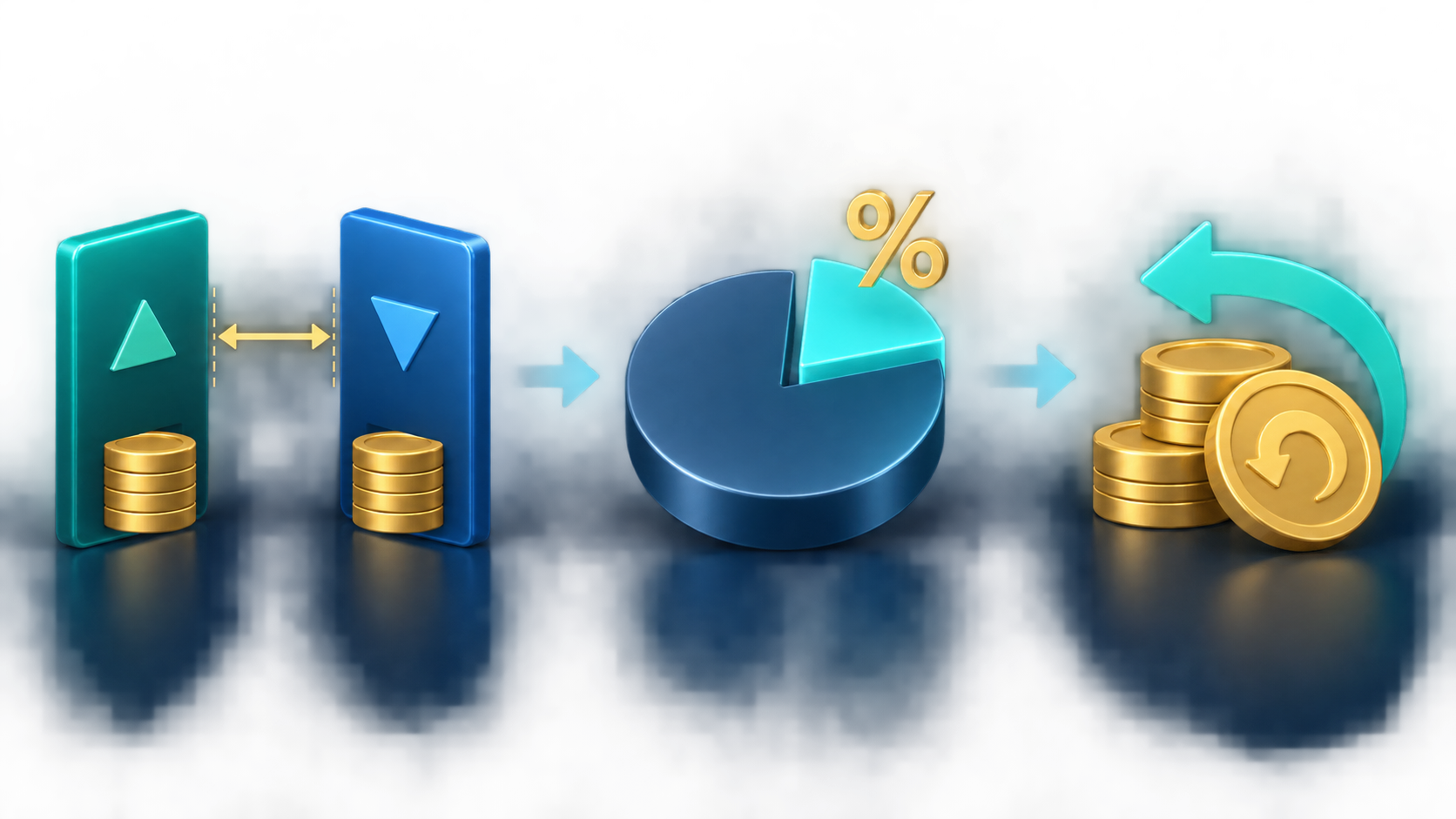
Worked examples: from pips to a cashback credit
The examples below use simple arithmetic to show the method. They are not broker quotes, and a pip’s cash value changes with the currency pair, contract size, account currency, and exchange rate.
| Scenario | Eligible spread cost | Cashback rate | Illustrative credit | Effective spread-related cost |
|---|---|---|---|---|
| Single qualifying trade | $12.00 | 25% | $3.00 | $9.00 |
| Multiple qualifying trades in a period | $80.00 total | 15% | $12.00 | $68.00 |
| Smaller rate on a different account tier | $40.00 | 10% | $4.00 | $36.00 |
A pip-based illustration
Suppose a EUR/USD trade has a 1.2-pip spread and, only for this example, the position size makes one pip worth $10. The initial spread-related cost is 1.2 × $10 = $12. If the applicable cashback rate is 25%, the credit is $3. The effective spread-related cost is $9 after the credit posts. A smaller position would usually produce a smaller dollar result; a different pair or account currency can change the pip value.
This calculation leaves out commission, financing or swap, conversion charges, deposits and withdrawals, and any losses caused by price movement. Those items can be material, especially for positions held overnight or strategies that trade frequently.
What exactly does the percentage apply to?
“Percentage of spread” is not a universal accounting term. The offer may apply to the observed spread on each qualifying trade, a broker-reported volume calculation, a subset of instruments, or the portion of a partner payment that the rebate service chooses to share. The formula can be sound while the input is different from what a reader assumed.
Before comparing offers, identify each item in writing:
Account and legal entity: Is the exact account type eligible in the trader’s country of residence?
Instrument scope: Does the percentage cover major FX pairs only, or are minors, metals, indices, CFDs, and crypto excluded or treated differently?
Cost basis: Is the percentage applied to spread, commission, lots, or a combined calculation?
Timing: Is the credit calculated daily, weekly, monthly, or after a trade closes?
Limits: Are there volume caps, minimums, exclusions for promotions, or rules for unusually short holding periods?
Payment path: Is the amount paid to a trading account, a wallet, or another withdrawal method—and are minimums or fees involved?
On its broker comparison page, FXBee shows that rebate formats can differ by broker and account: some listings are expressed as a percentage of spread while others are shown as a dollar amount per lot. That is a reason to compare the terms of the exact listing rather than treating every headline number as interchangeable.
Compare total trading cost, not just the cashback headline
A higher cashback percentage does not automatically mean a lower total cost. A 30% return on a wider eligible spread can still leave a higher after-rebate cost than a 10% return on a tighter spread. The same caution applies when one account charges commission and another wraps more of the cost into the spread.
| Cost or condition | Why it changes the comparison | What to verify |
|---|---|---|
| Typical and live spread | The starting cost may vary with liquidity and market conditions. | Instrument-specific spread information and how it is measured. |
| Commission | A low-spread account can add a separate per-lot charge. | Round-turn commission, currency, and whether it is rebate-eligible. |
| Swap or financing | Holding positions overnight can add or subtract cost independent of the spread. | Instrument-specific financing schedule and rollover time. |
| Rebate exclusions and timing | An apparent saving is less useful if a trade does not qualify or the credit cannot be withdrawn on expected terms. | Eligibility, caps, settlement dates, and payment conditions. |
| Execution quality | Slippage and fills can affect the price received; cashback does not repair poor execution. | Broker disclosures and conditions during volatile markets. |

Extra checks for U.S. residents
For U.S. residents, eligibility and registration should come before any cashback calculation. The CFTC explains that retail forex counterparties are subject to a U.S. regulatory framework and that retail forex dealers and certain intermediaries have registration requirements. See the CFTC’s overview of retail foreign currency trading for the agency’s description of the framework.
The CFTC also advises prospective traders to verify registration and to review risk disclosures. Its Forex Frauds guidance warns that most retail forex traders lose money and says U.S. traders should use a CFTC-registered dealer. Registration does not make a trade suitable or profitable, but it is a foundational due-diligence check.
Do not infer U.S. availability from a global broker list, a cashback landing page, or a percentage shown on a comparison table. Confirm the exact broker entity, account type, and referral arrangement accept U.S. residents before opening or funding an account. If a service mentions a third-party broker, the broker—not the cashback service—controls the trading account, quotes, execution, margin rules, and country availability.

How to review a spread-based cashback offer
Start with the broker. Check the legal entity, country eligibility, account terms, and disclosures before considering the rebate.
Open the exact rebate listing. At FXBee, use the broker comparison page and the applicable broker details to review the stated format and account conditions.
Ask for the cost basis. Determine whether the percentage applies to spread cost, volume, commission, or another defined amount.
Model your normal trade size. Use a few representative trades rather than one unusually large or unusually quiet-market example.
Include non-rebated costs. Add commission, financing, conversion, and any operational fees that apply to your plan.
Verify tracking before funding. If a tracked link or new account is required, confirm that requirement and keep a record of the account ID, referral path, and terms.
Check settlement and support. Review the payout schedule and, if needed, contact FXBee support for clarification before relying on a calculation.
For broader screening criteria, see FXBee’s overview of what to check with forex rebate providers and its guide to evaluating cashback programs and red flags. Review the Terms of Use and Privacy Policy as part of normal account due diligence.
The bottom line
A forex cashback percentage of spread is best treated as a cost-rebate calculation: eligible spread cost multiplied by the stated rate. The math is simple; the terms behind the “eligible” amount are the hard part. Compare the after-rebate cost alongside execution, commission, financing, payment conditions, and broker suitability. For U.S. residents, confirm registration and availability before treating any advertised rebate as relevant to an account.

Frequently asked questions
What is forex cashback as a percentage of spread?
It is generally a rebate calculated as a stated share of an eligible spread-related trading cost. A 20% rate, for example, means the illustrative credit is 20% of the defined eligible spread cost. The precise definition, eligible instruments, account types, and settlement timing come from the program’s terms.
How do I calculate a forex cashback percentage of spread?
Multiply the eligible spread cost by the cashback rate expressed as a decimal. For example, if the eligible cost is $20 and the rate is 15%, the illustrative credit is $20 × 0.15 = $3. Confirm that the program uses that same cost basis before assuming the result.
Does cashback lower the live forex spread?
Usually no. The live bid-ask quote and execution come from the broker and account selected. Cashback is commonly recorded and credited later, which may lower an eligible effective cost after settlement but does not alter the price shown when an order is placed.
Is a higher cashback percentage always better?
No. The starting spread, commission, financing, execution, exclusions, and payment conditions can outweigh a headline percentage. Compare the estimated after-rebate cost for the same pair, trade size, account type, and holding period.
Can a spread-based cashback rebate cover commission?
Not necessarily. Some accounts charge separate commission, and a rebate offer may be based only on spread, only on commission, on lots traded, or on another measure. Read the offer’s cost basis and exclusions instead of assuming all charges are included.
Are all forex pairs eligible for cashback?
Eligibility varies. A program may apply different rates to major pairs, minor pairs, metals, indices, CFDs, or other instruments—or exclude some entirely. Verify the exact instrument list, account type, and promotional exclusions in the current terms.
When is forex cashback paid?
Programs can settle daily, weekly, monthly, or on another schedule. The credit may go to a trading account or a separate wallet and can be subject to minimums, verification, or withdrawal rules. Check the payout timing before treating a calculated amount as available cash.
Can I receive cashback on an existing broker account?
Sometimes, but often a provider requires a newly tracked account or a specific transfer process. Ask before changing account arrangements. FXBee’s existing-account guide discusses checks to make before assuming an account can be linked.
Can U.S. residents use any advertised forex cashback offer?
No. Country availability depends on the exact broker entity, account, and arrangement. U.S. residents should verify applicable registration, dealer eligibility, and all account disclosures before opening or funding an account. A global listing alone does not establish U.S. availability.
Does forex cashback make trading safer or profitable?
No. A rebate may reduce a defined trading cost after it is credited, but it does not protect against market movement, leverage, execution risk, or losses. Use only capital you can afford to lose and read the broker’s risk disclosures carefully.