
Forex cashback can be legitimate: it is usually a share of the commission a broker pays to an introducing broker, affiliate, or rebate service for referred trading volume. But a legitimate-looking cashback offer does not make a broker safe, suitable, or available to U.S. residents. The right question is not simply “is forex cashback legit?” It is whether the broker, the referral arrangement, the eligibility terms, and the payment trail can all be verified before you open or fund an account.
This guide explains how rebates work, what they can and cannot tell you, and how a U.S.-based trader can screen an offer without confusing a trading-cost incentive with a promise of profit.

Short answer: forex cashback can be legitimate, but it is not a safety certificate
A rebate is a commercial arrangement, not an investment return. In a typical model, the broker compensates a referral partner for eligible trading activity; the partner shares part of that revenue with the referred trader. The cashback may be paid per lot, as a percentage of spread or commission, or under account-specific rules. The payment can be genuine without changing the fact that forex trading involves substantial risk.
For U.S. residents, the broker’s regulatory status comes first. The Commodity Futures Trading Commission (CFTC) says that a person should verify firms and people before trading, and its forex-fraud guidance recommends checking registration and reviewing risk disclosures. Use the CFTC registration-check resources and the NFA BASIC database rather than relying on a rebate site, social post, or referral link.
A rebate cannot cure an unregistered dealer, a misleading risk disclosure, poor execution, withdrawal problems, or a product that is not offered lawfully to you. It can only reduce one component of the cost of trading if the offer is real and the account remains eligible.
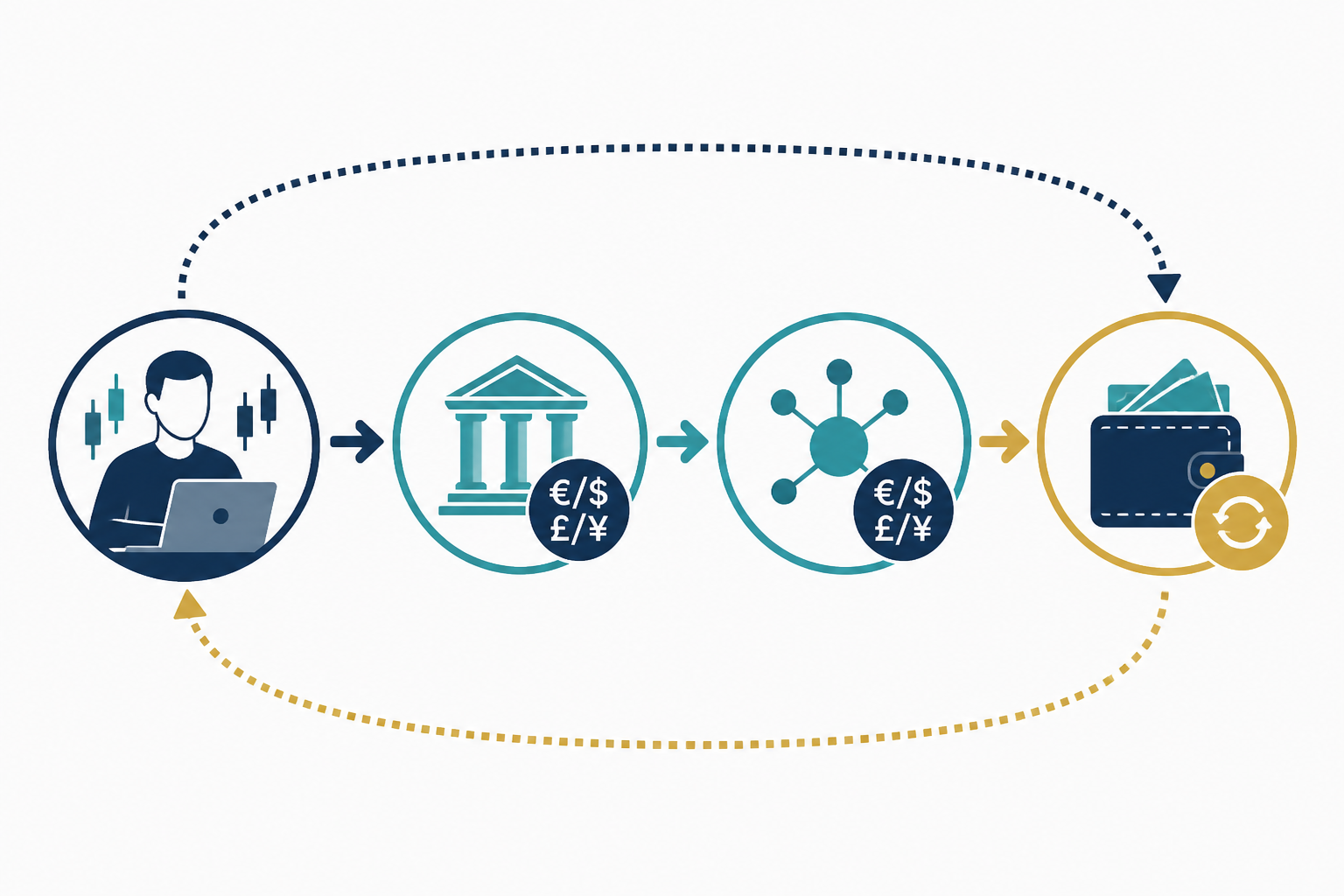
How forex cashback programs usually work
“Cashback,” “rebate,” and “spread rebate” are often used interchangeably, but the calculation can differ. Read the broker and rebate-provider terms for the exact account type, symbol, volume unit, payment schedule, and exclusions.
You open or link an eligible account through a tracking link or a documented account-transfer process.
The broker records qualifying trading volume under the referral relationship.
The broker pays the rebate provider under its commercial agreement.
The provider credits a stated portion to a wallet, payment method, or, where available, the trading account.
The mechanics are plausible because referral compensation is common in financial services. The important details are whether your broker pays the rebate for your account type and whether the rebate program discloses what counts as qualifying volume.
Common rebate formats
| Format | What to verify | Why it matters |
|---|---|---|
| Fixed amount per lot | What counts as a lot, eligible symbols, and account type | A headline amount may apply only to selected instruments or accounts. |
| Share of spread or commission | The source charge, percentage, and calculation example | The rebate moves with the underlying cost and may not be comparable across brokers. |
| Cashback to wallet | Minimum withdrawal, method, fees, and timing | A wallet credit is not the same as cash already in your bank. |
| Credit to trading account | Whether it is withdrawable, usable as margin, or subject to a clawback | Credits may have different restrictions from cash rebates. |
How to evaluate whether a forex cashback program is legitimate
Use the checklist below before sending money, sharing identity documents, or placing trades for the purpose of reaching a rebate threshold.
1. Verify the broker independently
Start with the entity that will hold your account or act as your counterparty—not with the rebate provider. For a U.S. retail forex relationship, search the legal entity and relevant individuals in NFA BASIC and review the record, business address, registration categories, and disciplinary information. The CFTC cautions that registration is not a guarantee against fraud, but it is a basic screening step. If the broker is offshore, says U.S. rules do not apply, or will not identify the legal entity serving you, do not treat a rebate as a reason to proceed.
2. Confirm the referral relationship and account eligibility
A credible program should tell you how to enroll, whether existing accounts can be linked, and which broker entities, platforms, account types, symbols, and countries are eligible. Ask the broker directly whether the referring service is recognized for the account you plan to use. Keep the answer in writing. Do not assume that a familiar brand name means every regional entity or account type participates.
3. Read the calculation and payment terms
Look for a precise formula, payment cadence, exclusions, and the treatment of hedging, scalping, closed trades, bonuses, swaps, and promotional accounts. A useful program can explain whether its figures are estimated, “up to” amounts, or guaranteed only after the broker reports the trade. If a page shows a rate but no qualifying rules, treat the rate as marketing information—not a forecast of what you will receive.
4. Test the support and paper trail before funding
Use a modest, suitable test only if you have already completed the regulatory and suitability review. Save the sign-up confirmation, the broker’s acknowledgement of the referral, the rebate dashboard record, and the payout terms. Ask support how an omitted trade is disputed and what documents it needs. Avoid increasing trading volume just to “unlock” cashback; that can turn a small cost incentive into excessive risk-taking.
5. Separate the rebate provider from investment advice
A cashback site may be a comparison or referral service. It is not automatically a registered investment adviser, a trading manager, or a regulator. Be especially careful if its staff or promoters pair the offer with account-management promises, trading signals, bots, copy trading, or “risk-free” performance claims. The CFTC notes that fraudsters often use claims of high or guaranteed returns and unregistered platforms to lure customers.
Forex cashback red flags
One red flag is not proof of wrongdoing, but several should stop the process until you can verify the facts.

Guaranteed income or “risk-free” trading: Cashback may offset fees; it does not protect against market losses, leverage, slippage, or an unsuitable strategy.
Pressure to deposit immediately: Do not let a limited-time rebate override time needed to check the entity, disclosures, and withdrawal rules.
No clear legal entity or registration information: A brand, app, or social-media account is not enough. Check the legal entity that will hold the account.
Crypto-only deposits, private-chat support, or unexplained payment instructions: These are recurring warning signs in CFTC forex-fraud guidance, particularly when combined with an unregistered platform.
Opaque rebate math: “Up to” figures without eligible-account details, exclusions, or settlement dates are hard to evaluate.
Trading-volume requirements that push you to trade more: A rebate is not worth taking trades you would otherwise skip.
Unverifiable testimonial or score claims: Treat marketing reviews as leads for questions, not proof of service quality or payout reliability.
Requests for remote access or sensitive credentials: A rebate provider should not need your trading-platform password or device access to calculate a standard referral credit.
For a broader list of current warning signs, see the CFTC’s forex-frauds guidance and the SEC’s individual-investor bulletin on foreign exchange trading.
Compare total trading cost, not the biggest cashback number
The right comparison is not “Which site offers the highest rebate?” It is “What is the expected all-in cost and risk of using this particular account for my intended trading?” A lower rebate can still be the better outcome if the broker’s regulated entity, execution, spreads, commissions, financing charges, and withdrawal process are more appropriate for you.

| Cost or risk factor | Question to ask |
|---|---|
| Spread and commission | What do these cost on the instruments and hours you actually trade? |
| Rebate amount | Is it fixed, estimated, capped, delayed, or conditional on volume? |
| Financing and swap charges | How do holding costs affect the strategy if positions remain open overnight? |
| Execution and slippage | How could fills during volatile conditions change the result relative to a small rebate? |
| Withdrawal and conversion costs | Are there charges, thresholds, or currency conversions that reduce the practical value of cashback? |
| Leverage and loss capacity | Could a small adverse price move exceed the rebate many times over? |
The SEC explains that leverage can magnify losses and that a small move against a position can wipe out an initial investment, depending on the dealer agreement. Treat that risk as more important than any cashback calculation.
Using a marketplace such as FXBee: what to check
FXBee publishes a broker and rebate comparison page that lists rebate formats and rates for selected brokers and account types. Its published listings include examples of daily credit options to a wallet or trading account; availability and terms should be checked for the specific broker, entity, account, and country before registration. The site’s own Terms of Use also states that margin trading is high risk and may not be suitable for every investor.
Use the comparison page as a starting point for questions—not as a substitute for official broker disclosures or U.S. registration checks. Before enrolling through any listing, confirm the current rate, account eligibility, payment route, and the broker’s acceptance of the referral. If you need help understanding a page or a missing-credit process, FXBee publishes a support page; save its response and the relevant offer terms with your account records.
FXBee’s content should not be read as personalized investment advice, a recommendation to trade, or evidence that any particular broker is authorized for every U.S. resident. Product availability and eligibility can vary by entity and jurisdiction.
A five-minute pre-deposit checklist
Identify the exact broker legal entity and the entity that will serve your account.
Search the firm and relevant people in NFA BASIC and CFTC resources.
Read the broker’s risk disclosure, account agreement, fee schedule, and withdrawal rules.
Get the rebate formula, account eligibility, exclusions, and payment timing in writing.
Confirm with the broker that the referral relationship is active for your account.
Calculate the expected all-in cost for the instruments and time horizon you use.
Use only risk capital you can afford to lose; do not trade more merely to earn a rebate.

The bottom line
Forex cashback is legitimate when it is a transparent referral-revenue share attached to an eligible account and paid under clear terms. It becomes a bad deal when opaque eligibility, unverified brokers, aggressive sales tactics, or the urge to trade more overwhelms basic due diligence. For U.S. readers, verify the broker first, read the terms second, and consider the rebate last.
Risk note: Forex and margin trading involve substantial risk and may result in the loss of all funds committed. This article is educational only and is not investment, legal, or tax advice.