
A trade can look right on a chart and still deliver a disappointing account result. The missing pieces are usually position size, the bid/ask spread, commissions, overnight financing, and currency conversion. This guide shows how to calculate each part before you place a trade, then use a forex profit calculator to check the arithmetic.
It is educational material, not investment advice. Forex is high risk, and leverage can magnify losses as well as gains. U.S. traders should use only appropriately regulated providers and review the CFTC’s foreign-currency trading guidance before funding an account.

Start with the core forex profit-and-loss formula
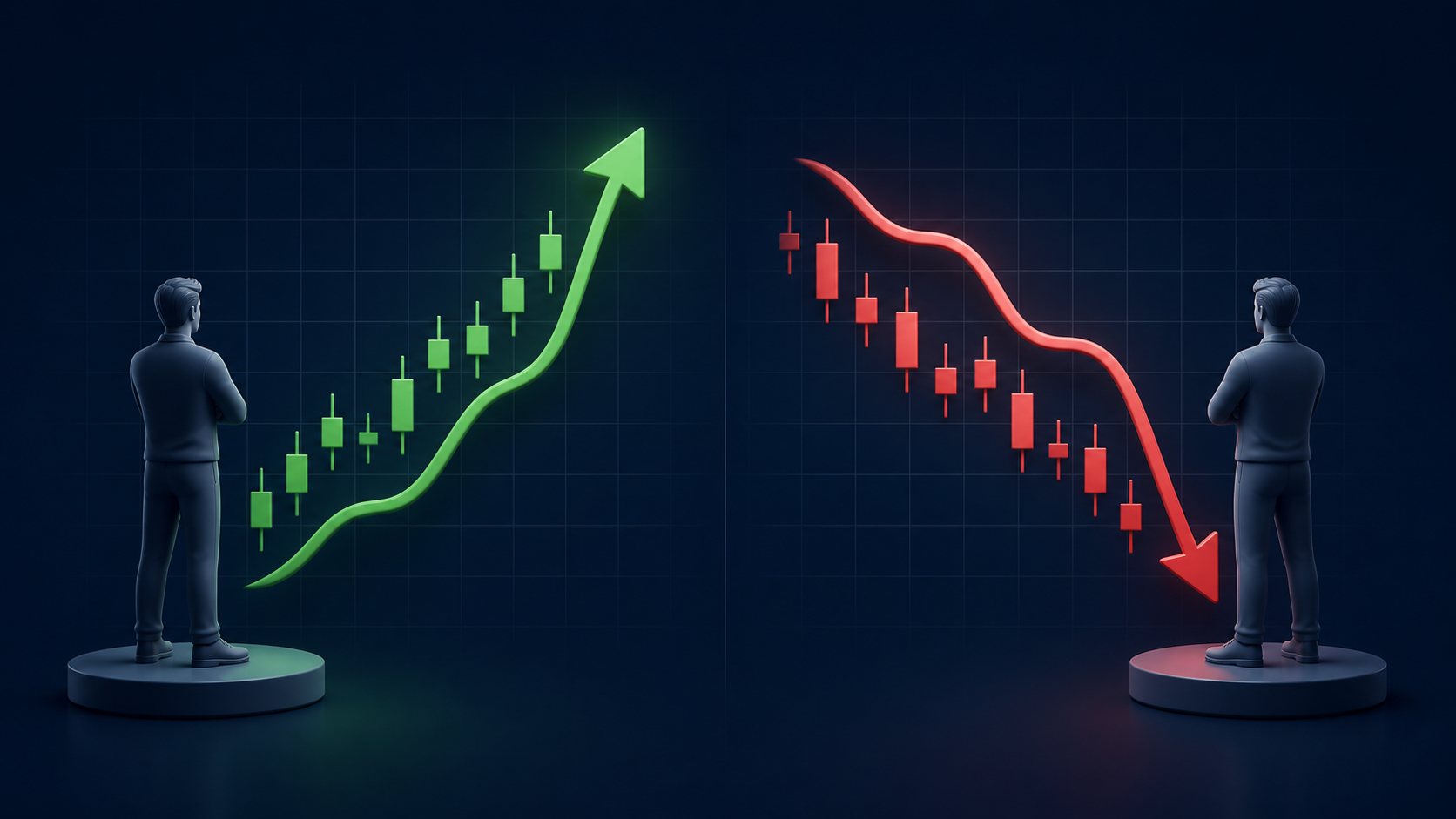
Forex P&L begins with a price difference multiplied by the number of currency units traded. The sign changes with direction:
Long trade: (exit price − entry price) × units traded
Short trade: (entry price − exit price) × units traded
Those formulas return the result in the pair’s quote currency. In EUR/USD, the quote currency is U.S. dollars, so a USD account can read the result directly. With USD/JPY, the calculation initially produces yen; a platform normally converts it to the account currency at the applicable conversion rate.
For a live trade, use the price you could actually transact at: a long opens at the ask and closes at the bid; a short opens at the bid and closes at the ask. Using a mid-price in a spreadsheet can be useful for rough planning, but it hides the immediate effect of the spread.
Pips, lot size, and pip value: the three inputs that change the dollar result
A pip is usually the fourth decimal place in a non-JPY currency pair (0.0001) and the second decimal place in a JPY pair (0.01). Some platforms quote a tenth of a pip, often called a pipette. Do not confuse a pipette move with a full pip move when estimating P&L.
Position size is the number of base-currency units controlled by the trade. Common forex conventions are 100,000 units for a standard lot, 10,000 for a mini lot, and 1,000 for a micro lot, though contract specifications should always be checked in the broker’s platform.
| Example: EUR/USD in a USD account | Units | Approximate value of one pip |
|---|---|---|
| 1.00 standard lot | 100,000 EUR | $10.00 |
| 0.10 mini lot | 10,000 EUR | $1.00 |
| 0.01 micro lot | 1,000 EUR | $0.10 |
These dollar examples work neatly because USD is the quote and account currency. For cross pairs, JPY pairs, or accounts funded in another currency, pip value changes with the exchange rate and conversion. That is one reason to verify your result with a calculator and the platform’s trade preview.

Two practical forex P&L examples
Example 1: EUR/USD long position
Assume a trader buys 0.10 lot of EUR/USD, or 10,000 units. The ask at entry is 1.08520 and the bid at exit is 1.08770. The trade moved 0.00250, which is 25 pips in the trader’s favor.
Gross P&L = (1.08770 − 1.08520) × 10,000 = $25.00.
Because the actual ask and bid were used, the entry spread is already reflected in this example. Costs that are charged separately, such as a round-trip commission or financing, still need to be deducted to find net P&L.
Example 2: USD/JPY short position
Assume a trader sells 0.10 lot of USD/JPY, or 10,000 USD. The bid at entry is 150.20 and the ask at exit is 149.60. The favorable movement is 0.60 yen per dollar.
Gross P&L = (150.20 − 149.60) × 10,000 = ¥6,000. If the account is in USD, the platform converts that yen amount to dollars at its applicable conversion rate. The exact USD result can therefore differ slightly from a pre-trade estimate.
The point is not to memorize every cross-currency conversion. It is to recognize when your calculator needs an account currency and current conversion rate rather than assuming every pip is worth a fixed dollar amount.
Gross P&L is not your net trading result
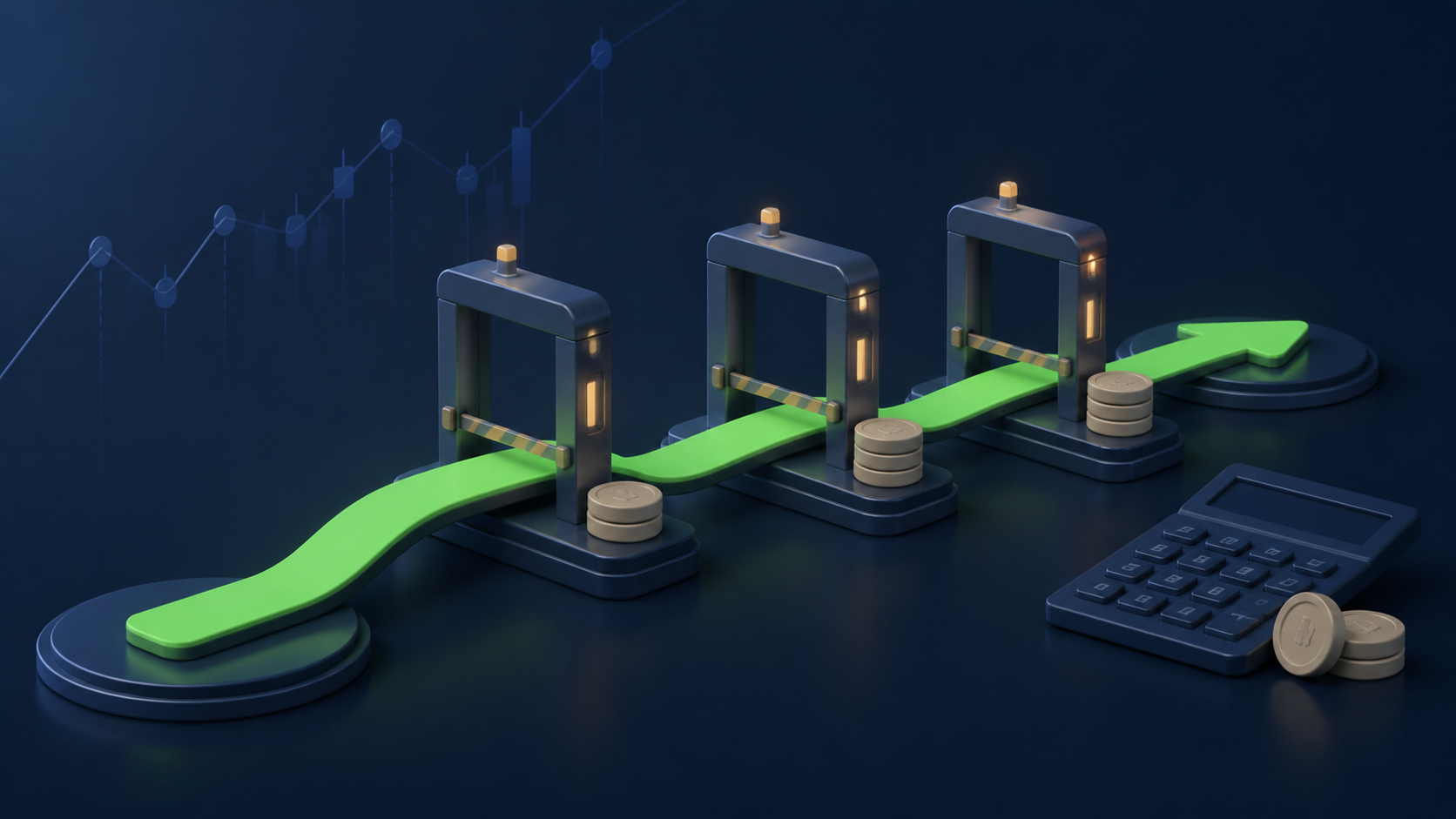
Price movement produces gross P&L. Your account result is the amount left after relevant trading costs. A realistic pre-trade estimate should distinguish costs that are already captured in bid/ask prices from costs that must be added separately.
| Cost | What it means for your calculation | Common mistake |
|---|---|---|
| Spread | For an executed trade, use the actual ask to buy and bid to sell; that captures it. | Subtracting spread again after using executable prices. |
| Commission | Deduct the full opening and closing commission if your account charges one. | Counting only one side of a round trip. |
| Financing or rollover | Apply the provider’s rate for each overnight holding period, if applicable. | Assuming it is always a charge or always a credit. |
| Currency conversion | Convert quote-currency P&L and fees into the account currency. | Using a static rate for a cross pair. |
Return to the EUR/USD example. If gross P&L is $25 and the total round-trip commission is $7, with no financing charge, net P&L is $18. This is why a small target can be less forgiving than it first appears.
How to use a forex profit calculator before you trade
A calculator is a checking tool, not a forecast. It cannot tell you whether the market will reach your target, whether a stop order will fill at its requested price in a fast market, or whether a quoted spread will widen. It can make the amount at risk and the estimated payoff visible before you commit capital.
Select the exact instrument and confirm its contract size.
Set the account currency, then choose buy or sell.
Enter the intended number of lots or units, not the amount of margin deposited.
Use executable entry and exit prices when available; otherwise state that the result is an estimate.
Add both sides of commission, expected financing, and any conversion impact the tool supports.
Compare the calculated loss at the stop with the cash amount you are prepared to lose.
Check the platform’s order preview immediately before placing the order; prices and costs can move.
Leverage belongs in the margin check, not the core P&L formula. A 25-pip move on 0.10 lot produces the same gross dollar movement whether the account is using 10:1 or 50:1 leverage. Higher leverage can make it possible to open a larger position with less posted margin, which is precisely why it can amplify account risk.
Five calculation mistakes beginners can avoid
Using the wrong side of the quote. Buy at ask, sell at bid; a mid-price may overstate a close result.
Entering margin instead of trade size. Margin is collateral. Units or lots determine price exposure.
Assuming every pip has the same USD value. Pair structure, size, account currency, and conversion matter.
Counting the spread twice. If actual bid/ask fill prices are in the formula, do not deduct a separate spread estimate again.
Planning only for the target. Calculate the stop-loss scenario first, including the chance of slippage in volatile conditions.
For education and a way to compare available rebate information, you can review FXBee’s broker comparison page. Review account-specific trading costs and whether a provider serves your jurisdiction directly with that provider; a directory or rebate platform does not replace due diligence.
A U.S.-focused safety and provider check
Retail off-exchange forex is regulated in the United States, but that does not make a trade low risk. The CFTC warns that forex offers can be extremely risky and that fraud warnings include promises of unusually high or low-risk returns. Read its investor alert on foreign exchange fraud, verify current registration and eligibility before funding an account, and avoid treating social-media claims or backtests as a profit guarantee.
FXBee states that it is a third-party platform for rebate services, trading-task rewards, copy-trading insights, and community features; it does not offer trade execution or investment advice. Its support information and Terms of Use are useful reading before using the platform. If you are still building the basics, FXBee also has a beginner forex learning guide.
Bottom line: calculate the possible loss as carefully as the possible profit. A forex profit calculator can reduce arithmetic errors, but it cannot remove market risk, execution risk, or the possibility of losing the money committed to a leveraged trade.
Forex profit calculator FAQ
How do I calculate forex profit manually?
For a long trade, subtract entry from exit and multiply by the units traded. For a short trade, subtract exit from entry and multiply by units. The result is in the quote currency, so convert it if that is different from the account currency. Then deduct any separate commission and financing to estimate net P&L.
What inputs does a forex profit calculator need?
At minimum, enter the currency pair, buy or sell direction, trade size, entry price, exit or target price, and account currency. Add commission, financing, and conversion inputs when the calculator supports them. A result is only as useful as the contract specifications and prices entered.
Does leverage increase forex profit?
Leverage does not change the P&L from a given price move and position size. It changes the margin needed to open that position. Because it may let a trader take a larger position relative to deposited funds, it can magnify gains and losses relative to the account balance.
How much is one pip worth in forex?
It depends on the pair, lot size, and account currency. For EUR/USD in a USD account, one pip is approximately $10 for a standard lot, $1 for 0.10 lot, and $0.10 for 0.01 lot. These are examples, not universal values.
Do I subtract the spread separately?
Not if your calculation uses actual executable prices: a long enters at ask and exits at bid, while a short enters at bid and exits at ask. That already reflects the spread. If a calculator uses a single mid-price, it may need a separate spread estimate, so check its method.
Why can my platform P&L differ from my estimate?
Differences can come from live bid/ask changes, slippage, a changing spread, commission, rollover, conversion rates, or the contract’s tick-value rules. Compare the calculator inputs with the platform’s execution report rather than assuming the calculator is wrong.
How are profits calculated for USD/JPY in a USD account?
First calculate the result in yen using the price difference times the number of USD units. Then convert the yen result into U.S. dollars at the applicable rate. A calculator or platform trade preview is safer than applying a fixed dollar-per-pip shortcut.
Should I calculate profit or loss first?
Calculate the potential loss at the stop first. It ties the trade size to an amount you can afford to lose. Then calculate the potential gain at the target using the same assumptions about spread, costs, and conversion. Neither number predicts the outcome.
Are overnight forex financing fees included in a calculator?
Some calculators include them and others do not. Financing can vary by instrument, direction, provider policy, and holding period. Check the provider’s current schedule and treat a generic calculator result as incomplete until you know whether it includes rollover.
Can a forex calculator predict my trade outcome?
No. It translates your assumptions into an estimated P&L. It cannot predict future prices, volatility, liquidity, slippage, or whether an order will fill at its requested level. Use it for sizing and scenario planning, not certainty.
Can U.S. beginners trade forex safely?
No trade is risk-free. U.S. beginners should learn on a demo environment where available, understand the provider and current regulatory eligibility, use a defined loss limit, and avoid anyone promising easy or guaranteed returns. Only use money you can afford to lose.
Where can I find beginner forex education from FXBee?
FXBee publishes educational material and broker/rebate information on its website. Read the relevant terms and support information, confirm any provider’s current terms directly, and remember that FXBee says it does not provide trade execution or investment advice.