
A forex rebate can look more generous than it is when two offers use different calculation bases. The practical question is not which label looks larger; it is whether both figures pay for the same completed trading activity. This guide explains per-side vs round-turn forex rebate quotes, shows how to normalize them, and flags the checks U.S. retail traders should make before using any broker or rebate program.
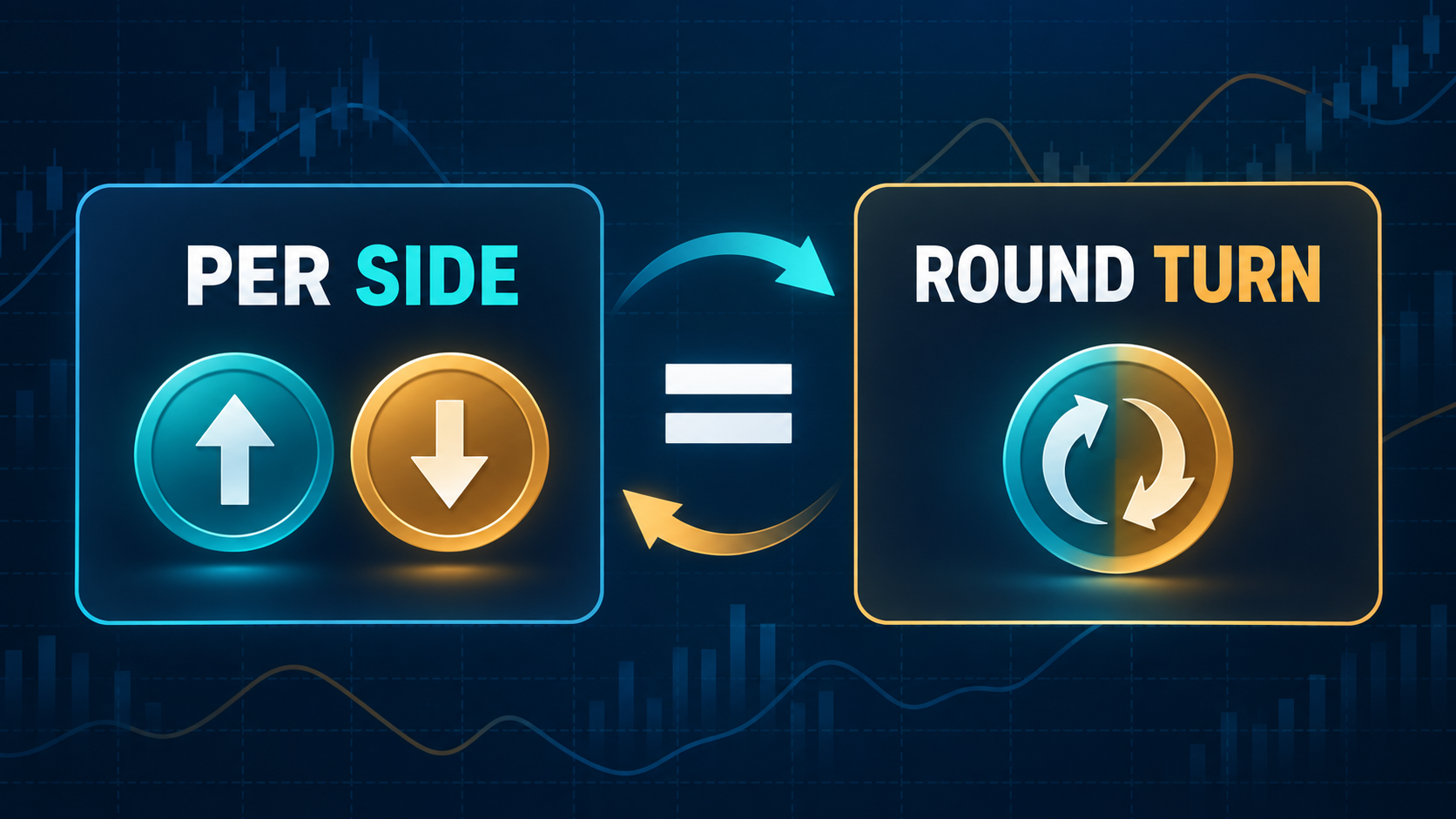
Quick answer: one completed round turn normally has two sides: opening a position and closing it. If a rebate is quoted per side, multiply it by two to compare it with a round-turn quote for the same trade size, instrument, account type, and eligibility rules. A $1.25-per-side quote, for example, equals $2.50 per round turn—not $1.25—when both sides qualify.
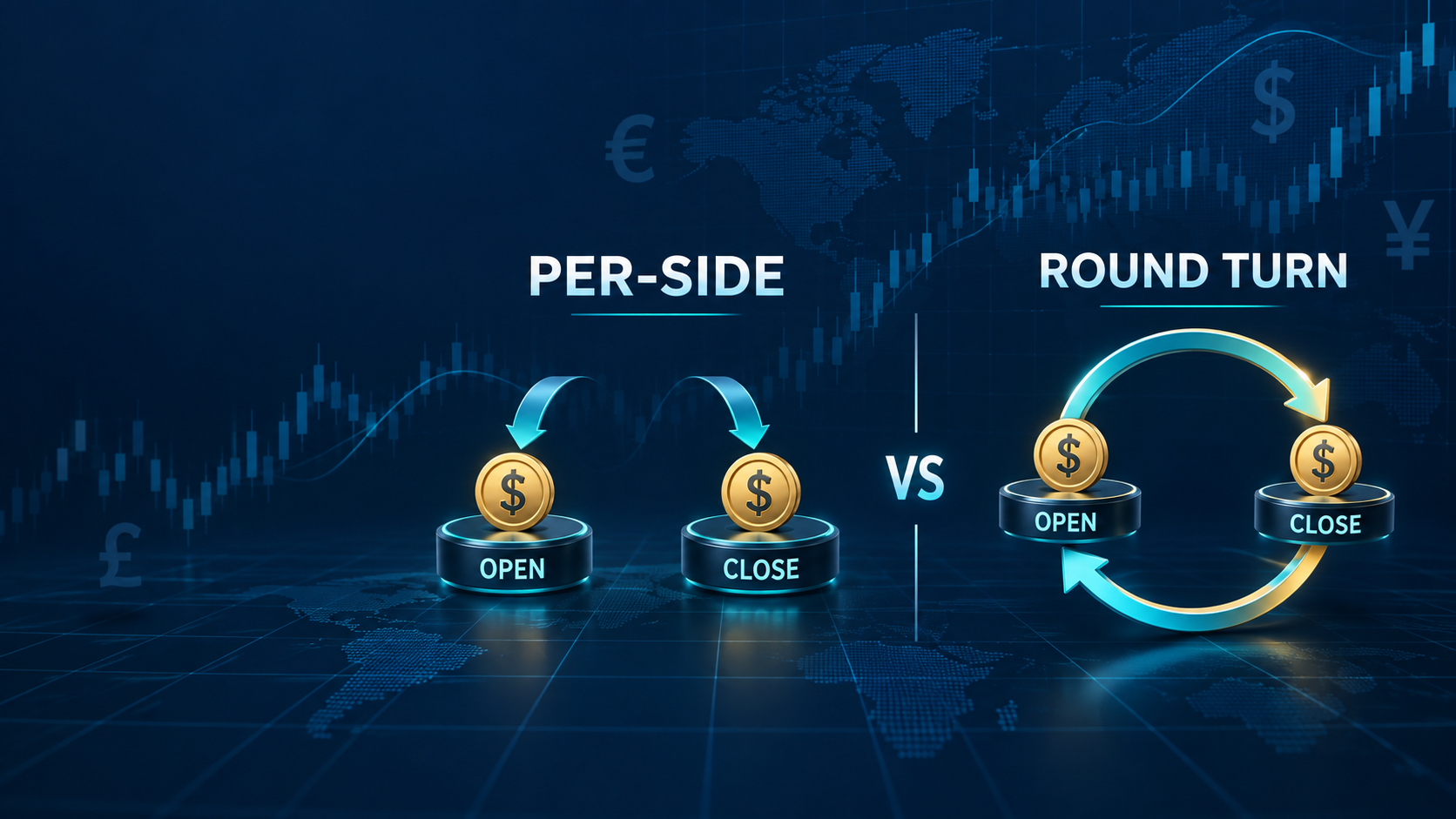
What “per side” and “round turn” mean in forex rebates
Every ordinary trade has a lifecycle. You enter by buying or selling, then you exit by doing the opposite. Those are the trade’s two sides. A per-side rebate is stated for each qualifying execution: one potential credit for the opening side and another for the closing side. A round-turn rebate is stated for the whole open-and-close cycle.
That distinction is easy to lose in a long list of broker offers because both may be expressed “per lot.” The phrase after the number is decisive. “$2 per lot, per side” and “$2 per lot, round turn” are not equivalent offers. Assuming all other conditions match, the first is $4 per completed round turn; the second is $2.
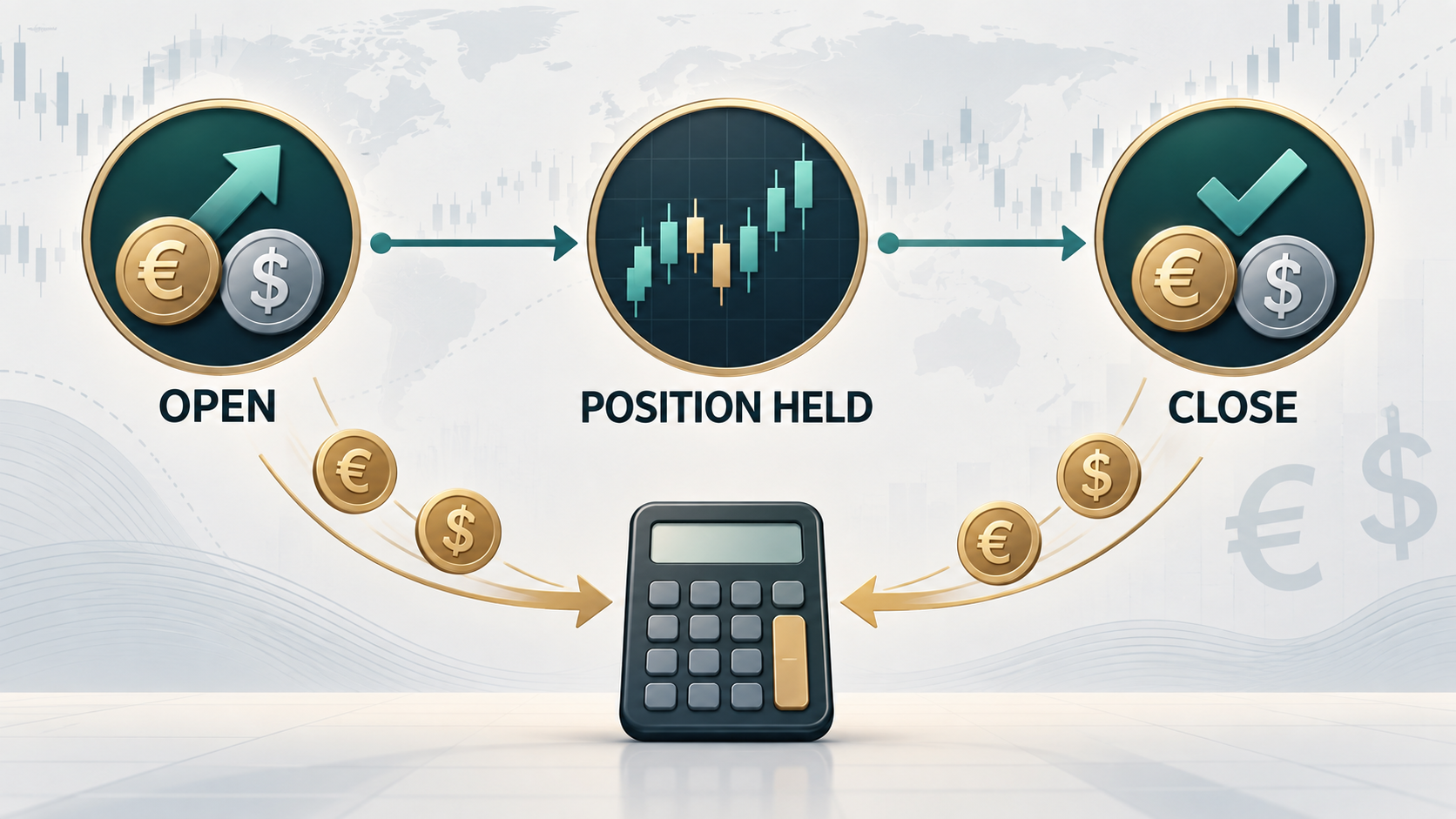
Terms that can change the meaning
Lot: a contract-size reference. The lot convention can differ by instrument and account type, so do not compare a forex-pair figure with a metals or index-CFD figure without reading the specification.
Completed trade: commonly a position that has both an opening and closing execution. Some programs use their own definitions for partial closes, netting, or amendments.
Rebate currency: the figure may be credited in U.S. dollars, the account’s base currency, points, or another unit. Currency conversion can affect the amount received.
Eligible volume: the volume a program agrees to count. Certain products, accounts, strategies, or promotional trades can be excluded.
Per-side vs round-turn forex rebate: the conversion rule
For a fully opened and fully closed position where both sides are eligible, the math is straightforward:
Round-turn rebate = per-side rebate × 2
Per-side rebate = round-turn rebate ÷ 2
Use the rule only after confirming that the quote refers to the same instrument, account type, lot definition, period, and currency. It converts a calculation basis; it does not guarantee an eventual credit.
| Advertised quote | Calculation | Comparable round-turn amount |
|---|---|---|
| $1.20 per side per lot | $1.20 × 2 | $2.40 per round turn per lot |
| $3.00 per round turn per lot | $3.00 ÷ 2 | $1.50 per side per lot |
| $0.80 per side per lot on one account type | $0.80 × 2 | $1.60 per round turn per lot, before checking other terms |
These are arithmetic examples only. They do not describe a live rate from FXBee or any broker, and they exclude spread, commission, financing, slippage, taxes, and eligibility constraints.
Partial closes and multi-order entries need extra care
A position can be opened in several orders or closed in pieces. In that case, qualifying volume may be calculated on each execution rather than on the original trade ticket. A trader who opens 1.00 lot and closes 0.40 then 0.60 lots should confirm whether the program applies the rebate to each eligible closing execution, the aggregate volume, or another reported-volume rule. The provider’s transaction statement should be the source of truth.
How to compare rebate offers without being misled by the headline number
First, convert every offer to the same basis. Most traders find “per completed round turn, per standard lot” the cleanest comparison unit because it describes the full trade lifecycle. Then compare the surrounding conditions—not just the normalized number.
Write down the quoted amount and whether it is per side or per round turn.
Record the instrument and exact account type, including whether it is a raw-spread, standard, commission-based, or other account.
Convert the figure to one shared basis.
Check the eligible lot definition, minimum volume, excluded products, and restrictions on trading style or duration.
Confirm how the rebate is tracked, credited, reversed, and withdrawn or transferred.
Compare the broker’s total expected trading cost and regulatory fit separately from the rebate.

Comparison table: questions that make the quote comparable
| Question | Why it matters | What to look for |
|---|---|---|
| Is the quote per side or round turn? | It determines whether the headline figure covers one execution or two. | Explicit wording in the rate table or program terms. |
| Which account and instrument qualify? | Rebates often vary by account, currency pair, metal, or CFD product. | The precise account label and product list. |
| What is the total cost after the rebate? | A higher rebate can coexist with a wider spread or a larger commission. | Typical spread information, commission schedule, and the normalized rebate. |
| When and where is the credit paid? | Timing and destination affect liquidity and recordkeeping. | Credit cycle, wallet or trading-account destination, and reversal policy. |
| Can a U.S. resident use the arrangement? | Availability, broker authorization, and product access can differ by residence. | Current U.S. eligibility and registration information from official sources. |
A rebate does not replace a total-cost calculation
A rebate is a potential offset to part of trading cost; it is not the trade’s return. Before assuming one offer is cheaper, consider the spread, stated commission, overnight financing or rollover, conversion charges, platform fees where applicable, and execution quality. Those factors can be larger than a small difference in rebate rate, especially during volatile market conditions.
A simple planning view is:
Estimated net trading cost = spread cost + commission + financing and other applicable charges − confirmed rebate credit.
Each component is conditional. Spread cost changes with market pricing. Financing depends on the instrument, direction, position duration, and broker schedule. The rebate may be delayed, excluded, or adjusted under program terms. Treat this equation as a comparison framework, not a promise of cost or profitability.
Extra checks for U.S. forex traders
Forex availability and protections are jurisdiction-specific. For U.S. residents, verify the broker and the exact account arrangement before depositing funds, linking an account, or relying on a rebate quote. Do not assume that a broker visible in a global comparison table accepts U.S. retail clients or offers the same terms in the United States.
Confirm current registration and disciplinary information through official CFTC and National Futures Association resources.
Read the broker’s risk disclosure, fee schedule, account agreement, and the rebate program’s own terms.
Ask whether a particular rebate program is available to U.S. residents and whether it changes the account’s pricing, introducing-broker relationship, or protections.
Keep records of the rate shown, account link date, trade-volume reports, and rebate credits.
Use only capital you can afford to lose. Leveraged retail forex can result in rapid losses.
The CFTC states that retail forex counterparties and intermediaries are subject to registration, disclosure, recordkeeping, and other requirements in the U.S. Its customer advisory on eight things to know before trading forex also advises people to research dealers before making deposits or sharing sensitive information.
Using FXBee to research rebate listings
FXBee’s broker comparison page lists brokers and, for certain listed accounts, displays rebate information and possible credit destinations. Treat each displayed rate as a starting point for verification rather than a standalone buying decision. Account availability, eligibility, rebate rates, and broker conditions can change.
Before registering or linking an account, compare the exact broker and account entry with its current terms. If you need help with account linking, rebate questions, or platform matters, FXBee publishes a support page. Its terms of use also state that margin trading involves high risk and may not be suitable for every investor.
For a general account, readers can review the FXBee homepage and use the registration page only after confirming that the relevant service is available and appropriate for their jurisdiction. FXBee is presented here as a comparison resource, not as a recommendation of any listed broker or a representation that a specific program is available in the U.S.
A five-minute rebate-quote checklist
Circle “per side” or “round turn.” If the basis is absent, ask before comparing.
Convert the quote to the same basis as the alternative.
Match the instrument, account type, lot convention, and rebate currency.
Read exclusions for trade duration, hedging, partial closes, promotions, and particular symbols.
Calculate estimated total cost after the rebate, not the rebate in isolation.
For U.S. residents, verify current dealer authorization and local eligibility through official sources.

The bottom line
Per-side and round-turn rebate figures can describe the same economic value only after the calculation basis is aligned. Convert a per-side rate by multiplying by two for a completed round turn, then check the rate against the correct account, instrument, eligibility rules, and total trading costs. For U.S. readers, jurisdiction and dealer registration belong in that same decision—not as an afterthought.
Use rebate comparisons to understand a program’s mechanics. Do not use them as a reason to trade more frequently or as a substitute for risk management, broker due diligence, or an independent assessment of whether leveraged forex is suitable for you.
Frequently asked questions
What is the difference between a per-side and round-turn forex rebate?
A per-side rebate applies to each eligible execution side, such as opening or closing a position. A round-turn rebate applies to the full open-and-close cycle. Assuming both sides qualify, one round turn equals two sides.
How do I convert a per-side vs round-turn forex rebate quote?
Multiply a per-side quote by two to express it per completed round turn. Divide a round-turn quote by two to express it per side. Do this only after matching the account type, product, lot convention, currency, and eligibility terms.
Does a round turn always mean two lots?
No. A round turn means two sides of the same volume: opening and closing. A 1.00-lot position that is fully opened and closed is usually one 1.00-lot round turn, not two lots of market exposure at once.
Are per-side rebates paid when I open a trade?
Not necessarily. “Per side” describes the calculation basis, not the payment time. A provider might accrue both sides and credit them daily, weekly, monthly, or after the position closes. Check the program’s current crediting policy.
What happens to the rebate if I partially close a position?
Many programs calculate eligible volume from the partial closing executions, but rules vary. Confirm whether the program tracks each execution, aggregates volume, or has exclusions for particular trading patterns. Your account and rebate statements should show the reported volume.
Does a larger forex rebate mean the broker is cheaper?
No. Compare total estimated cost, including spread, commission, financing, conversion costs, and any applicable fees, then subtract only a confirmed eligible rebate. A larger rebate can accompany a different pricing structure.
Can forex rebates be changed or reversed?
They can be. Rates, eligible products, credit schedules, and reversal rules depend on the broker and rebate provider terms. Save the current terms and ask support how corrections, cancelled trades, or ineligible volume are handled.
Are forex rebates available to U.S. residents?
Availability depends on the provider, broker, account, and current U.S. rules. Do not infer eligibility from a global listing. Verify the dealer’s registration and ask whether the specific rebate arrangement is available to U.S. retail clients.
Is a rebate a guaranteed trading profit?
No. A rebate may reduce qualifying transaction costs, but it does not remove market risk, leverage risk, spread cost, commission, or financing. Trading results can still be negative, and eligibility can be subject to program terms.
What should I verify on a forex rebate comparison page?
Verify the quote basis, account type, instrument, lot definition, rebate currency, restrictions, credit timing, and resident eligibility. Then confirm the broker’s regulation and calculate total expected cost rather than relying on the rebate headline.