
IC Markets rebates are cashback payments tied to eligible trading volume on an IC Markets account that was opened or linked through a rebate path. The cashback can offset part of what you already pay in commission or spread. It does not change execution, does not guarantee profit, and it is not a substitute for reading the client agreement on the legal entity that holds your account.
On FXBee, rebate teaching and account opening for brokers sit on this host: you review the live rebate card, open or link the account through the FXBee path, then track daily credits to the FXBee wallet or back to the trading account. Live IC Markets dollar rates on FXBee can change; when the dealer card still shows “Coming Soon,” treat any $/lot number in this article as a worked example for net-cost math, not as a published FXBee payout.
What IC Markets rebates actually pay for
A rebate is a share of brokerage economics returned after you trade. For most cashback setups, including FXBee’s volume-based model, the system accumulates cashback from completed lots whether the trade wins or loses. That is useful for scalpers and day traders who pay commission often—but only if you still control risk. Higher volume just to “farm” rebates can erase the cashback through slippage, overnight swap, and larger losses.
FXBee’s public support wording is clear on three points: rebates follow volume on accounts linked via FXBee referral links; amounts vary by broker policy and account type; and fixed rates are not guaranteed. Before you size a strategy around cashback, open the live IC Markets rebates card on FXBee and read the rate table shown that day.
Raw Spread, Standard, and cTrader: where the broker cost sits
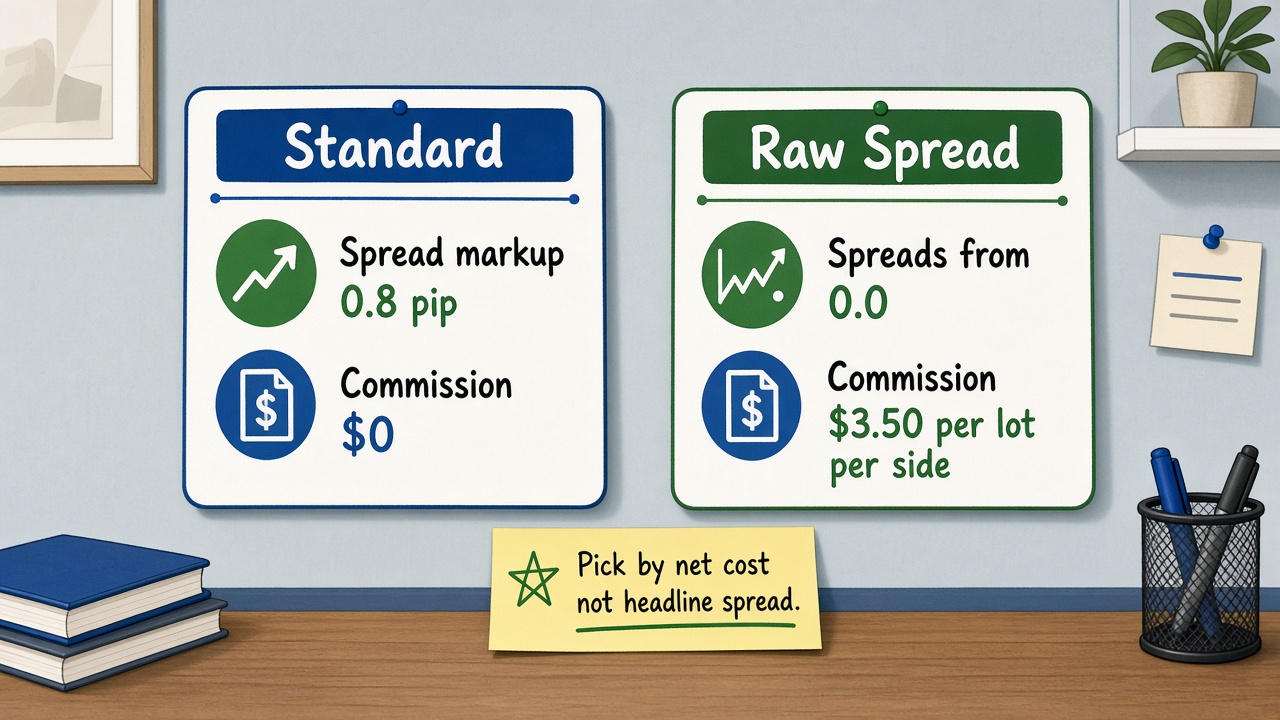
IC Markets-style pricing usually splits into two MetaTrader models plus a cTrader raw model. The names matter because rebates attach to different fee shapes:
Standard (MetaTrader): no separate commission line in many help articles; cost is built into a spread markup commonly described as about 0.8 pip above raw pricing.
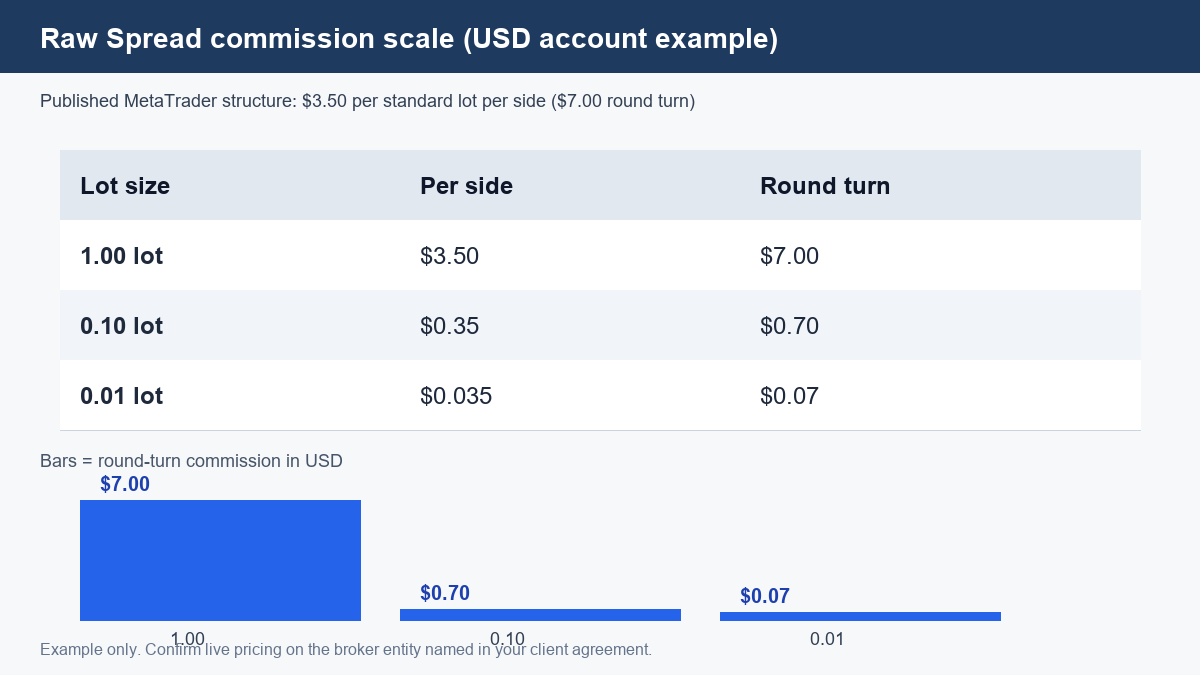
Raw Spread (MetaTrader): raw interbank-style spreads plus a commission. Help pages for USD accounts commonly state $3.50 per standard lot per side ($7.00 round turn). Smaller lots scale down (0.10 lot ≈ $0.35/side; 0.01 lot ≈ $0.035/side).
cTrader Raw: commission is often charged per $100,000 notional traded per side (commonly cited near $3), so the dollar amount moves with the quote currency and trade size rather than a flat “per lot” MT4-style fee.
Those commission figures are broker pricing facts from public IC Markets / IC help and pricing pages. They can differ by base currency, entity, and platform. Recheck the account you actually open before you treat $7 round turn as your number.
How to read IC Markets rebate rates without guessing
Search results for “IC Markets rebates” often paste a single $/lot as if it were permanent. Treat rates as a three-layer stack instead:
Broker trading cost — spread + commission (and swap if you hold overnight).
Rebate share — the portion returned by the rebate path for that account type and symbol group.
Net cost — broker cost minus rebate for the same lot and instrument.
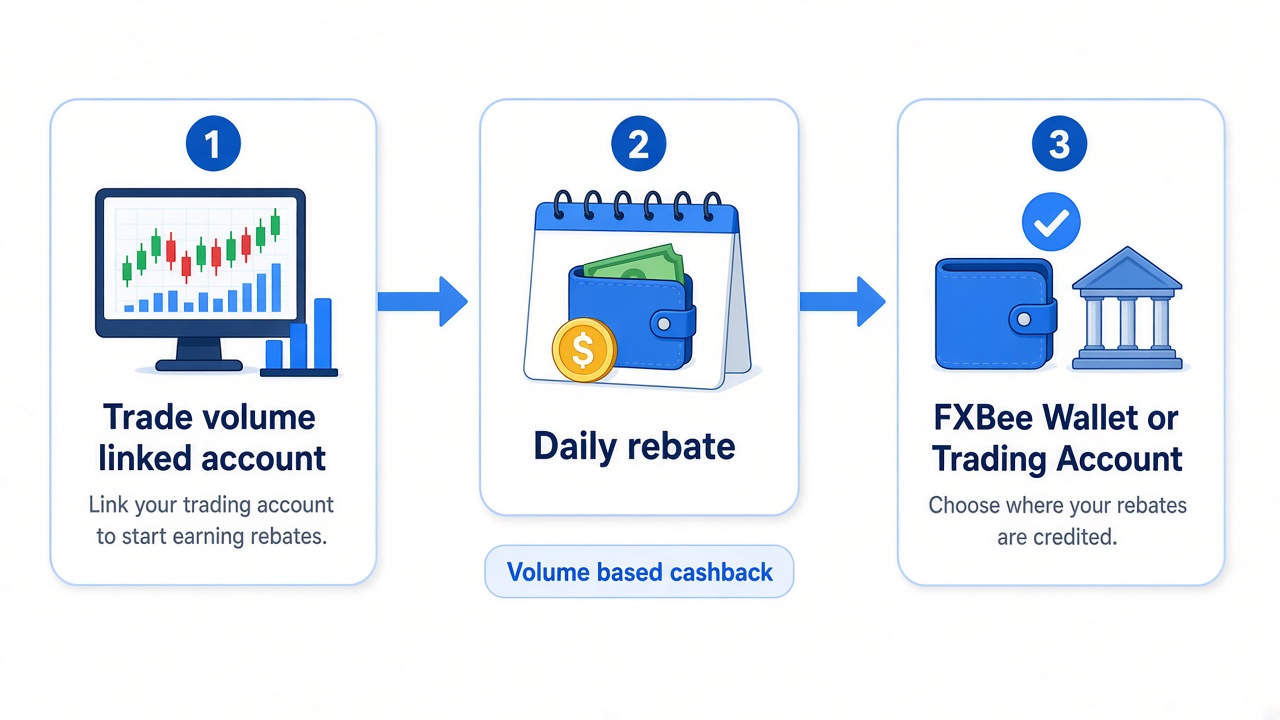
On FXBee’s IC Markets dealer page, the rebate methods are described as daily credit to the FXBee wallet or daily credit to the trading account. The rate grid may still display “Rebate Details Coming Soon.” When that happens, you can still prepare: choose Standard vs Raw Spread vs cTrader for your style, confirm the entity on the agreement, then wait for or refresh the live cashback figures before you commit volume.
If you are comparing rebate programs more broadly, the FXBee broker rebate list shows how other brokers publish rates when those cards are populated.
Raw Spread commission scale (USD example)
For a USD Raw Spread MetaTrader account that uses the commonly published $3.50 / side structure, round-turn commission scales like this:
| Lot size | Commission per side | Round turn |
|---|---|---|
| 1.00 | $3.50 | $7.00 |
| 0.10 | $0.35 | $0.70 |
| 0.01 | $0.035 | $0.07 |
MT4 and MT5 can post commission differently (all at open vs per side). That bookkeeping detail does not change the economic round-turn cost, but it does change how the history looks when you reconcile rebates against tickets.
Net cost worked example (illustrative rebate)
Use this only to practice the formula. The rebate dollar amount below is not a claim about FXBee’s live IC Markets card.
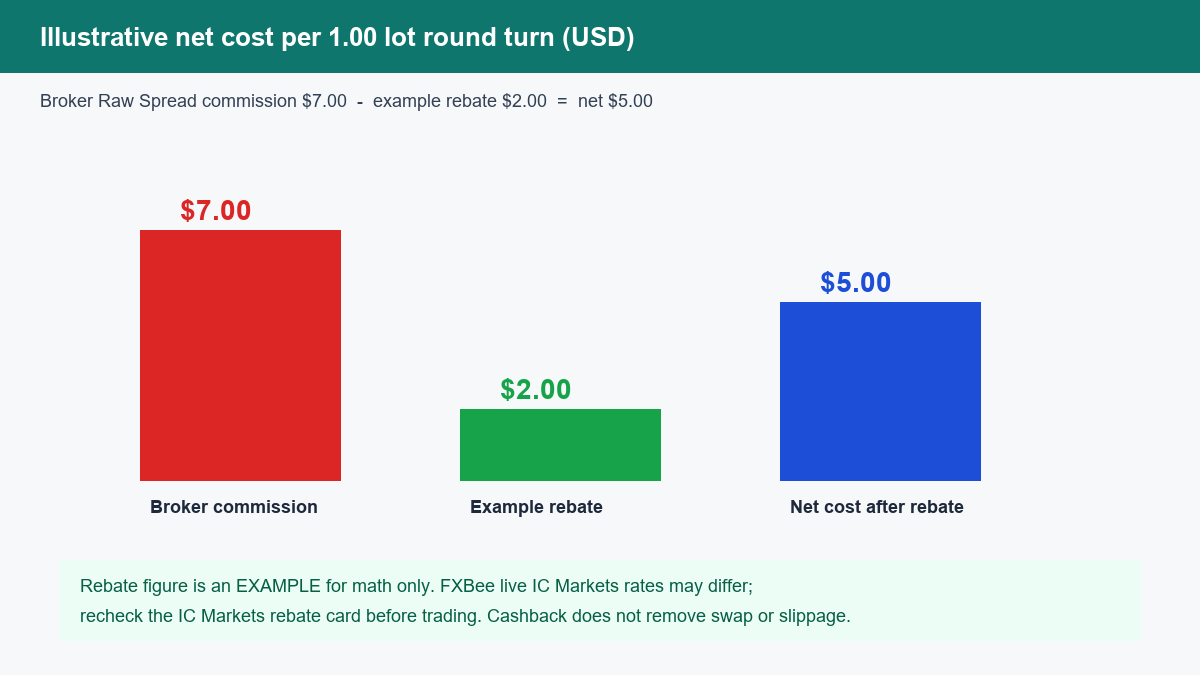
Formula: Net cost ≈ broker round-turn commission (and/or spread cost) − rebate for that lot.
Example: 1.00 lot EURUSD on Raw Spread, USD account, commission $7.00 round turn. If an illustrative rebate were $2.00 on that lot, net commission-style cost would be $5.00 before spread, swap, and slippage. If the average spread on that fill was 0.1 pip and pip value was $10 per lot, spread cost is about $1.00, so all-in friction before swap sits near $6.00 in this example.
Two traps show up often. First, comparing Standard “no commission” to Raw Spread “$7” without converting the Standard markup into dollars for the same pair. Second, treating rebate as free income while ignoring that a wider fill during news can cost more than a week of cashback.
Opening and linking an IC Markets path on FXBee
Because FXBee’s site role here is rebate, cashback teaching, and account opening, the practical path stays on this host:
Open the IC Markets rebates page and note account types listed (Standard, Raw Spread, cTrader Raw Spread on the public card).
Start account opening from that FXBee path so volume can attribute correctly.
Complete broker identity checks and funding under the company named on the client agreement.
Choose daily rebate destination: FXBee wallet or trading account, as shown on the dealer page.
After you trade, reconcile tickets against the FXBee commission record—not against a screenshot from a marketing page.
If you already hold an IC Markets account opened outside a rebate path, ask FXBee support whether that account can be linked. Do not assume every existing login can be moved into cashback tracking.
Costs rebates do not cancel
Swap / overnight financing — cashback on volume does not neutralize holding costs.
Slippage and requotes in fast markets — especially around major news.
Funding and withdrawal fees — depend on method and entity; the FXBee card lists common channels such as card, wire, e-wallets, and crypto, but live fees sit with the broker.
Inactivity or administrative fees — check the live client documents for your entity.
Leverage limits — marketing cards may show high maximum leverage. Retail clients under ASIC or CySEC entities face tighter product intervention limits than some offshore classifications. Always match leverage to the agreement company, not to a global headline.
Who holds the account: entities and registers
The FXBee IC Markets card lists company names that include International Capital Markets Pty Ltd, IC Markets EU Ltd, and Raw Trading Ltd, with public licence references such as ASIC AFSL 335692, CySEC 362/18, and FSA Seychelles SD018. Those labels are screening facts, not a promise that every visitor gets the same entity.
Before you deposit, open the client agreement and confirm: company full name, register number, and complaint path. You can cross-check Australian AFS licensees through ASIC’s professional registers search. For EU services, verify the CySEC authorisation that matches the agreement, not a number copied from an unrelated blog. Platform software (MT4, MT5, cTrader) is not a licence.
CFDs and leveraged FX are high-risk. This page is educational cost guidance, not investment advice, and it does not claim that rebates make a broker safer.
When Raw Spread plus rebates is a poor fit
You trade very small size and the commission line feels confusing relative to a simple Standard spread.
You hold multi-day swing positions where swap dominates commission.
Your region cannot open the entity that offers the Raw Spread conditions you researched.
You would need to overtrade to “make rebates meaningful,” which usually means risk is driving the decision, not cost control.
For a wider broker-selection frame beyond cashback math, see FXBee’s guide on what broker is best for forex. For how cashback providers differ as a category, see top forex cashback providers.
Practical checklist before you scale volume
Live FXBee IC Markets rebate table reviewed today (not a cached screenshot).
Account type chosen for your hold time and lot size (Standard vs Raw Spread vs cTrader).
Agreement company and register number written down.
Rebate destination selected (wallet vs trading account).
One week of ticket vs cashback reconciliation planned before increasing size.
FAQ
What are IC Markets rebates?
IC Markets rebates are cashback amounts linked to eligible trading volume on an IC Markets account connected through a rebate path such as FXBee. The payment can reduce part of your trading cost. It is not a profit guarantee and it does not alter spreads or execution at the broker.
Do IC Markets rebates change Raw Spread commission?
No. The broker still charges its published commission or spread. Cashback is a separate credit after volume is recorded. Your platform tickets should still show the normal Raw Spread commission (for example the commonly published $3.50 per lot per side on many USD MetaTrader accounts).
How much cashback does FXBee pay on IC Markets right now?
Check the live rate table on FXBee’s IC Markets dealer page. Public cards have shown “Rebate Details Coming Soon,” and FXBee states that rates can vary by broker policy and account type and are not guaranteed as fixed figures. Do not rely on a blog example as the live payout.
Is Raw Spread always cheaper than Standard once rebates apply?
Not automatically. Convert Standard’s spread markup into dollars for your pair and lot size, then subtract each account’s rebate. Scalpers who pay commission frequently often prefer Raw Spread, but quiet swing traders may find Standard simpler if overnight swap dominates.
How is cTrader commission different from MetaTrader Raw Spread?
MetaTrader Raw Spread commission is often a fixed dollar amount per lot per side. cTrader raw pricing is commonly charged per $100,000 traded per side, so the fee moves with notional value and conversion rates. Compare both on the same symbol before you pick a platform for rebate tracking.
When are FXBee rebates paid for IC Markets?
FXBee’s IC Markets page describes daily rebate methods: credit to the FXBee wallet or credit to the trading account. Settlement details can still depend on broker reporting and platform rules, so confirm the option you selected in your FXBee dashboard after the first trading day.
Can I link an existing IC Markets account to FXBee cashback?
Only if FXBee and the broker allow linking for that account. Many rebate paths require opening through the referral flow so volume attributes correctly. Contact FXBee support with your account details before assuming an older login will earn cashback.
Do rebates make IC Markets safer?
No. Safety questions belong to the legal entity on your agreement, segregated funds wording, and how you verify register numbers. Cashback only changes part of trading cost. It does not remove market risk or guarantee withdrawals.
Which company is on the IC Markets client agreement?
It depends on where you are onboarded. Public materials associated with the brand may reference entities such as International Capital Markets Pty Ltd (ASIC AFSL 335692), IC Markets EU Ltd (CySEC 362/18), or Raw Trading Ltd (FSA Seychelles SD018). Read the PDF or on-screen agreement for your login and match that exact company to the regulator register.
Does maximum leverage of 1000:1 apply to every IC Markets client?
No. High leverage figures on marketing cards are not a worldwide retail offer. ASIC and CySEC retail product rules cap leverage well below many offshore headlines. Use the leverage shown for your classified account after login, not a comparison-site maximum.
What minimum deposit should I plan for?
FXBee’s public IC Markets card lists a minimum deposit of 200 USD among other account facts. Treat that as a screening figure and confirm the live deposit screen for your entity and account currency before you transfer funds.
How should I calculate net cost with IC Markets rebates?
Take broker round-turn commission (or Standard spread cost in dollars) for your lot size, add expected spread and swap if relevant, then subtract the live rebate for that instrument and account type. Keep a one-week log of tickets versus FXBee credits before you scale.
Are forex rebates the same as a deposit bonus?
No. Rebates track trading volume and usually return part of cost after trades. Deposit bonuses are promotional credits with their own turnover or withdrawal conditions. Mixing the two in one spreadsheet is a common way to misread true cost.
Where do I start if I want IC Markets cashback through FXBee?
Begin on FXBee’s IC Markets rebates page, confirm the live rate and account types, open or link through that path, finish broker verification under the agreement company, then select daily wallet or trading-account credit. Use the broker list on FXBee if you need to compare other rebate cards in the same workflow.
Next step
If your goal is lower all-in cost on IC Markets-style Raw Spread trading, start with the live numbers on FXBee’s IC Markets rebates card, pick the account model that matches your hold time, and only then size volume around a reconciled net cost—not around a copied $/lot from an outdated article.