
A trade can look disciplined on a chart and still be mis-sized before it is placed. The usual culprits are a pip value copied from the wrong pair, a stop-loss distance measured in points rather than pips, or a position size chosen from margin instead of risk. A forex profit calculator can make the arithmetic quicker, but it only reflects the inputs you give it.
This guide explains the calculation errors that can distort a forex trade plan, how to catch them before submitting an order, and what U.S.-based retail traders should verify with their dealer. It is educational information, not individualized investment, legal, or tax advice. Forex trading is risky; leverage can magnify losses, and a stop order may fill at a worse price in fast conditions.
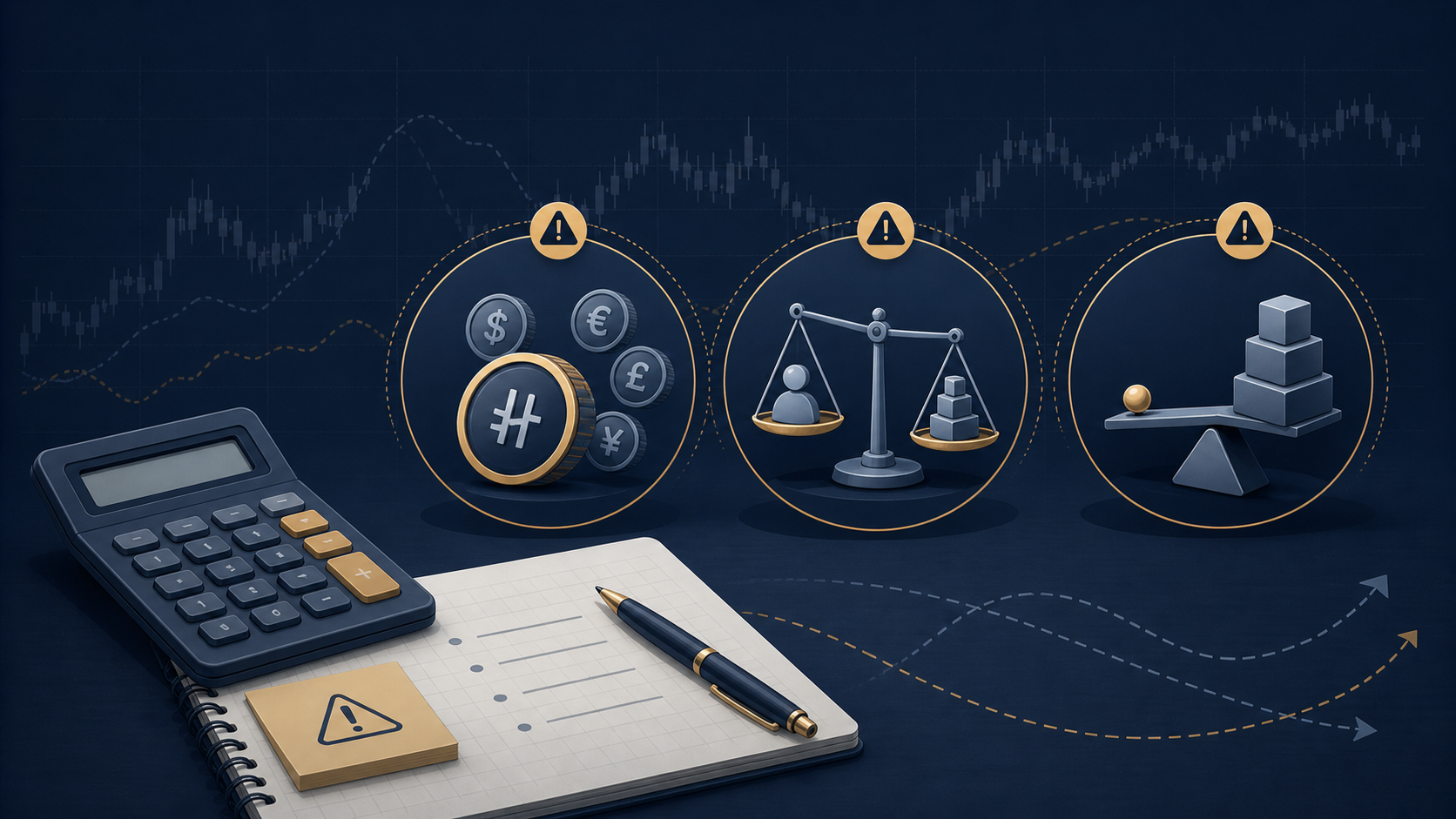
Why a Small Forex Calculation Error Can Become a Large Risk Error
Forex positions are commonly expressed in lots, while the trading idea may be expressed in dollars at risk, pips to a stop, or a percentage of account equity. Those are different units. Mixing them up changes the result even when the entry and stop prices are correct.
Leverage is especially easy to misread. It affects how much margin is set aside to open a position; it does not decide how much the trade loses if price reaches the stop. The loss is driven primarily by position size, the distance to the exit, the value of each pip, and execution costs. U.S. investor guidance also cautions that leverage can magnify losses and that transaction costs can turn an otherwise profitable trade into a losing one. Read the SEC's Investor.gov forex bulletin.
Think of a calculator as a consistency check, not a prediction engine. It can estimate the result at a stated price and cost assumption; it cannot guarantee a fill, a spread, a financing charge, or a future exchange rate.
The Four Forex Calculations to Get Right
Before looking at common errors, separate these four jobs. A calculator may display all of them, but they answer different questions.
| Calculation | What it answers | Inputs that often go wrong |
|---|---|---|
| Pip value | What is one pip worth for this pair and trade size? | Pair convention, contract size, account currency, conversion rate |
| Position size | How many units or lots fit the planned loss at the stop? | Risk amount, stop distance, pip value, unit-versus-lot field |
| Margin estimate | How much collateral may be required to open or maintain the position? | Leverage, product rules, dealer margin policy, exchange rate |
| Net P/L estimate | What remains after the planned move and known costs? | Bid/ask side, spread, commission, financing, conversion |
Pip value is pair-specific
For many non-JPY quoted pairs, a pip is 0.0001; for many JPY-quoted pairs, it is 0.01. Brokers may also quote fractional-pip prices. The pip size is not the same as the smallest price increment shown on the platform, so confirm the dealer's contract specification before doing the math.
In its simplest form, pip value in the quote currency is:
pip value = pip size × trade units
If the account currency differs from the quote currency, convert that figure using the relevant current rate. This is why a fixed “$10 per pip” shortcut is only an approximation for some standard-lot trades; it is not a universal rule.
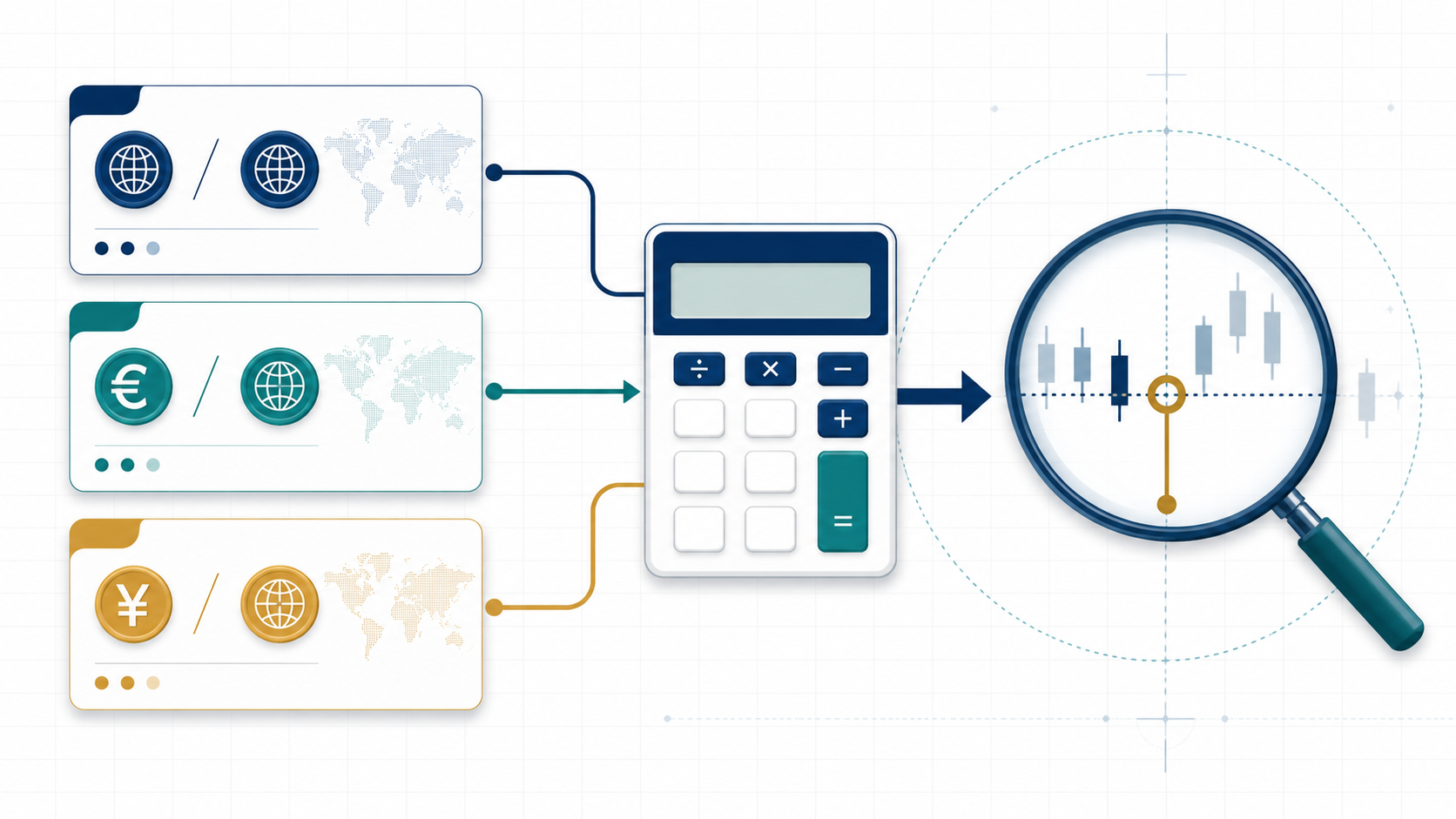
Position size should start with the planned loss
A common planning formula is:
position size = maximum planned loss ÷ (stop-loss distance in pips × pip value per unit or lot)
Use the same unit throughout the calculation. If the calculator expects lots but the result is in units, the error can be 100,000-fold on a standard-lot field. Round down to a size the platform supports, then re-check the estimated loss using the rounded amount.
Margin and risk are related, but not interchangeable
Margin is a funding requirement, whereas a stop-loss-based risk figure estimates the loss if the exit occurs close to the planned level. A low margin requirement can make a position look affordable while its potential loss is still too large for the account. Check both numbers separately.
Net P/L needs costs and the correct side of the quote
For a long position, entry is generally based on the ask and exit on the bid; the reverse applies to a short position. A gross P/L estimate based only on a mid-price omits the spread. Depending on the account and product, commission and overnight financing may also matter. Check the dealer's current specifications rather than assuming a cost schedule from an old example.
Eight Common Forex Calculation Mistakes
1. Treating points, pips, and fractional pips as the same thing
Five-digit and three-digit quotes often show a fractional pip. A move of 50 displayed points may be five pips rather than 50 pips. Write the stop distance in pips explicitly before entering it into a calculator, and use the platform's product specification when the quote format is unclear.
2. Using a pip value from another currency pair
Traders sometimes memorize a pip value from a USD-quoted major pair and use it for a cross pair or a JPY pair. That shortcut can be wrong because the quote currency, pip increment, and account-currency conversion differ. Select the exact symbol, contract type, and account currency every time.
3. Sizing a trade from available margin
“I have enough margin” is not a position-sizing rule. It only says the platform may permit the trade at that moment. Choose the maximum loss you are prepared to accept under your plan, measure the distance to the protective exit, and calculate the size from those two values. Then confirm that margin is sufficient.
4. Forgetting that a stop distance changes when the entry moves
A revised entry price with the same stop price creates a different stop distance. Reusing the old lot size means the amount at risk has changed. Recalculate after every meaningful edit to the entry, stop, currency pair, or account currency.
5. Calculating gross profit but calling it net profit
A forex profit calculator result is only net when its cost assumptions match the proposed trade. Include the quoted spread where appropriate, commission, and any financing estimate for the intended holding period. Costs may change with liquidity, account type, and dealer terms.
6. Ignoring currency conversion in a non-matching account currency
If P/L is generated in a currency different from the account currency, the converted amount can move as exchange rates move. A calculator may use a current conversion rate, but the final account-currency result can differ at execution. Treat the displayed conversion as an estimate and leave room for variation.
7. Assuming the stop guarantees the exact loss amount
A stop order is an instruction to exit, not a promise that the fill will be at the stated price. Gaps, fast markets, and liquidity conditions can create slippage. Your planned loss is a planning figure, so avoid treating it as a hard ceiling unless the product and order type expressly provide that protection.
8. Copying a calculator's default contract size
Standard, mini, and micro lot labels describe different unit quantities, and some products use their own contract conventions. A default selection can survive from the previous calculation. Confirm the symbol and contract size on the trade ticket before submitting an order.
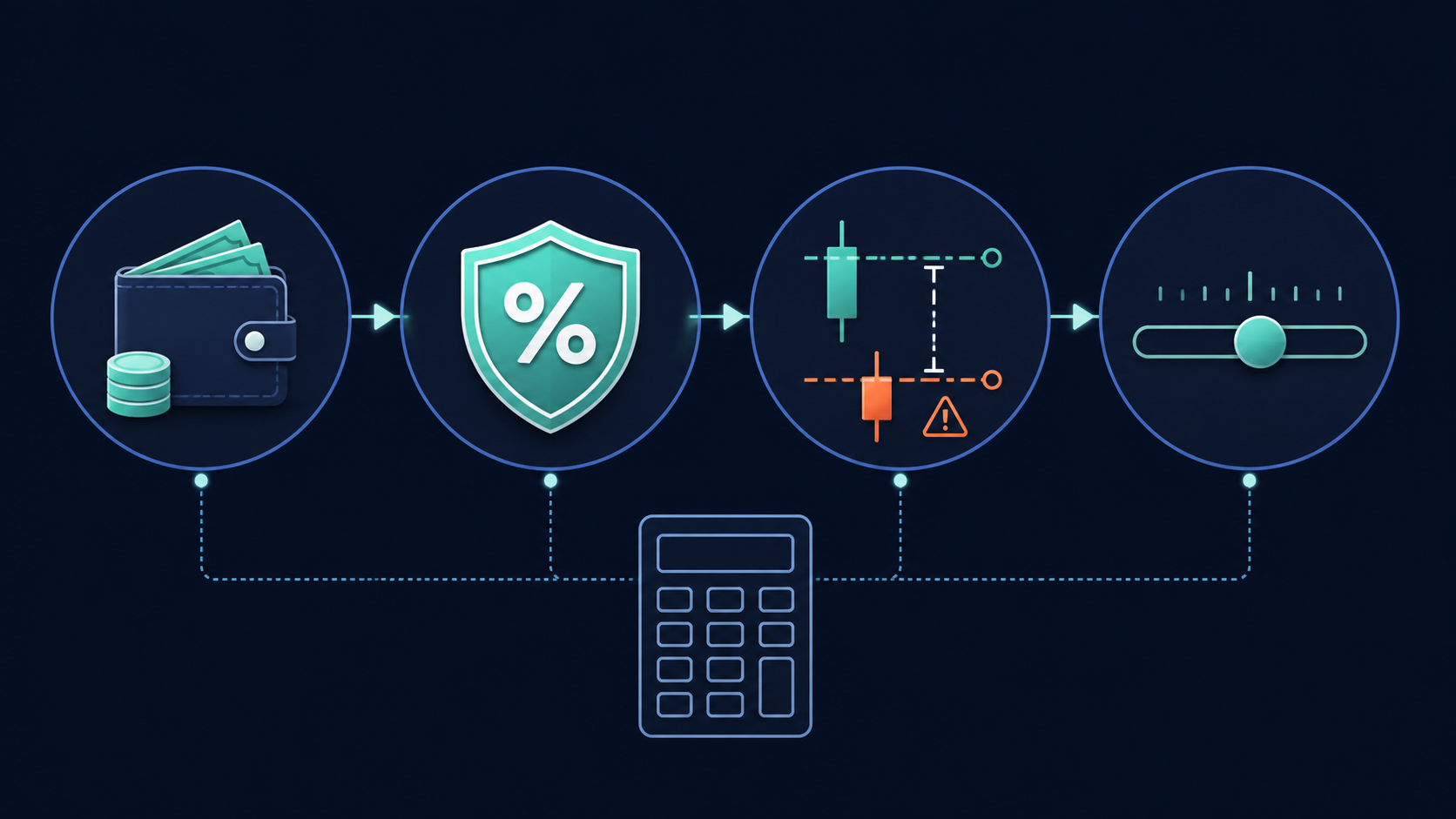
A Worked Example: Separate Gross P/L From Costs
The following figures are illustrative only. They do not represent an fxbee.com quote, a live market price, or a recommended trade.
Assume a USD-denominated account and a one-standard-lot EUR/USD long position. The position enters at 1.0800 and exits at 1.0842, a 42-pip favorable move. Because the quote currency is USD in this example, one pip for 100,000 units is approximately $10.
Gross movement estimate: 42 pips × $10 = $420.
Illustrative spread cost at entry: 1.2 pips × $10 = $12.
Illustrative round-turn commission: $7.
Illustrative net before financing: $420 − $12 − $7 = $401.
The purpose is not the $401 result. It is the sequence: calculate the directional movement, use the correct pip value, then subtract costs once. In a live trade, the realized spread, fills, commission schedule, conversion rate, and financing can differ. Check the dealer's current disclosures and trade-ticket estimates.

How to Use a Forex Profit Calculator More Reliably
Select the exact currency pair and the account currency.
Confirm whether the tool needs units, lots, or contract count.
Enter the intended side of the trade and the relevant entry and exit prices.
Measure the protective stop in pips, not merely in displayed points.
Review the gross result, then add spread, commission, and financing assumptions separately if the tool does not do so.
Compare the calculator estimate with the platform's order preview and current product specifications.
Re-run the calculation whenever a key input changes.
If you are evaluating a platform or educational resource, start with the materials available at fxbee.com and independently verify whether a product is available and appropriate for your jurisdiction. For U.S. retail forex activity, the CFTC advises investors to understand the product, review risk disclosures, and verify relevant registrations rather than relying on high-return claims. See the CFTC's forex fraud guidance.
A 60-Second Pre-Trade Calculation Checklist
Is the pair symbol correct, including any suffix or contract variant?
Am I using pips rather than points or fractional-pip digits?
Does the pip value match the pair, trade size, and account currency?
Is the position size based on planned loss and stop distance, not on free margin?
Have I rounded the size down to a supported increment and recalculated the risk?
Have I allowed for spread, commissions, financing, and possible slippage?
Does the platform preview match the calculator closely enough to investigate any difference?
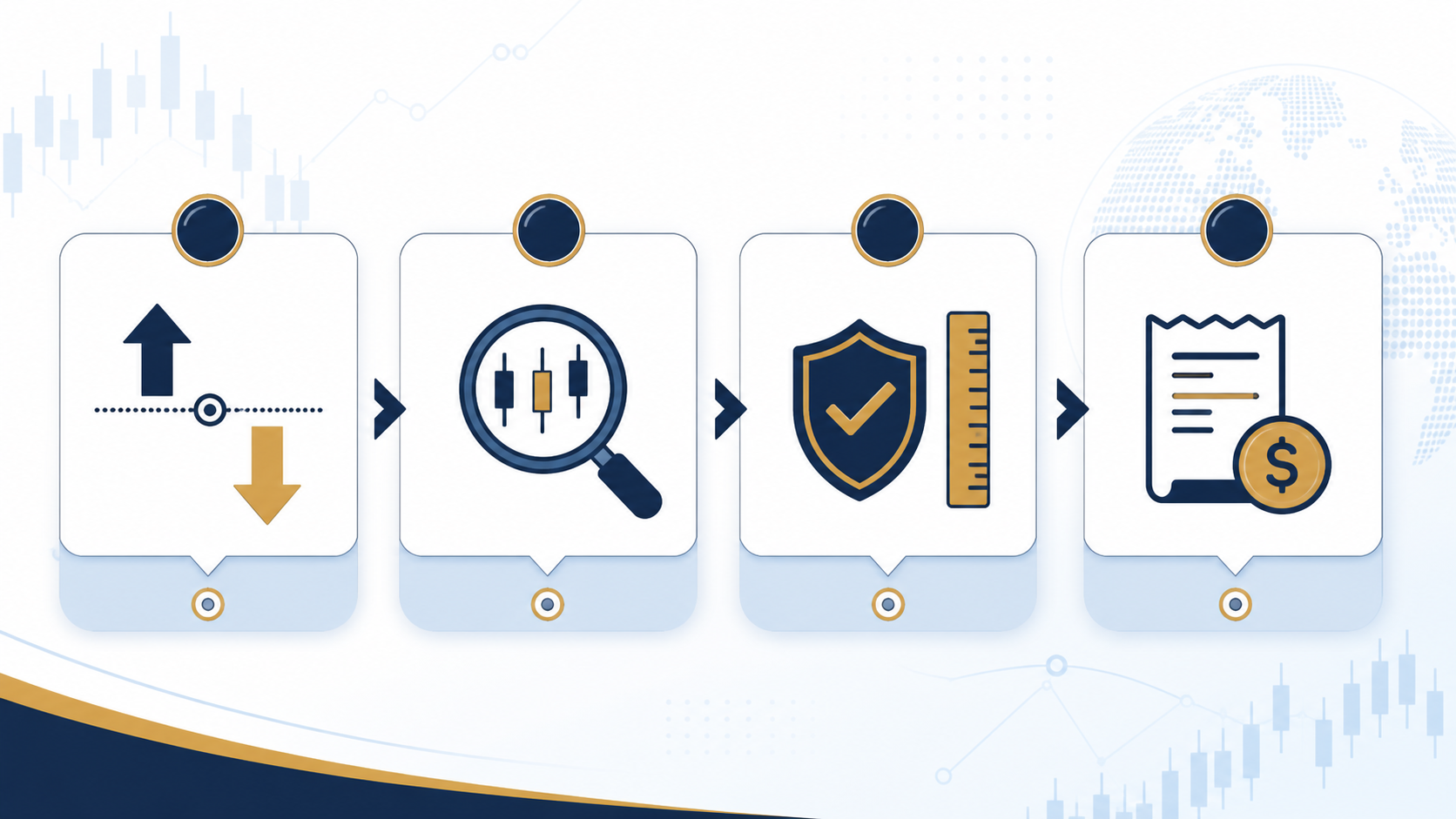
That last comparison is valuable. A mismatch may be harmless rounding, but it can also reveal a selected mini lot instead of a standard lot, a different account currency, or a cost assumption that no longer applies.
Final Takeaway
Most forex calculation mistakes are unit mistakes: the wrong pip increment, the wrong lot size, the wrong currency conversion, or margin substituted for risk. Slow the process down long enough to name each input and its unit. Then treat the output as an estimate that needs a final check against the dealer's live trade ticket and disclosures.
Frequently Asked Questions
What does a forex profit calculator calculate?
A forex profit calculator typically estimates profit or loss from the pair, trade direction, trade size, entry price, exit price, and account currency. Some tools also estimate pip value, margin, spread, commission, or financing. Check which costs it includes before treating the number as a net result.
Why is my pip value different for different forex pairs?
Pip value depends on the pip increment, the number of units traded, the pair's quote currency, and the conversion to your account currency. A pip-value shortcut that works for one USD-quoted pair may not work for a JPY pair or a cross pair.
Is margin the same as the amount I can lose?
No. Margin is collateral required by the dealer. The potential loss depends on position size, price movement, execution, and costs. A position can require relatively little margin while still exposing the account to a large loss.
How do I calculate a position size from a stop-loss?
Set a maximum planned loss, measure the stop distance in pips, establish the pip value for the pair and account currency, and divide the loss amount by the loss per pip at that stop distance. Round down to a supported trade increment and recalculate after rounding.
Do spreads and commissions change a forex P/L calculation?
Yes. A spread affects the effective entry and exit, and commission is a direct trading cost where charged. Financing can matter for positions held overnight. Use current dealer specifications because costs can differ by account, product, and market conditions.
Does a stop-loss guarantee the amount shown in my calculation?
Not necessarily. A calculation normally assumes a fill at the stated stop price. Fast markets, gaps, and liquidity conditions can cause an order to execute at a different price. Read the order-type and execution disclosures supplied by the dealer.
Why do points and pips create forex calculator mistakes?
Many platforms display fractional-pip pricing. A move measured in displayed points can be one-tenth of a pip on some symbols. Entering points as pips can multiply a stop distance or P/L estimate by ten.
Can I use the same lot size for every currency pair?
You can use the same unit quantity, but it will not necessarily create the same pip value or planned risk. Recalculate the pip value and position size whenever the pair, account currency, stop distance, or contract type changes.
What should U.S. forex traders verify before opening an account?
Read the dealer's risk disclosures and account terms, understand costs and execution, and verify relevant registration information through official U.S. regulatory resources. Availability, eligibility, and permitted products depend on the provider and jurisdiction.
When should I recalculate a forex trade?
Recalculate when you change the pair, trade direction, entry, stop, target, account currency, lot size, or expected holding period. Also compare your estimate with the order preview immediately before sending the order.