
Picking among CFD Brokers in 2026 can feel like shopping for a work truck online: every seller says the ride is smooth, the price is right, and the engine never quits. For agencies, affiliates, and brokerage buyers, the real headache is finding a partner that can handle volume, pricing, support, and day-to-day trust.
A tight spread looks great on paper, but that is only half the story. If execution slips, support goes quiet, or platform uptime gets shaky, the cheap deal can turn into a money pit fast.
One Fxbee manager put it plainly: “Good pricing means little if clients can’t trade with confidence.”
This guide gets straight to the point. It helps you compare brokers by the stuff that actually hits your bottom line: fees, execution, service, trading conditions, and partner fit.
If you are trying to cut through the noise and stop wasting time on weak options, you are in the right place. Let’s sort out which brokers are worth a closer look and which ones are all hat and no cattle.
How to choose from the top 10 CFD Brokers?

Licensing, Regulatory Oversight, and the Financial Conduct Authority
Check FCA authorization, not just flashy marketing.
Look at which regulatory bodies supervise the broker and where its licenses apply.
A broker with real authorization usually shows cleaner paperwork, clearer rules, and less funny business. For wholesale buyers, strong oversight matters because weak compliance can wreck onboarding, payments, and partner trust fast.
Client Fund Segregation and Investor Compensation Fund rules
Confirm fund segregation is written clearly in the legal docs.
Check if client accounts are held separately from company money.
Review investor protection options like ICF, FSCS, or other compensation schemes.
This stuff is a big deal. Segregated funds can reduce blowback if a broker gets into trouble, while compensation schemes add another safety net. For procurement teams, that makes the broker feel less sketchy and more bankable.
Spreads, Commissions, and Withdrawal Fees to compare first
Start with the obvious money drain: spreads, commissions, trading fees, withdrawal fees, and overnight fees. Then go one step deeper and inspect pricing models for hidden costs. A broker with ultra-low spreads can still sting you with chunky withdrawals or sneaky financing charges. For wholesale-focused readers, this is where shortlist decisions get real, because pricing affects margin, client retention, and deal value from day one.
Market Maker, Straight Through Processing, and Electronic Communication Network models
Market Maker: often easier access, but dealing desk conflict worries can pop up.
STP: routes trades through liquidity providers with less desk interference.
ECN: often suits high-volume flow with non-dealing desk pricing.
Read the execution models closely. If the broker hides how orders are filled, that’s a red flag. Buyers usually want transparency, stable fills, and fewer nasty surprises under pressure.
Web Trader, Mobile Application, and Charting Tools checklist
Does the trading platform offer MetaTrader, cTrader, or a solid WebTrader?
Is the mobile app smooth, or does it lag when markets get wild?
Are charting tools strong enough for real work?
Is the user interface clean, fast, and easy to train teams on?
A clunky platform can annoy users fast. Good tools keep trading flow sharp and support costs lower.
Leverage, Negative Balance Protection, and Margin Call policies
Short version: bigger leverage is not always better. Check margin requirements, stop-out level, margin call rules, and negative balance protection before getting sold on big numbers. A broker that explains risk management in plain language usually saves clients from ugly surprises later. For wholesale buyers, clean policies matter because sloppy margin handling can spark complaints, losses, and a whole mess of support issues.
Best CFD Brokers for high-volume trading
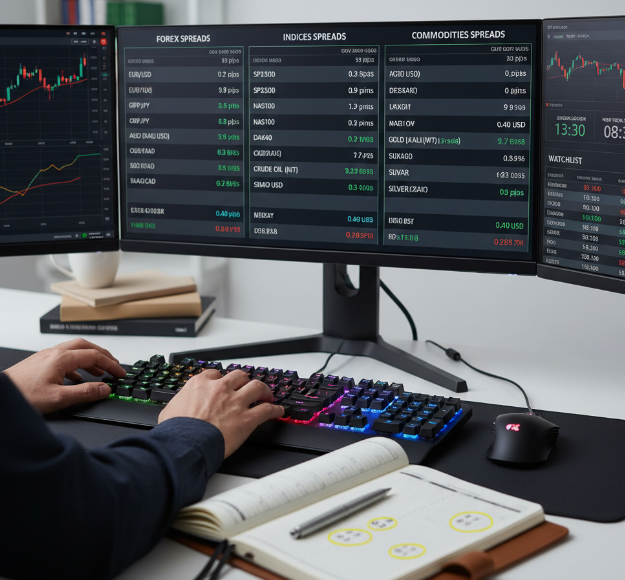
Low Bid-Ask Spread access across Forex, Indices, and Commodities
Tight spreads matter when size goes up fast.
Check the bid-ask spread during London and New York overlap, not just quiet hours.
Compare Forex spreads, Indices spreads, and Commodities spreads side by side.
Good pricing efficiency usually shows up with solid liquidity access and fewer ugly spikes.
If a broker sells “super low” spreads but widens hard on news, that deal is kinda fake.
Market Execution, No Dealing Desk, and Direct Market Access
Look for true Market execution with fewer delays.
Check if the broker runs No Dealing Desk (NDD), an ECN broker model, or an STP broker setup.
Review order routing rules, because that affects fills more than the homepage hype.
Strong execution speed plus Direct Market Access (DMA) usually suits larger tickets better.
Re-quotes and messy fills are a red flag, plain and simple.
API Integration, Automated Trading, and Backtesting support
API integration : Handy for custom workflows and faster data handling.
Automated trading : Good for rules-based entries without second-guessing every click.
Algorithmic trading: Better fit for scale, repeatability, and multi-market coverage.
Backtesting platform: Helps test ideas before real cash gets tossed in.
Trading bots, custom indicators, MQL support: Nice combo for teams that want speed, tweaks, and less manual grind.
Capital Adequacy, Liquidity depth, and slippage control
Big orders hit different. A broker with healthy capital adequacy and real financial stability is less likely to wobble when markets get jumpy. Strong liquidity depth helps large trades move through the order book with less market impact. Good slippage control also matters, especially around data releases. Add regulatory compliance to the checklist, because flashy pricing means nothing if the backend looks shaky.
Overnight Swaps, Financing Rates, and Rollover Charges at scale
Overnight swaps can chew through returns on positions held for days.
Compare financing rates across asset groups, not just one headline pair.
Rollover charges hit harder when position size grows.
Watch holding costs, interest rates, and hidden scaling charges on larger books.
A broker may look cheap on entry, then quietly get pricey overnight. That’s the bit many buyers miss.
Low spreads vs. better execution: Which CFD broker wins?
Tight Spreads
Bid-ask matters most in fast markets. A broker showing a tiny spread can still cost more once commission is added.
Raw spread accounts usually suit active traders who want transparent pricing.
Zero spread promos look slick, but check the fine print on lot size and fees.
ECN and STP setups often pull stronger liquidity
Better liquidity usually means tighter pricing during busy sessions
Good deal: low spread plus fair commission, not just a flashy headline
Fast Market Execution
Quick fills can beat cheap spreads, plain and simple. If latency is high, your market orders hit late and the entry is already gone. Solid brokers invest in fast server response, stable trade processing, and VPS support for automated setups. Watch for consistent order speed, not just demo-account hype. Instant execution sounds nice, but what really counts is getting filled near your click price when the market starts moving like crazy.
Fewer Re-quotes
No re-quotes keeps trading smooth when market volatility spikes
Frequent order rejection is a red flag, full stop
Strong execution quality helps protect your setup
Clean price confirmation builds trust over time
3 quick checks:
Trade during news hours
Compare fills across several orders
Note how often the platform asks you to accept a new price
Less friction usually means a broker takes execution seriously.
Lower Slippage
Short take: slippage is the gap between expected and execution price.
Small price deviation is normal
Heavy market volatility can widen it fast
A reliable order fill engine helps keep losses in check
Stop-loss orders are where bad slippage hurts most
Positive slippage is a bonus
Negative slippage is the real test
A broker wins here when bad slippage stays limited and good fills still show up now and then.
Too many CFD Brokers? Compare fees, leverage, and support

Spreads, Commissions, Deposit Fees, and Inactivity Fees
Check the Fee Structure like you’d check the bill before paying.
Spreads and Commissions shape day-to-day Trading Costs.
Deposit Fees matter if teams fund accounts often.
Inactivity Fees can sting during quiet months.
A broker with low headline pricing but sneaky Transaction Fees is not a bargain. Smart buyers compare Pricing Models across active and low-volume periods, not just the front-page promo.
Leverage tiers and Negative Balance Protection terms
Short version: bigger Leverage Tiers are not always better. High Leverage can cut capital needs, but it also raises Margin Requirements and risk. Good wholesale buyers check Negative Balance Protection, account-level Margin rules, and local ESMA Regulations before signing. If a broker offers flashy ratios but weak Risk Management terms, that’s a red flag. You want room to trade, not a setup that blows up on one rough move.
Stop Loss, Take Profit, and Guaranteed Stop Loss availability
A clean broker setup should include practical Order Types, not just the basics on paper.
Stop Loss for capping downside
Take Profit for locking gains
Guaranteed Stop Loss for extra Volatility Protection
Clear rules on Slippage during fast markets
This stuff matters most when markets get wild. If risk controls are hard to find or loaded with fine print, buyers should slow down and think twice.
Know Your Customer, Anti-Money Laundering, and account onboarding
Fast Account Opening feels nice, but sloppy checks are bad news. Strong KYC and AML processes show real Regulatory Compliance and solid Due Diligence. Here’s the sweet spot: smooth Identity Verification, clear document requests, and no endless back-and-forth. For wholesale buyers handling multiple accounts or partner flows, Account Onboarding speed matters a lot. If the process is confusing, delayed, or inconsistent, client conversion can drop before trading even starts.
Financial Services Guide, service quality, and account manager support
This is where the small stuff becomes big stuff. A clear Financial Services Guide tells buyers how the broker works, what the risks are, and what support looks like. Good Service Quality means fast Responsiveness, useful Support Channels, and an Account Manager who actually fixes problems. Bad Customer Support usually shows up at the worst time—payment delays, platform issues, or compliance questions. Strong Client Services can save hours and keep deals moving.
Support for Forex, Equities, ETFs, and Cryptocurrencies traders
Different clients want different Asset Classes, so product range really counts.
Forex for liquidity. Equities for stock-linked exposure. ETFs for broader baskets. Cryptocurrencies for higher-risk demand.
A broker with weak Market Access or thin Tradable Instruments can limit growth fast. Wholesale buyers should check how many CFD Products are live, how stable pricing is across markets, and whether the platform supports mixed client demand without feeling clunky.
Why do professional traders switch CFD Brokers so often?
Pros don’t switch just for fun. Most moves come down to money, speed, trust, and better tools.
A pro trader can stick with one broker for years, then bail in a week when the setup stops making sense. A tiny change in spreads, fees and commissions, or execution speed can hit results fast. Add weak customer support, limited market access, shaky platform features, or loose regulation, and that broker starts looking like dead weight.

1) The money starts leaking
Fees and commissions creep up after the account is opened.
Spreads look tight in ads, then widen during active sessions.
Overnight costs get ugly on swing positions.
Withdrawal friction makes cash management a pain.
Volume discounts sound great, but the real pricing does not hold up.
For active desks, this stuff is not minor. A few extra points across dozens or hundreds of trades can chew through a solid month.
2) Execution speed stops feeling clean
Pros pay close attention to how orders actually fill, not just how the platform looks.
Orders start slipping more during news events.
Entries on Forex, Indices, or Commodities fill at worse prices.
Partial fills show up at the wrong times.
Fast markets expose weak routing.
A broker talks a big game, but live fills say otherwise.
When execution speed drops off, traders notice right away. No one wants a setup that looked great on screen but got wrecked at the fill.
3) Platform features begin to feel dated
A lot of switches happen because the tech no longer fits the trader’s workflow.
A scalper wants faster charts and one-click order entry.
A swing trader wants cleaner risk tools and easier alerts.
A desk manager wants smoother account reporting.
A systematic trader wants better API support.
A mobile-heavy trader wants the app to work without random bugs.
If the broker’s platform features can’t keep up, pros move on. Simple as that.
What usually pushes the switch hardest
| Trigger | What traders notice | Business impact | Common result |
|---|---|---|---|
| Higher Spreads | Costs jump during peak sessions | Lower net returns | Trader compares new brokers |
| Slower Execution speed | More slippage and delayed fills | Missed entries and exits | Capital gets moved fast |
| Weak Customer support | Slow replies when issues hit | Downtime and frustration | Trust drops hard |
| Limited Market access | Fewer tradable products | Less flexibility across strategies | Trader looks elsewhere |
4) Regulation becomes a deal-breaker
Pros care about regulation way more than beginners think.
A broker can have slick branding, a clean dashboard, and lots of products. None of that matters much if the regulatory setup feels soft. Traders want to know:
Who oversees the broker
How client money is handled
What dispute process exists
How transparent the firm is during stress events
If answers are vague, that’s a red flag. Traders with real size do not mess around here.
5) Customer support matters more than people admit
A lot of retail traders ignore support until something breaks. Pros do not.
They watch for:
Fast replies during market hours
Real humans who know trading terms
Clear answers on margin, pricing, and fills
Quick help with platform outages
Support that does not dodge tough questions
Good customer support saves time. Bad support costs trades.
A few trader complaints
“My spreads were fine for two months, then got messy when volatility picked up.”
“The broker had great marketing, but the execution speed was not there.”
“I needed broader market access across Cryptocurrencies, Equities, and ETFs, and my old setup just felt limited.”
“The app looked nice, but the desktop tools were too basic for how I trade.”
“Support kept giving canned answers. That was the last straw.”
How pros size up a move before switching
| Checkpoint | What gets reviewed | Why it matters | Green light sign |
|---|---|---|---|
| Pricing | Fees and commissions, Spreads | Protects trade expectancy | Costs stay consistent |
| Tech | Platform features, execution logs | Supports strategy fit | Fast and stable trading |
| Trust | Regulation, fund handling | Reduces counterparty worry | Clear legal framework |
| Reach | Market access, product list | Expands trading choices | Strong cross-asset offering |
Q&A from the desk
Q: What usually makes a pro leave a broker?
Fxbee dealing-desk consultant: “It’s rarely one big dramatic thing. It’s usually three smaller annoyances stacking up—pricing, fills, and support.”
Q: Do traders leave just because of lower fees?
Fxbee brokerage operations manager: “Not by itself. Lower fees and commissions get attention, but clean execution and trust keep the account.”
Q: How important are platform features?
Fxbee product specialist: “Huge. If a trader can’t move fast, manage risk, or access the right markets, the relationship is already on borrowed time.”
Q: What about regulation?
Fxbee compliance lead: “Pros want clarity. If the broker is fuzzy on oversight, that account becomes hard to defend internally.”
The usual pattern looks like this
A trader notices costs drifting higher.
Fills start feeling slower or less reliable.
Support becomes harder to reach when it matters.
Another broker offers stronger market access or better tools.
The trader tests the new setup with a smaller allocation.
If performance holds, more capital moves over.
That last step is key. Pros do not always make a loud exit. A lot of the time, the old broker just gets less flow until the account fades out.
Why this matters for wholesale brokerage buyers
For teams sourcing CFD Brokers & Brokerage solutions at scale, the switching pattern tells you what really matters after the sales pitch:
Stable spreads
Fair fees and commissions
Reliable execution speed
Strong platform features
Credible regulation
Responsive customer support
Broad market access
Practical leverage settings
That’s the stuff that keeps active clients around. If a broker misses on those basics, pro traders won’t stick around just because the homepage looks sharp.
CFD Brokers for agencies, affiliates, and brokerage partners

White-label brokerage priorities and Licensing requirements
White-label solutions should support fast brand customization without wrecking the core setup.
Solid brokerage setup starts with financial licenses, clear legal requirements, and day-to-day regulatory compliance.
Smart buyers check operational priorities too: reporting, payments, support flow, and back-office control.
If the licensing side looks messy, that shiny broker pitch can go south real fast.
Multi-asset coverage: Forex, Precious Metals, Energy Futures, and Spot Gold
A good partner deal gets more clicks when the trading instruments actually match buyer demand. Multi-asset trading matters because different client groups want different things at different times. Some chase Forex pairs daily, while others focus on precious metals, energy futures, or spot gold when markets get jumpy. Strong commodities trading coverage helps partners sell a broader story, not just a single-product pitch that feels a bit thin.
Partner demand for API Integration, Web Trader, and Mobile Application
API integration for smooth partner connectivity and custom workflows.
A stable web trader platform with clean user interface design.
A fast mobile trading app for on-the-go access.
Strong platform accessibility across regions and devices.
If the trading technology feels clunky, partners notice it straight away.
Risk controls: Hedging, Margin Call, and Negative Balance Protection
Risk management is a trust builder.
Short version: hedging strategies help reduce exposure, margin call rules keep accounts in check, and negative balance protection stops clients from falling into ugly debt. Add leverage control, stop-loss orders, and decent volatility management, and the offer feels way more partner-friendly. Without those guardrails, even a flashy platform can look like bad news.
Client onboarding with Know Your Customer and Anti-Money Laundering
Quick, clean client onboarding wins deals.
Slow, messy checks kill momentum.
Good brokers keep KYC procedures, AML compliance, and identity verification tight without making account opening feel like endless paperwork.
Partners also care about regulatory checks and proper due diligence, because one weak onboarding process can create support chaos, compliance stress, and lost conversions all at once.
Reporting tools, Social Trading, and Expert Advisors support
For agencies and affiliates, retention matters just as much as sign-ups. That’s where reporting analytics and performance metrics pull real weight, because partners need proof, not vibes. Social trading and copy trading features can make the platform feel more active and sticky. Support for Expert Advisors (EAs) and automated trading also attracts advanced users. Toss in strong community features, and the whole offer feels more alive, which is a big plus for partner growth.
Conclusion
Picking a CFD broker in 2026 is a lot like choosing a business partner, not just kicking the tires on a shiny app. A broker may look slick on the surface, but the real test is under the hood: pricing, execution, licensing, and support. If spreads are too wide, onboarding drags, or the platform feels clunky, that deal can go sideways fast.
The smart move is to match the broker to the job at hand. High-volume traders usually care about fees, slippage, and execution speed. Agencies and brokerage partners often look harder at white-label options, compliance, reporting, API access, and client onboarding. In plain English, the best CFD Brokers are the ones that solve your actual pain points instead of piling on bells and whistles you may never use.
At the end of the day, keep it simple: shortlist the brokers that fit your goals, cut the fluff, and go with the one that makes your life easier.
References
[FCA Firm Checker - https://www.fca.org.uk/consumers/fca-firm-checker]
[FCA CASS 7.13 Segregation of client money - https://handbook.fca.org.uk/handbook/CASS/7/13.html]
[FSCS Investment Protection - https://www.fscs.org.uk/what-we-cover/investments/]
[ESMA MiFID II Rulebook - https://www.esma.europa.eu/publications-and-data/interactive-single-rulebook/mifid-ii]
[ESMA adopts final product intervention measures on CFDs and binary options - https://www.esma.europa.eu/press-news/esma-news/esma-adopts-final-product-intervention-measures-cfds-and-binary-options]
[CySEC Investment Services Law / Investor Compensation Fund materials - https://www.cysec.gov.cy/en-GB/legislation/services-markets/epey/]
[ASIC CFD product intervention order extended for five years - https://asic.gov.au/about-asic/news-centre/find-a-media-release/2022-releases/22-082mr-asic-s-cfd-product-intervention-order-extended-for-five-years/]
[MetaTrader 5 Trading Platform - https://www.metatrader5.com/en/trading-platform]
[MetaTrader 5 Automated Trading - https://www.metatrader5.com/en/automated-trading]
[MetaTrader 5 VPS - https://www.metatrader5.com/en/trading-platform/vps]
[cTrader Guide - https://ctrader.com/guide]
[cTrader Algo Documentation - https://help.ctrader.com/ctrader-algo/]
FAQ
How do CFD Brokers handle white-label brokerage needs?
Good white-label solutions should allow easy brand customization. A smooth brokerage setup needs clear financial licenses and solid regulatory compliance. It also helps to review legal requirements and core operational priorities.
What should agencies check before choosing a brokerage partner?
Agencies should check Licensing, Client Fund Segregation, Capital Adequacy, and support quality. If Regulatory Oversight is weak or onboarding feels sloppy, trouble usually shows up later.
Which CFD Brokers offer the best multi-asset trading access?
Top options usually cover Forex pairs, Precious Metals, Energy Futures, and Spot Gold. Many also include Indices, Cryptocurrencies, Equities, and ETFs. Broader trading instruments help partners reach more clients.
Why does execution quality matter so much with CFD brokers?
Execution quality shapes fill speed, slippage, and Re-quotes. Brokers using Market Execution, Straight Through Processing, or Electronic Communication Network access often feel steadier in fast markets.
What technology do partners expect from CFD Brokers?
Many want API Integration for easier partner workflows. A solid Web Trader and Mobile Application improve Platform accessibility. Useful extras include Charting Tools, Technical Indicators, and Backtesting.
How important is KYC and AML during client onboarding?
It matters a lot. Strong Know Your Customer, Anti-Money Laundering, and Identity verification keep Account opening cleaner and cut fraud, delays, and support pain.
What risk controls should a brokerage partner look for?
Strong Risk Management should include Stop Loss and Take Profit. Negative Balance Protection and fair Margin Call rules matter a lot. Some buyers also want Hedging and Guaranteed Stop Loss.
How do CFD Brokers compare on trading costs?
Cost gaps usually show up in Spreads, Commissions, Overnight Swaps, Deposit Fees, and Withdrawal Fees. Some also add Inactivity Fees or heavy Rollover Charges.
Which analytics and automation features help retention most?
Reporting analytics and Performance metrics help partners track results. Social Trading and Copy Trading can keep users active. Advanced traders often want Expert Advisors, Automated Trading, and strong Community features.
How can buyers tell if a CFD broker is a good fit in 2026?
Start with Licensing, pricing, execution model, and asset range. Then check Web Trader, API Integration, and Negative Balance Protection. If the setup feels clunky, that is usually a bad sign.